Understanding Moab Hiking Trails and What They Offer
Hiking in Moab is different than driving trails. Both engage the landscape, but they do it in fundamentally different ways. From a Jeep, you cover distance and experience scope. On foot, you notice details. You feel the scale of terrain. You understand how the rock formations actually move and shift. You experience the physical reality of elevation and distance in ways that driving doesn't provide.
Moab hiking trails exist at various difficulty levels. Some are short walks to stunning viewpoints. Others are full-day commitments requiring navigation skills and technical footwork. Some are crowded and well-maintained. Others feel remote and require honest assessment of your capabilities. The key is matching your skill level to the trail instead of choosing based on how the photos look online.
This guide walks through Moab hiking trails organized by difficulty level. It explains what makes each trail work, what to expect physically, and what preparation matters. Whether you're new to hiking or experienced, whether you're visiting for an afternoon or planning multiple days of trail time, understanding the options helps you choose something that fits your reality.
Why Hiking in Moab Works
Hiking complements the Moab experience in ways that driving alone doesn't. Your Jeep gets you to places. Walking lets you absorb those places. The geology makes sense when you're standing in it, touching the rock, understanding how formations relate to each other. The views hit differently when you've walked to them.
What makes Moab hiking trails valuable:
Access to geology and landscape details that driving misses
Physical engagement that creates deeper understanding
Flexibility in time commitment and intensity
Options for various skill levels and interests
Discovery of less-crowded experiences than famous spots
Personal challenge aligned with your capability
There's something about moving through terrain under your own power that creates understanding. A trail that looks steep from a photo feels different when you're climbing it. A distance that seems manageable on paper reveals itself differently when you're covering it on foot. This honest encounter with reality—with your own effort and capability—is part of what makes hiking rewarding.
Remember: Hiking on Moab hiking trails isn't just an activity. It's a way of engaging with landscape that complements driving and creates experiences you can't get from a vehicle alone.
Moab Hiking Trails and Your Actual Skill Level
Difficulty ratings exist for a reason, but they're not universal. A trail rated intermediate by one source might feel different to you based on fitness level, previous hiking experience, altitude comfort, and what you consider challenging. This isn't about being weak or strong. It's about honest self-assessment.
What affects your actual difficulty experience:
Current cardiovascular fitness level
Previous hiking and altitude exposure
Comfort with exposure and technical terrain
How your body responds to sun and heat
Footwear quality and experience with specific terrain types
Mental tolerance for physical challenge
If you've never hiked, start with easy trails. Not because there's anything wrong with jumping into intermediate terrain, but because knowing how your body responds to elevation, sun exposure, and sustained walking helps you make better decisions on subsequent hikes. If you've hiked regularly but not in high desert, easy-to-intermediate trails let you adjust to altitude and terrain specifics without overcommitting.
Keep In Mind: Start easier than you think you should. Experience with local terrain gives you realistic understanding of how your body responds to Moab hiking trails and altitude.
Easy Moab Hiking Trails for Beginners and Families
Landscape Arch
Landscape Arch is one of Moab's most accessible trails with these characteristics:
Round trip distance: approximately 3 miles
Elevation gain: minimal (roughly 100 feet)
Terrain type: sandy ground, straightforward walking
Crowd level: moderate to high (very popular)
Time commitment: roughly 90 minutes including arch time
Best times: early morning or late afternoon
The destination—one of the longest natural stone arches in North America—is genuinely worth reaching. The trail itself is straightforward. No technical sections. No navigation required. Just walking on sandy ground toward something beautiful.
This trail works for families, older hikers, or anyone wanting a genuine Moab experience without serious physical demand. The arch photographs well and feels rewarding regardless of fitness level.
Corona Arch
Corona Arch requires a bit more effort than Landscape Arch with these details:
Round trip distance: approximately 3 miles
Elevation gain: moderate (roughly 400 feet)
Terrain type: sandy start, then slickrock sections with scrambling
Crowd level: low to moderate (less crowded than Landscape Arch)
Time commitment: 2 to 2.5 hours round trip
Best times: early morning, spring or fall
The destination—a large natural arch frame—is genuinely impressive and less crowded than some Moab hiking trails. The trail has exposed sections where you're walking on slickrock with drop-offs. It requires comfort with exposure, but it's not dangerous if you pay attention.
Sand Hollow Trail
Sand Hollow offers a shorter option with these specifics:
Round trip distance: roughly 2 miles
Elevation gain: minimal
Terrain type: sand and rock, easy walking
Crowd level: low (underrated and less crowded)
Time commitment: roughly 90 minutes
Best times: any season works
The scenery includes layered red, orange, and purple rock formations. It's less famous than some trails, which means fewer crowds, particularly during peak season. This works well as an afternoon walk or addition to other activities.
Easy Moab hiking trails work best for:
Families with younger children
First-time hikers adjusting to altitude
Anyone wanting genuine experience without major physical commitment
Afternoon walks after morning activities
Photography-focused hikes with less time pressure
Recovery days between harder hikes
Remember: Easy Moab hiking trails still deliver genuine Moab experience. You don't need to push hard to reach something beautiful.
Intermediate Moab Hiking Trails for Developing Hikers
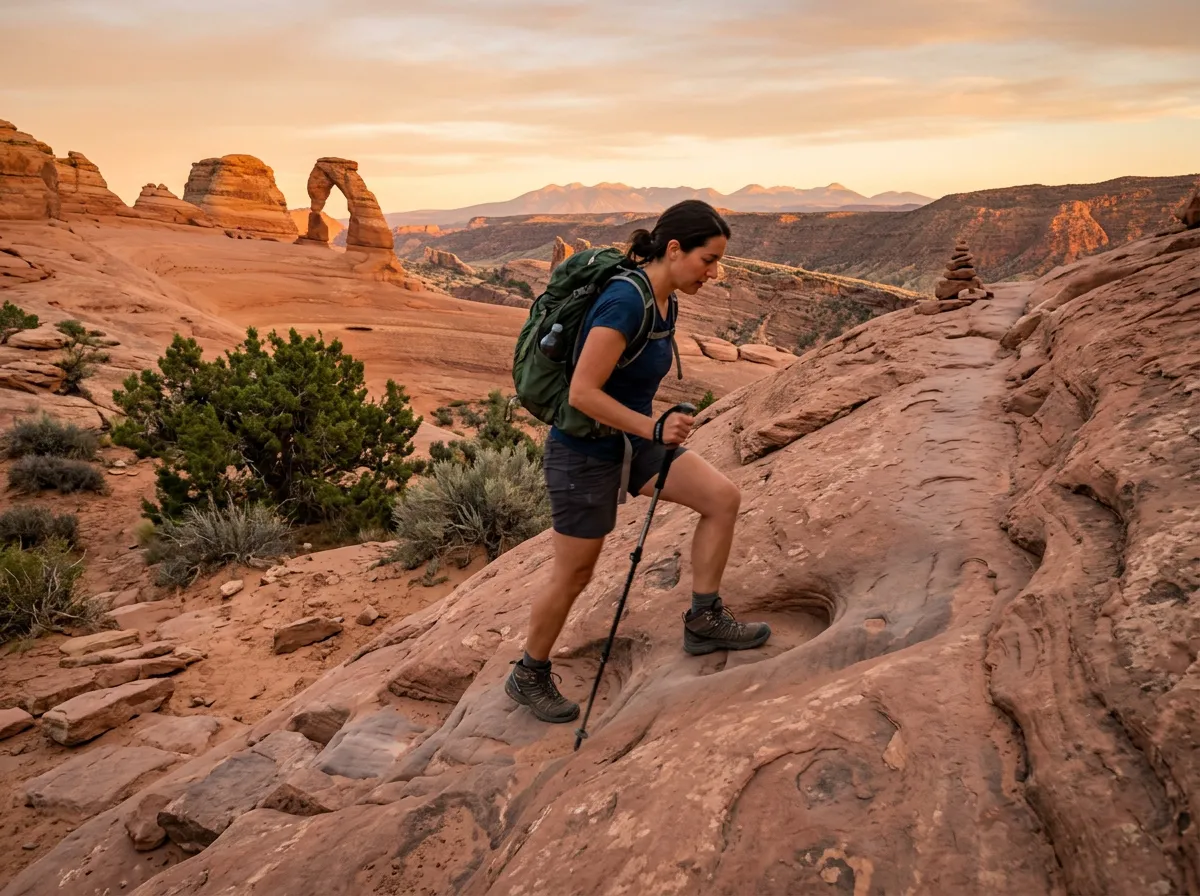
Delicate Arch
Delicate Arch is the famous one with these specifications:
Round trip distance: 3 miles
Elevation gain: significant (roughly 480 feet)
Terrain type: slickrock with sandy sections
Crowd level: high during peak times
Time commitment: 2 to 3 hours
Best times: early morning in spring, fall, and winter
Challenges: sustained climb, sun exposure, minimal shade
The hike is iconic. The destination is genuinely worth the effort. What makes it challenging is elevation gain and sun exposure. There's minimal shade. The slickrock sections require careful footwork. The trail is well-maintained and marked, so navigation is straightforward.
Do this hike early morning if you're visiting during warm months. Start before sunrise if possible. You'll see the arch in soft light, avoid the worst heat, and miss afternoon crowds. The experience changes completely based on time of day.
Devil's Garden Trail
Devil's Garden offers flexibility and varied scenery:
Round trip distance: 2 to 8 miles (depending on version)
Elevation gain: moderate (varies by how far you go)
Terrain type: slickrock, sand, rock scrambling
Crowd level: moderate to high
Time commitment: 1 to 4 hours depending on route
Best times: spring or fall
Multiple arch viewpoints exist, so you can do a shorter or longer version. The flexibility lets you match the trail to your day rather than forcing commitment. You can hike just to Landscape Arch and turn back, or continue to additional arches for fuller experience.
Windows Primitive Loop
Windows offers varied terrain with genuine challenge:
Round trip distance: roughly 5 miles
Elevation gain: moderate (roughly 300 feet)
Terrain type: sand, slickrock, rock scrambling
Crowd level: low to moderate (less crowded than famous arches)
Time commitment: 3 to 3.5 hours
Best times: spring or fall
What makes it intermediate is the combination of terrain types and scrambling sections. The experience feels more remote than famous alternatives. The challenge feels honestly earned rather than manufactured.
Intermediate Moab hiking trails generally demand:
Sustained elevation gain or longer distances
Some slickrock or scrambling sections
Mixed terrain requiring different footwork
Basic cardiovascular fitness
Comfort with exposure in some sections
Altitude adjustment capability
Proper footwear and technique
Balanced Rock Trail
Balanced Rock is a shorter option with significant interest:
Round trip distance: roughly 1 mile
Elevation gain: minimal
Terrain type: slickrock, rock scrambling
Crowd level: low
Time commitment: 1 to 1.5 hours
Challenges: scrambling, exposure, technical footwork
The destination—a massive rock balanced on a small base—is visually striking. The trail is less crowded than major arches. The experience packs significant interest into shorter distance.
Think of it this way: Intermediate Moab hiking trails bridge the gap between easy walks and serious technical challenges. They offer genuine accomplishment without extreme commitment.
Advanced Moab Hiking Trails for Experienced Hikers
Angel Arch
Angel Arch is genuinely remote with these characteristics:
Round trip distance: 5 to 6 miles
Elevation gain: moderate but with uncertain terrain
Terrain type: unmarked trail, wash crossings, scrambling
Crowd level: very low (genuinely remote)
Time commitment: 4 to 5 hours
Requirements: navigation skills, map reading, GPS capability
This trail requires route-finding skills and comfort with being slightly lost. You need a map and preferably GPS. You need to be confident reading terrain and making decisions about route. This isn't a maintained trail with clear markers. It's hiking where you're making the decisions.
Klondike Bluffs
Klondike Bluffs offers remote feeling with these details:
Round trip distance: 7 to 8 miles
Elevation gain: moderate to significant
Terrain type: varied, with exposed sections and drop-offs
Crowd level: very low
Time commitment: 4 to 5 hours
Challenges: distance, exposure, sustained effort
The landscape feels spacious and wild. Crowds are minimal. What makes this trail advanced is less about single technical sections and more about overall commitment. You need fitness for distance, comfort with exposure, and navigation capability.
Fiery Furnace
Fiery Furnace is genuine slot canyon experience:
Round trip distance: roughly 4 miles
Elevation gain: moderate with scrambling
Terrain type: narrow slots, scrambling, route-finding
Crowd level: low to moderate
Time commitment: 3 to 4 hours
Challenges: confined spaces, scrambling, navigation
This trail involves walking through narrow passages between tall rock walls. It includes scrambling, slickrock sections, and genuine route-finding requirements. Navigation is complex. You need to pay attention and make route-finding decisions.
Advanced Moab hiking trails demand:
Navigation skills and map reading capability
Comfort with exposure and scrambling
Sustained fitness for longer or steeper terrain
Ability to make route-finding decisions independently
Experience reading terrain and making safety judgments
Comfort in conditions that aren't maintained or marked
Psychological willingness to be in remote terrain
Keep In Mind: Advanced Moab hiking trails aren't just harder. They're qualitatively different experiences that require different skills and comfort levels.
Understanding Terrain Types on Moab Hiking Trails
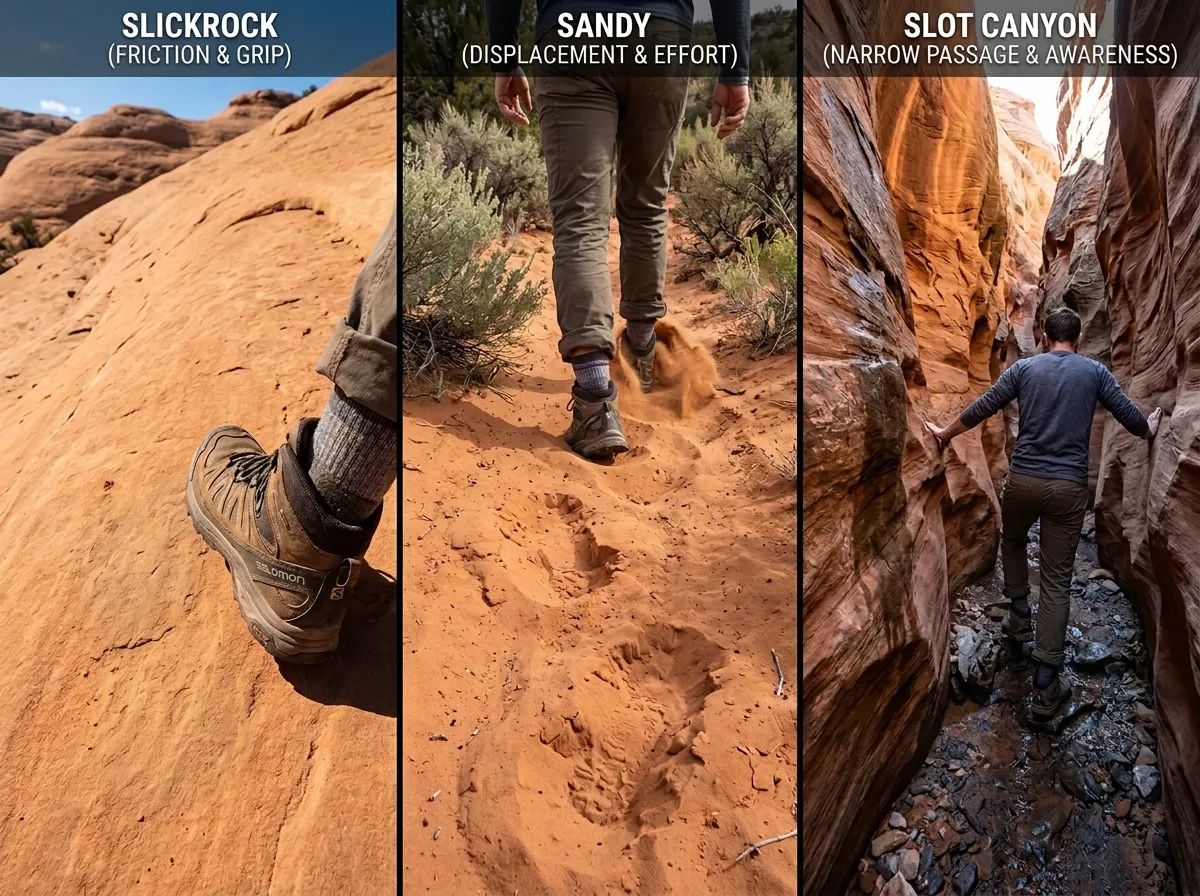
Slickrock Hiking
Slickrock characteristics and technique:
Surface: smooth stone with minimal natural traction
Footwork: requires deliberate, smooth movements
Footwear: shoes with excellent grip and ankle support matter significantly
Heat: stone radiates warmth into feet and legs
Technique: lean forward slightly, use legs not arms for balance
Mindset: trust that the stone has grip despite looking slick
Slickrock hiking feels alien until you adjust. Then it becomes intuitive. The more you fight slickrock, the harder it becomes. The more you trust it, the more manageable it feels.
Sand Terrain
Sand trail characteristics:
Energy demand: higher than rock trails of similar distance
Physical sensation: constant sinking and pushing through soft ground
Fatigue: appears earlier than on rock terrain
Blisters: sand accumulation in boots creates friction and blister risk
Water needs: bring more water than you would for rock trails
Break frequency: take breaks more often
Slot Canyons
Slot canyon requirements and hazards:
Physical demands: scrambling and climbing
Mental demands: comfort with confined space
Flash flood hazard: danger during and after rain
Width variation: passages from wide to very narrow
Route-finding: navigation complexity
Caution: never enter if weather threatens
Exposed Sections
Exposed terrain considerations:
Requirements: comfort with heights and careful footwork
Safety: not dangerous if you pay attention and make conservative decisions
Footwork: requires focus and deliberate movement
Mindset: honesty about your comfort level matters
Technique: slow movement, testing handholds and footholds
Decision-making: turning back if exposure exceeds your comfort
Remember: Terrain type matters as much as distance or elevation. Know what terrain type you're comfortable with before committing to a trail.
Water and Desert Reality on Moab Hiking Trails
Water availability and hydration requirements:
Water on trails: doesn't exist on most Moab hiking trails
Carry requirement: at least 2 to 3 liters per person for half-day hikes
Full-day hikes: add more, especially in summer
Electrolyte replacement: plain water alone doesn't fully address hydration needs
Heat acceleration: builds faster than you expect
Summer strategy: start early, avoid afternoon heat
Seasonal variations: affects water access and temperature
Heat on Moab hiking trails builds faster than you expect. Start early in summer. Afternoon starts lead to hiking in peak heat. Early morning also means better light for photography and fewer crowds.
Flash flood considerations on canyon trails:
Danger timing: during and after rain
Warning signs: distant rainstorms can send water through washes rapidly
Response: if you hear thunder or see clouds building, leave canyon terrain immediately
Seasonal risk: highest during monsoon season (July-September)
Planning: check weather before canyon hikes
Safety: never enter slot canyon if weather threatens
Seasonal preparation differences:
Spring/Fall in Utah: cooler temperatures, occasional rain, good visibility
Summer: intense heat, minimal rain, intense sun exposure, early starts essential
Winter: cold, potential ice on slickrock, unpredictable weather, research conditions first
Think of it this way: Water doesn't exist on Moab hiking trails. You must carry everything. Desert conditions intensify quickly. Preparation that accounts for this prevents miserable experiences.
Preparation for Moab Hiking Trails
Footwear and Equipment
Critical footwear requirements:
Proper hiking boots: essential for foot protection and ankle support
Grip capability: crucial on slickrock and scrambling sections
Sole design: made for rock hiking rather than general athletic use
Break-in: ideally before your trip to prevent day-one blisters
Socks: bring extra pairs
Blister supplies: bring prevention and treatment supplies
Essential Packing List
What to bring on Moab hiking trails:
Water: at least 2-3 liters per person (more for full-day hikes)
Electrolyte replacement: tablets, powder, or sports drink
Snacks: with calories and salt (trail mix, granola, jerky, nuts)
Sunscreen: high SPF, reapply frequently
Hat: wide-brimmed for shade
Sunglasses: UV protection
Long-sleeve shirt: light color, breathable material
Extra socks: bring at least one pair
First aid kit: with blister treatment, pain medication, antibiotic ointment
Navigation: map, GPS unit or smartphone with offline maps
Communication: device if available
Emergency supplies: basic first aid beyond standard kit
Navigation and Safety
Navigation requirements for Moab hiking trails:
Know your route: research before you start
Carry a map: know how to read it
Bring GPS: smartphone with offline maps or dedicated unit
Know bailout points: where you can safely exit if conditions change
Tell someone: where you're hiking and when to expect you back
Bring communication device: if you have one
Compass: useful if comfortable using it
Keep In Mind: Preparation for Moab hiking trails is practical, not paranoid. Proper equipment makes the difference between enjoyable experience and difficult one.
Safety and Trail Ethics on Moab Hiking Trails
Understanding Difficulty Ratings and Your Limits
Difficulty considerations:
Ratings are guidelines: not gospel truth for your capability
Fitness affects difficulty: independent of other factors
Altitude comfort: affects how trails feel
Experience matters: technical trails feel different to experienced hikers
Conservative assessment: choose easier than you think you should
Progression: build experience before advancing difficulty
You will encounter moments where you question whether to continue. Terrain looks harder than expected. You're more tired than anticipated. Weather is changing. These are moments to make conservative decisions. Turning back isn't failure. It's respecting reality.
Leave No Trace and Respect
Trail ethics on Moab hiking trails:
Stay on marked trails: don't create new paths
Don't damage vegetation: it grows slowly in desert
Pack out everything: leave nothing behind
Don't leave trash: take everything you carried in
Respect other hikers: share space generously
Respect the landscape: it's what makes these trails worth visiting
Flash Flood Safety in Canyons
Critical safety rules:
Never enter slot canyon if weather threatens
Watch distant weather: rainstorms miles away create danger
Listen for water sounds: rushing water means flood danger
If water starts flowing: climb immediately to higher ground
If clouds build: leave canyon terrain
If you hear thunder: get out immediately
Plan timing: complete canyons before afternoon storms possible
When to Turn Back
Reasons to turn back immediately:
Weather deteriorates or visibility drops
Wind becomes unsafe for exposed sections
You're genuinely unsure whether you can complete terrain ahead
Physical distress that seems beyond normal exertion
Injury or pain that limits capability
Running out of water or daylight
Any situation where you feel unsafe or unprepared
Remember: Conservative decisions keep you safe and allow you to return another day when conditions are better.
Seasonal Hiking on Moab Hiking Trails
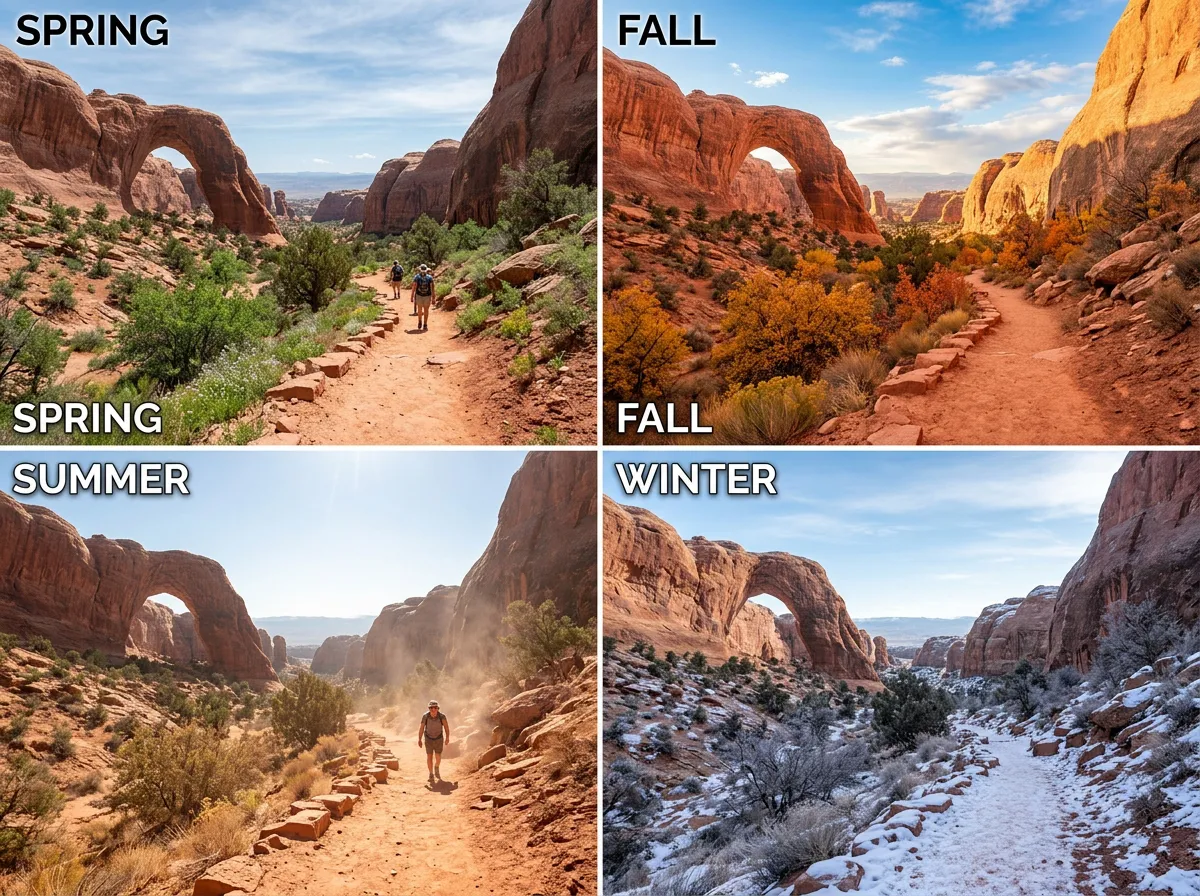
Spring Conditions (March-May)
Spring characteristics:
Temperatures: moderate, ranging 50-75 degrees
Rainfall: occasional, creating water crossings
Trail conditions: generally good
Crowds: increasing as weather improves
Best times: early morning, late afternoon
Challenges: occasional rain, mud in some sections
Advantages: mild temperatures, wildflowers, moderate crowds
Summer Reality (June-August)
Summer characteristics:
Temperatures: intense heat, 95-110+ degrees
Rainfall: minimal, occasional monsoons
Trail conditions: dusty, potentially closed in extreme heat
Crowds: lowest of any season (many avoid summer)
Best times: before sunrise, after sunset
Challenges: extreme heat, dehydration, intense UV
Recommendation: many hikers skip summer entirely
Fall Optimal Season (September-November)
Fall characteristics:
Temperatures: ideal, 60-80 degrees
Rainfall: minimal
Trail conditions: excellent
Crowds: moderate to high (peak hiking season)
Best times: any time works, though early morning still ideal
Challenges: moderate crowds on popular trails
Advantages: ideal conditions overall
Recommendation: preferred season for most hikers
Winter Considerations (December-February)
Winter characteristics:
Temperatures: mild during day (40-60 degrees), cold at night
Rainfall: unpredictable, occasional snow
Trail conditions: slickrock can be icy, some trails become difficult
Crowds: very low
Best times: midday when warmest
Challenges: unpredictable weather, slippery surfaces
Advantages: solitude, less sun exposure
Recommendation: valid but requires more preparation
Think of it this way: Fall is ideal for Moab hiking trails, but every season offers valid experiences if you prepare appropriately.
Combining Jeep Driving and Moab Hiking Trails
How to structure multi-activity days:
Your rental Jeep gets you to trailheads and provides flexibility
Drive to a trailhead, hike for a few hours, drive to another location
This approach maximizes experiences without overcommitting
Energy management matters: physical fatigue accumulates
Hydration needs compound: plan increased water intake
Recovery time between activities: helps prevent burnout
Location efficiency: plan routes minimizing redundant driving
If you're planning to rent a Jeep from Cliffhanger to access Moab hiking trailheads, we can help you figure out which vehicle and which combination of trails and drives matches your skill level and time. Contact us and we'll talk through what fits your plans.
Closing Thoughts on Moab Hiking Trails
Moab hiking trails offer genuine diversity of experience. You can walk for an hour and reach something beautiful. You can spend a full day on technical terrain and feel challenged and accomplished. You can find crowds or solitude. You can visit in any season and have a valid experience.
What makes these trails worth your time:
Demand for honesty about your capability
Reward for proper preparation
Delivery of genuine clarity when you're present
Teaching about your own capability
Beauty that justifies the effort
Connection with landscape through physical engagement
Experiences that stick with you
The key is matching your choice to your reality—your actual fitness level, your honest comfort with exposure and technical terrain, your realistic assessment of how much effort you want to invest. That honesty transforms Moab hiking trails from a checklist of famous destinations into a personal journey through landscape that has something to teach if you're listening.
Bring proper equipment. Start early. Stay hydrated. Make conservative decisions when conditions warrant. Respect the landscape and other hikers. Do these things and your experience with Moab hiking trails becomes something that actually sticks with you instead of something you endure and forget.
If you want to combine hiking with driving some of Moab's legendary trails, Cliffhanger Jeep Rental can set you up with a vehicle that gets you where you need to go. We offer different options for different skill levels and trip styles. Reach out and let's figure out what works for your adventure.