What Nobody Tells You About Chasing a Moab Sunset
Here's what the travel guides conveniently omit about the perfect Moab sunset: the most famous viewpoints fill with tripods an hour before the light gets good and turn the experience into a crowded scramble for position, the best color often happens fifteen minutes after the sun drops below the horizon when most visitors have already packed up and left, and the genuinely spectacular sunset locations sit at the end of dirt roads that the rental SUV in your driveway isn't allowed to drive.
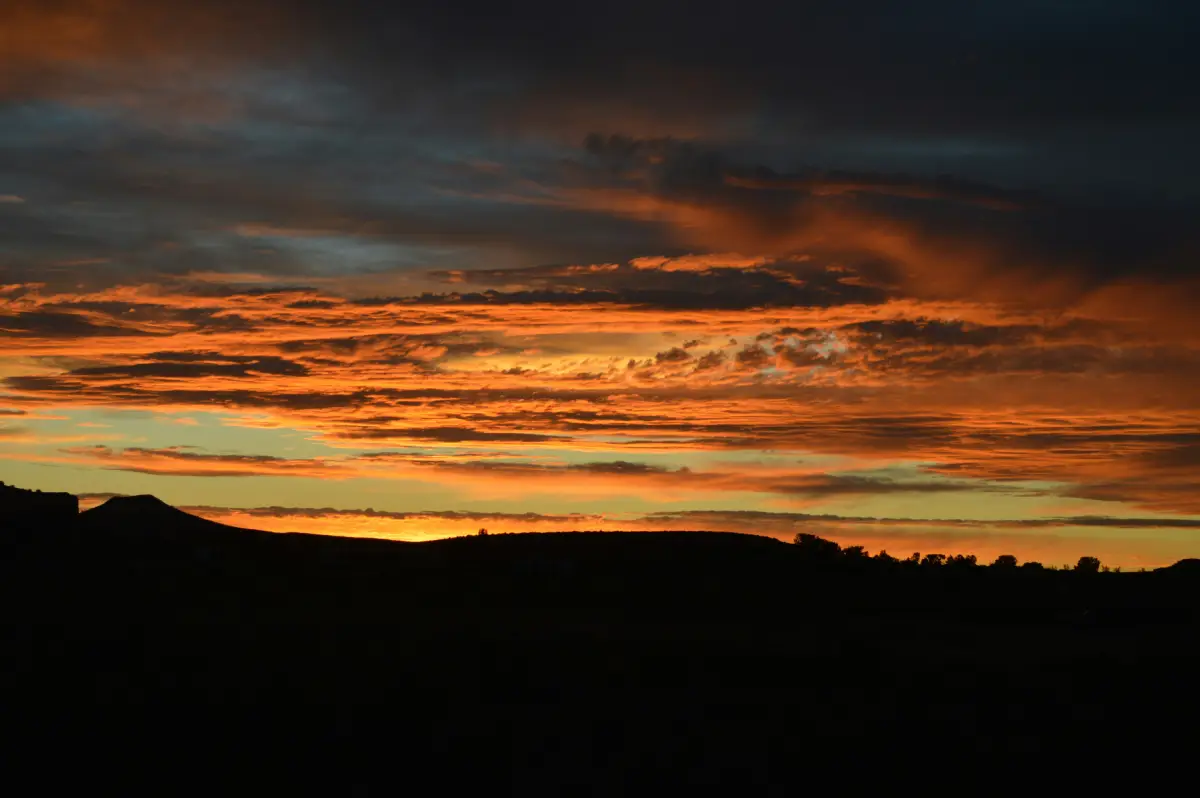
A Moab sunset isn't just a nice end to the day. It's the moment the entire landscape was built for. The red Navajo sandstone that looks dramatic at noon becomes genuinely incandescent in the last hour of light, glowing in shades of orange, crimson, and gold that photographs can barely capture. The La Sal Mountains catch alpenglow while the canyon country below falls into deep blue shadow. For photographers and travelers alike, golden hour in Moab delivers a payoff that justifies planning the entire day around it.
The travelers who get the most out of a Moab sunset are the ones who arrive understanding which viewpoints deliver the best light, when to actually be there, and how to reach the backcountry locations that the crowds never see.
Moab Sunset at a Glance
The basics:
Best season for color: Year-round, with dramatic cloud formations in spring and fall delivering the most spectacular skies
Golden hour timing: The hour before sunset for warm light on the rock; the 15 to 30 minutes after sunset for the deepest sky color
Crowd levels: Famous viewpoints like Delicate Arch and Mesa Arch draw significant crowds; backcountry locations stay empty
Vehicle requirement: Any vehicle reaches the paved overlooks; high-clearance 4WD opens the backcountry sunset locations the crowds never reach
Photography difficulty: Beginner-friendly at the accessible overlooks; the dramatic locations reward planning and the right vehicle
Essential gear: Tripod, layers for the temperature drop, water, and a headlamp for the dark hike back
What golden hour delivers: A Moab sunset transforms the landscape in ways that midday visitors never witness. The low-angle light rakes across the slickrock, deepening every texture and shadow while turning the sandstone from dusty red to glowing fire. The arches, towers, and canyon walls that anchor Moab's daytime photography become genuinely otherworldly in the final light. The phenomenon photographers chase most is the post-sunset glow, when the sky behind the formations lights up in color long after the sun has dropped, often delivering the single best frames of the entire evening to the patient few who waited.
Why Moab light is special: The combination of clear high-desert air, the iron-rich red sandstone, and the dramatic vertical relief of the canyon country creates lighting conditions that few places on earth can match. The same red rock that draws the off-road and mountain biking communities becomes a photographer's dream in the last hour of daylight, when the warm light and the warm-toned rock amplify each other into something genuinely spectacular.
Dead Horse Point: The Sunset Crown Jewel
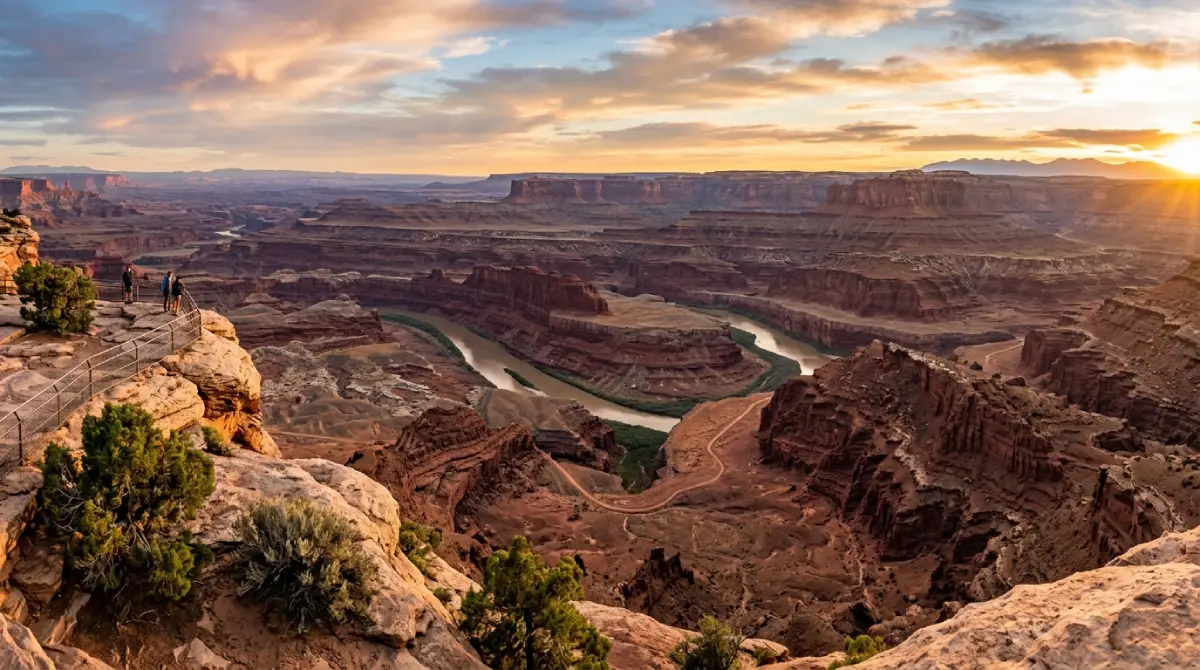
Dead Horse Point State Park consistently ranks as the single best sunset location in the Moab area, and for good reason. The 2,000-foot promontory above a dramatic bend in the Colorado River delivers a westward-facing panorama that catches the full sunset while the canyon system below falls into deepening shadow.
What the viewpoint delivers: The main overlook at Dead Horse Point faces across the canyon system with the Colorado River curving 2,000 feet below and the Island in the Sky district of Canyonlands stretching to the horizon. As the sun drops, the layered sandstone walls light up in sequence while the river catches the last reflections. The scale of the view means the sunset feels genuinely vast, and the park's relative distance from town keeps the crowds smaller than the national park alternatives.
The photography reality: Dead Horse Point rewards photographers who arrive early to claim a position and stay late for the post-sunset color. The overlook accommodates a reasonable number of tripods, but the prime positions fill on busy evenings. The park's elevated perspective means the post-sunset glow lights up the entire canyon system, often delivering better frames after the sun has dropped than during the sunset itself.
Logistics: Dead Horse Point charges a Utah state park entrance fee, and the gate has specific hours, so confirming the closing time before a sunset visit is essential. The drive from Moab takes roughly 35 minutes on paved Utah Highway 313. The park also offers yurt and camping options for visitors wanting to stay for both sunset and the dark-sky stargazing that follows.
Delicate Arch: The Iconic Sunset Pilgrimage
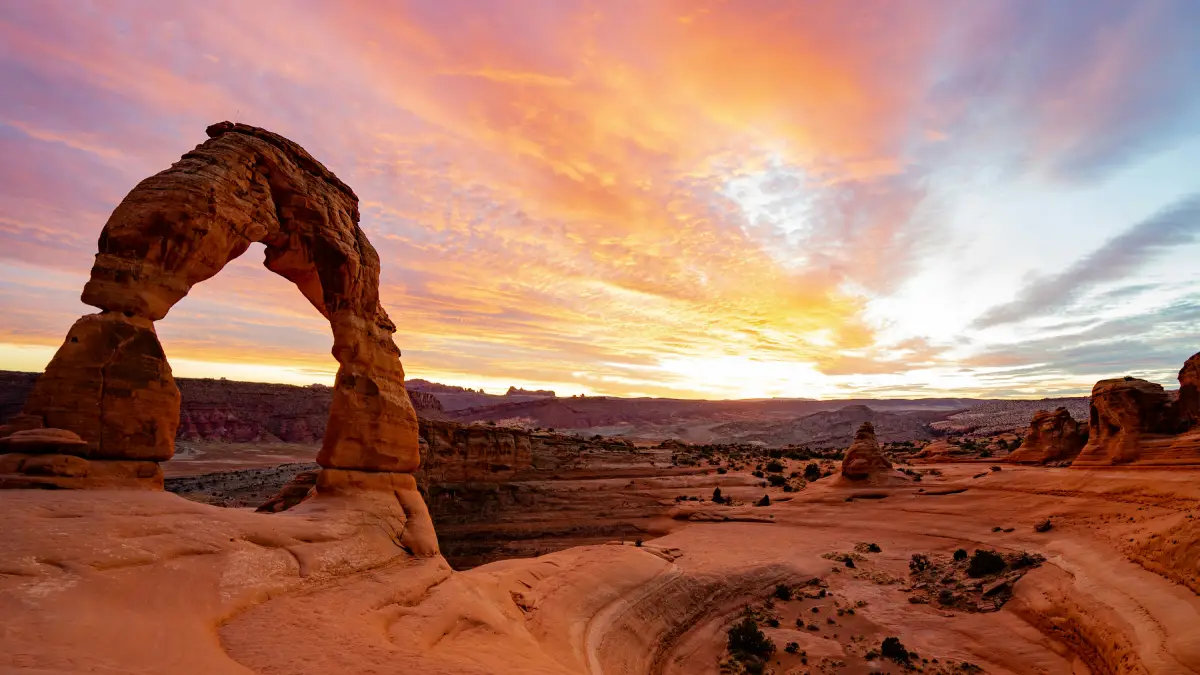
Delicate Arch at sunset is the most famous golden-hour experience in Moab, and the most photographed natural arch on earth becomes genuinely magical when the setting sun lights it from the side. It is also the most crowded, and earning the shot requires both effort and patience.
What the hike delivers: The 3-mile round-trip hike to Delicate Arch climbs steadily across slickrock to the natural amphitheater where the arch stands. Timing the hike to arrive 60 to 90 minutes before sunset gives photographers time to claim a position and watch the light evolve. As the sun drops, the arch glows in deepening orange against the backdrop of the La Sal Mountains, delivering the frame that appears on postcards, license plates, and the bucket lists of photographers worldwide.
The crowd reality: Delicate Arch at sunset draws crowds that can number in the hundreds during peak season. Photographers seeking the classic clean shot of the arch without people standing under it need patience, cooperation from the crowd, and often a willingness to wait for the brief windows when the area clears. The experience is communal rather than solitary, which suits some visitors and frustrates others.
Technical specifics:
The hike to Delicate Arch gains roughly 480 feet over 1.5 miles each way with minimal shade
A headlamp is essential for the hike back, which happens in full darkness after a sunset shoot
Arches National Park requires timed-entry reservations from April through October, though late-afternoon entry sometimes falls outside the reservation window
Water is non-negotiable even for an evening hike; the slickrock holds heat and the climb is more demanding than its distance suggests
Mesa Arch and the Island in the Sky Overlooks
While Mesa Arch is world-famous as a sunrise location, the Island in the Sky district of Canyonlands delivers exceptional sunset viewing from its westward-facing overlooks. The Green River Overlook and Grand View Point both catch the evening light dramatically while staying far less crowded than the sunrise scrum at Mesa Arch.
What the overlooks deliver: Green River Overlook faces west across the canyon system toward the Green River, catching the full sunset with the layered canyon country glowing in the foreground. Grand View Point, at the end of the Island in the Sky scenic drive, delivers a panoramic sunset across the deepest part of the canyon system. Both overlooks are accessible by any vehicle via paved road, making them among the most reachable dramatic sunset locations in the region.
The strategic advantage: The Island in the Sky overlooks deliver national-park-caliber sunset views without the Delicate Arch crowds. Photographers willing to trade the iconic arch frame for a vast canyon panorama often find these overlooks deliver a more peaceful and equally dramatic experience. The district also positions visitors near the Shafer Trail, where the dramatic switchback descent into the canyon offers backcountry sunset opportunities for travelers with capable vehicles.
Logistics: Canyonlands charges a standard entrance fee covered by the America the Beautiful pass. The Island in the Sky scenic drive takes roughly 40 minutes from Moab, and the westward overlooks are well-marked along the route.
The Backcountry Sunset Locations the Crowds Never See
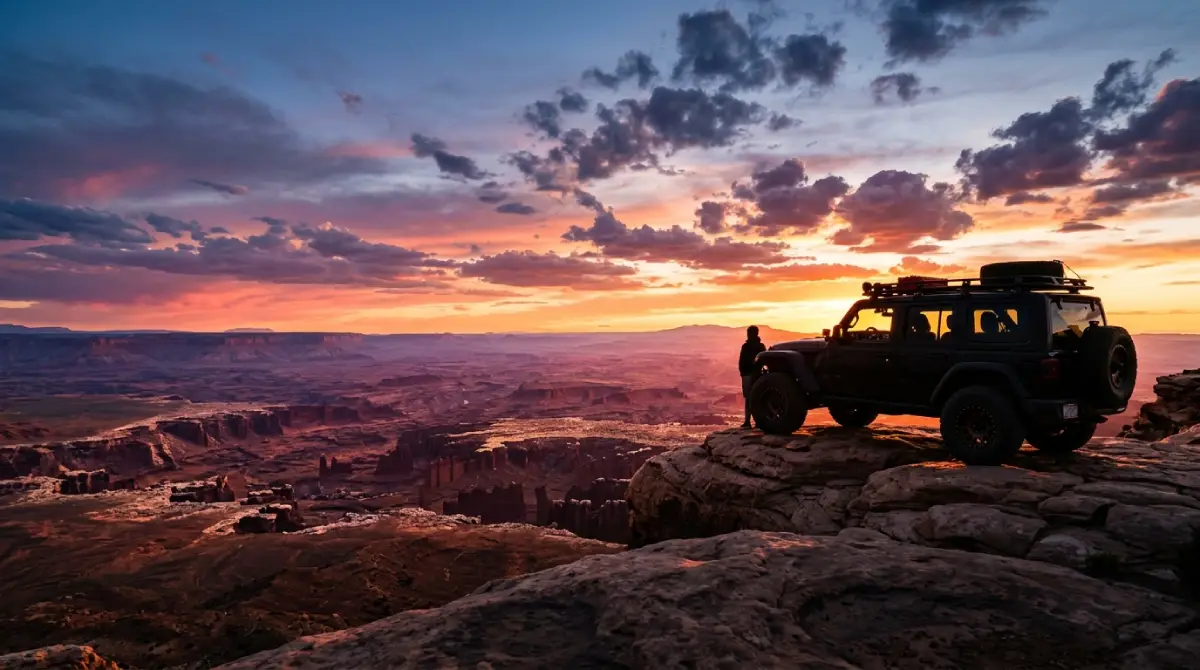
The famous viewpoints deliver spectacular sunsets, but they also deliver crowds. The genuinely solitary golden-hour experiences, the ones where a photographer can set up a tripod with no one else in sight, require leaving the pavement and reaching the backcountry locations that capable vehicles unlock.
The rim overlooks: The Moab Rim Trail climbs to a rim overlook 940 feet above the Colorado River, delivering a westward sunset view across Moab Valley with virtually no crowds. The technical climb means the rim stays empty even as the famous viewpoints fill, and the perspective across the valley and the river corridor at golden hour rewards the effort of the drive. Similarly, the Gold Bar Rim and Top of the World overlooks deliver dramatic sunset positions accessible only by high-clearance 4WD.
The Colorado River corridor: The Upper Colorado River Scenic Byway along Utah Highway 128 and the connected backcountry roads, including the Potash Road corridor, deliver sunset locations along the river where the canyon walls catch the last light and reflect in the water. The Fisher Towers, accessible via a short side road, glow spectacularly at sunset and deliver one of the most photographed compositions in the region for travelers who time it right.
The named trails: Many of Moab's named 4x4 trails, including Hell's Revenge, deliver rim-top and slickrock positions that become spectacular sunset locations for travelers running the trails late in the day. The combination of a technical drive and a golden-hour payoff at a remote overlook delivers an experience the paved-overlook crowds never access.
Technical specifics:
The backcountry sunset locations require high-clearance 4WD; stock rental SUVs prohibit the unpaved access entirely
Driving technical trails near sunset demands extra caution; plan the descent or the drive out with darkness in mind
A headlamp and a fully charged phone are essential for any backcountry sunset trip
Cell service drops on most backcountry roads; let someone know the planned route and return time
Sunset Photography Tips for Moab
The Moab landscape rewards both casual phone photographers and serious shooters, but a few techniques make the difference between a snapshot and a frame worth printing.
Timing the light: The hour before sunset delivers the warm directional light that makes the red rock glow, but the real magic often happens after the sun drops. The post-sunset period, when the sky lights up in color and the rock holds the last reflected warmth, frequently delivers the best frames of the evening. Patient photographers who wait 15 to 30 minutes past the actual sunset are rewarded with color the early-departing crowds miss entirely.
Composition strategy: Moab's dramatic formations work best when composed with foreground interest, whether a slickrock texture, a juniper, or a curve of the river. The vertical relief of the canyon country means that including both the lit rock and the shadowed depths creates the dramatic contrast that defines great Moab images. The arches and towers serve as natural framing elements that anchor a composition.
The practical reality: Sunset photography in Moab means being outside as the temperature drops and the light fades, which has logistical consequences most casual visitors underestimate. The same care that goes into a great frame should go into the practical preparation for getting back safely in the dark.
What to bring:
A tripod for the low-light conditions, especially for the post-sunset color when shutter speeds lengthen
Layers for the significant temperature drop that follows sunset in the high desert
A headlamp or flashlight for the hike or drive back in full darkness
Water, since even an evening outing in the desert dehydrates faster than expected
A weather check before heading out; dramatic clouds make the best sunsets but can also signal incoming storms
Why Cliffhanger for Your Moab Sunset Adventure
The structural reality of chasing a Moab sunset is that the best light and the smallest crowds rarely coincide at the accessible viewpoints. The famous overlooks deliver spectacular sunsets and the crowds to match. The genuinely solitary golden-hour experiences, the rim overlooks and backcountry positions where a photographer can work in peace, require leaving the pavement on terrain that standard rentals prohibit and stock vehicles can't handle.
Cliffhanger's Moab location is the natural starting point for a sunset adventure beyond the crowded overlooks.
What Cliffhanger's Moab Rubicons provide:
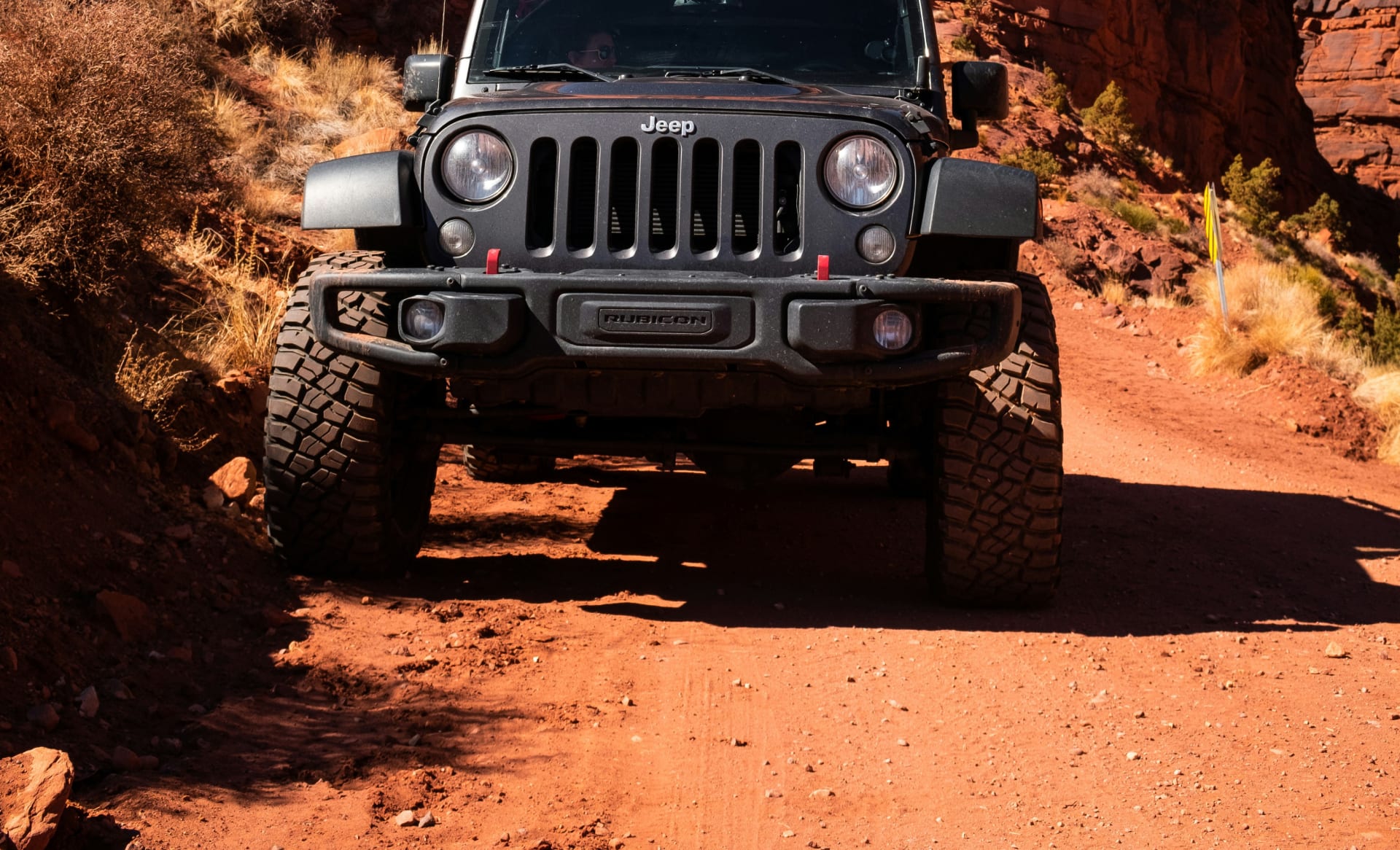
2.5 inch lift with 35 inch aggressive tires: clearance and grip for the backcountry rim overlooks that deliver crowd-free sunset positions
Extreme Rubicons with 3.5 inch lift and 39 inch tires: the configuration for the most technical trails leading to the most remote sunset locations
Full skid plate protection: oil pan, transmission, and transfer case coverage that turns rock contact into a non-event rather than a trip-ending damage moment
4LO low-range capability: the actual low-range gearing that the technical backcountry routes require, especially valuable when driving near or after dark
Trail-permission contracts: explicit authorization for the named Moab trails and backcountry network, with damage and recovery terms structured around real off-road use
Local staff with current conditions: staff who know which rim overlooks deliver the best sunset positions and the current state of the roads to reach them
A Moab sunset is one of the defining experiences the region offers, and the difference between fighting for tripod space at a crowded overlook and standing alone on a rim as the entire valley lights up is measured in vehicle capability. The richest version of golden hour in Moab pairs the accessible iconic viewpoints with the backcountry positions the crowds never reach, and a capable Jeep is what unlocks the second half of that experience. For travelers building a complete trip, the broader Moab attractions network turns a single sunset outing into a full itinerary worth planning around.
Cliffhanger exists to make sure your trip falls in the first category.
Ready to chase the perfect Moab sunset in a vehicle built to reach the views the crowds never see? Contact Cliffhanger Jeep Rentals in Moab and let's put together the configuration that makes your golden hour what it's supposed to be.