What Nobody Tells You About Mountain Biking Moab
Here's what the cycling magazines conveniently omit about mountain biking Moab: the legendary Slickrock Trail that put the town on the international mountain biking map is one of the most physically punishing rides in the country and entirely the wrong introduction for most first-time visitors, the trail network has expanded so dramatically over the past two decades that the famous routes are no longer the best ones, and the question that quietly drives most Moab trip planning is not which trail to ride but whether the day is better spent on two wheels or four.
Mountain biking Moab isn't a single trail or a checklist of famous descents. It's one of the original birthplaces of the sport, a town whose slickrock terrain created an entirely new category of riding when cyclists first started pedaling the Navajo sandstone in the 1980s, and a trail network that now spans everything from beginner-friendly flow trails to expert technical descents that rival anything in North America. The terrain that made Moab a mountain biking destination is the same terrain that made it an off-road Jeep destination, which means the town offers a genuine choice between two ways of experiencing the same legendary landscape.
The riders and travelers who get the most out of mountain biking Moab are the ones who arrive understanding the real trail breakdown, the honest difficulty assessments behind the famous names, and how a day on the bike compares to a day behind the wheel of a capable 4x4.
Mountain Biking Moab at a Glance
The basics:
Total trail network: Hundreds of miles of designated singletrack and slickrock routes across multiple trail systems
Skill range: Genuine beginner flow trails through expert-only technical descents
Season: Year-round riding, with spring and fall as the optimal windows and summer heat as the primary limiter
Famous trails: Slickrock Trail, the Whole Enchilada, Captain Ahab, the Magnificent 7 (Mag 7) network, Klondike Bluffs
Rental and shuttle infrastructure: Multiple bike shops, shuttle services, and guided operations support the riding economy
Best base: Moab proper, with trail access spread in every direction from town
What the network delivers: Mountain biking Moab spans every category of the sport. The slickrock riding the town is famous for delivers a unique surface found almost nowhere else, where tires grip Navajo sandstone with surprising traction on grades that look impossible. The flowing singletrack systems like the Mag 7 and Klondike Bluffs deliver more conventional trail riding with the red rock scenery as backdrop. The big mountain descents, headlined by the Whole Enchilada dropping from the La Sal Mountains to the Colorado River, deliver one of the most celebrated point-to-point rides in the country. The cross-country and bikepacking options extend the network into multi-day backcountry territory for riders wanting depth beyond day rides.
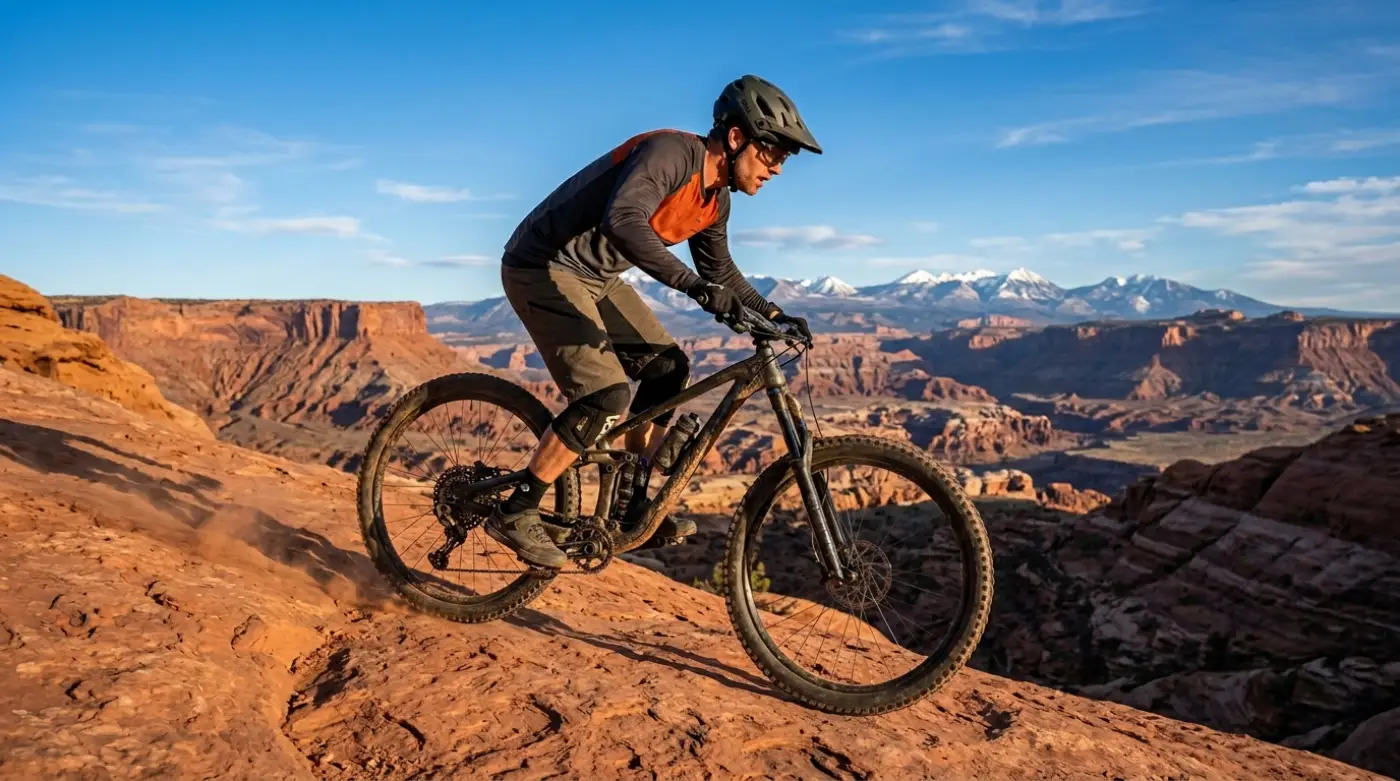
Why the terrain is unique: Moab's defining surface is slickrock, the smooth Navajo and Entrada sandstone that gives the area its otherworldly riding character. The name is historically misleading: the rock provides exceptional grip for modern mountain bike tires when dry, allowing riders to climb and descend grades that would be impossible on any other surface. This same slickrock is what draws the Jeep and off-road community, creating the rare situation where cyclists and 4x4 enthusiasts compete for and share the same legendary terrain.
The Slickrock Trail: Famous, Brutal, and Misunderstood
The Slickrock Trail is the route that made Moab internationally famous for mountain biking, and it remains the single most misunderstood trail in the network. Most first-time visitors assume the famous name means the famous trail is the one to ride. The reality is more complicated.
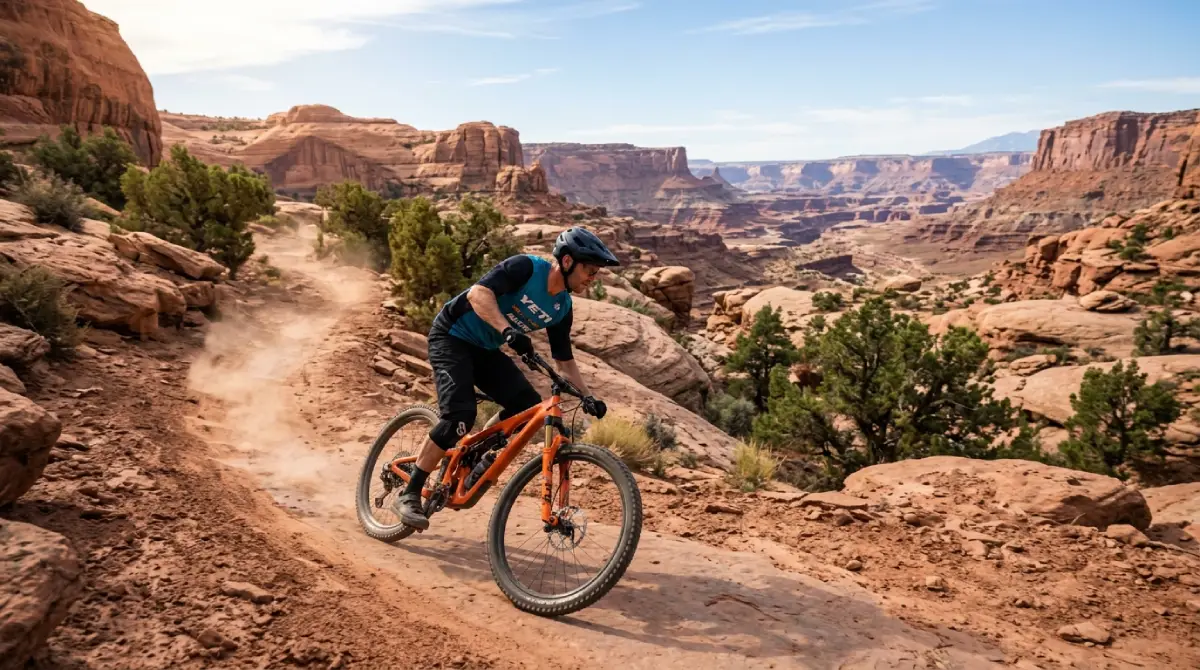
What the trail delivers: The Slickrock Trail is a 10.5-mile loop across exposed Navajo sandstone with relentless steep climbs and descents that follow the natural undulation of the slickrock. There is almost no flat terrain on the entire route. The trail is marked with painted dashes on the rock, and the riding is a continuous series of grunting climbs and steep rollovers that demand both fitness and nerve. The views across the Colorado River canyon and the surrounding desert are spectacular, but they come at a genuine physical cost.
The honest difficulty reality: The Slickrock Trail is not a beginner trail despite its fame. The constant elevation changes, the exposure on certain sections, and the sheer physical demand make it an advanced ride that humbles cyclists who underestimate it based on its iconic status. Many first-time visitors who attempt the full loop end up walking significant sections, running out of water, or both. The 2.3-mile practice loop near the trailhead provides a more reasonable introduction for riders wanting to experience the slickrock surface without committing to the full punishing circuit.
Technical specifics:
The Slickrock Trail demands genuine fitness and intermediate-to-advanced bike handling; it is not an appropriate first Moab ride for most visitors
The exposed slickrock provides excellent traction when dry but becomes dangerous when wet
Heat is a serious factor; the trail offers zero shade and summer attempts before dawn or after sunset are the only reasonable options
Minimum two to three liters of water per rider; the physical demand and sun exposure dehydrate riders faster than they anticipate
The Whole Enchilada: Moab's Signature Big Mountain Descent
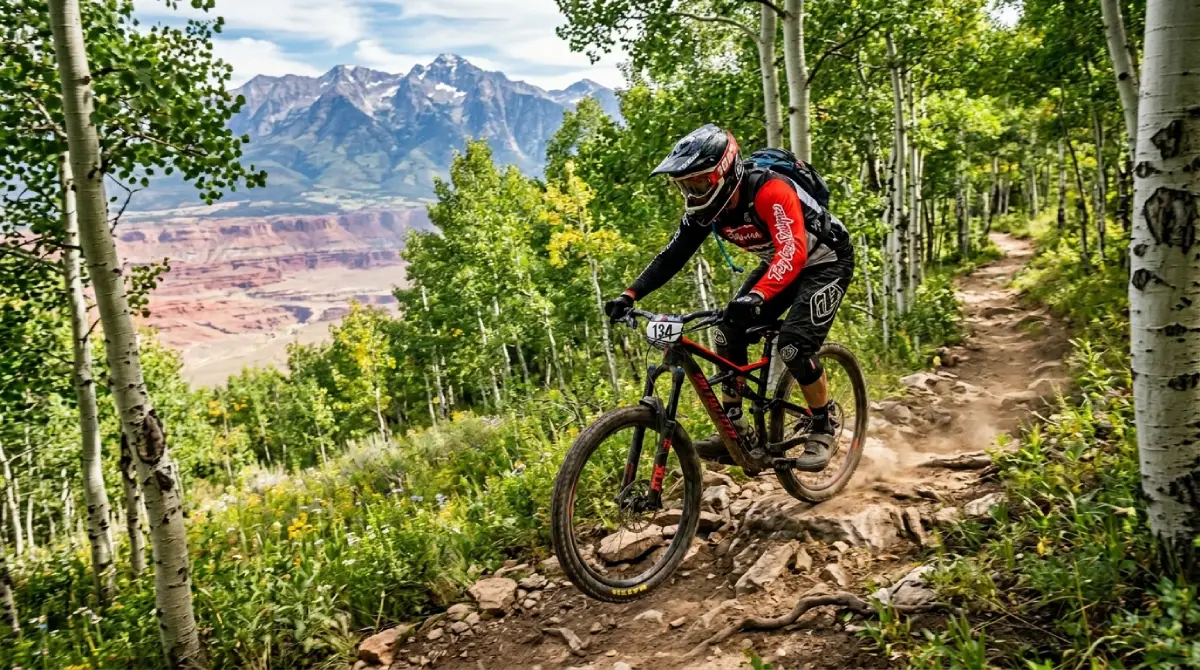
If the Slickrock Trail is Moab's most famous ride, the Whole Enchilada is its most coveted. This point-to-point descent drops roughly 7,000 vertical feet from the alpine terrain of the La Sal Mountains down through multiple ecosystems to the Colorado River, linking a series of trails into one of the most celebrated rides in North America.
What the route delivers: The Whole Enchilada begins in the high country above 11,000 feet, where the riding starts in alpine meadows and aspen forest before descending through pine forest, then into the high desert, and finally onto the technical slickrock and singletrack above the Colorado River. The full route links Burro Pass, Hazard County, Kokopelli, UPS, LPS, and Porcupine Rim into a single epic descent. The ecosystem transitions alone make the ride remarkable; the technical riding on the lower sections makes it legendary.
The logistics reality: The Whole Enchilada requires a shuttle. The route is point-to-point with a massive net elevation loss, and no rider pedals back up to the start. Multiple shuttle operators in Moab support the ride, running cyclists and bikes to the upper trailheads. The upper sections are seasonal, typically opening in summer once the high-country snow clears, while the lower Porcupine Rim section rides year-round.
The difficulty reality: The Whole Enchilada is an advanced ride, particularly the technical Porcupine Rim descent that finishes the route with exposed ledges and committed riding above the Colorado River. Riders attempting the full route should have genuine technical descending skills and the fitness to handle a long day in the saddle across changing terrain.
The Modern Trail Systems: Where Most Riders Should Actually Go
The famous trails get the magazine coverage, but the trail systems built over the past two decades are where most riders find the best Moab experience. These purpose-built networks deliver flowing, well-designed riding for a range of skill levels that the older famous trails don't accommodate as well.
The Mag 7 network: The Magnificent 7 trails north of Moab deliver a connected system of singletrack ranging from intermediate flow to more technical sections, with the option to link multiple trails into a long point-to-point ride finishing on Gold Bar Rim and Portal above the Colorado River. The Mag 7 system also intersects with the Gemini Bridges road network, where mountain bikers and Jeep traffic share the corridor and shared-use courtesy becomes essential.
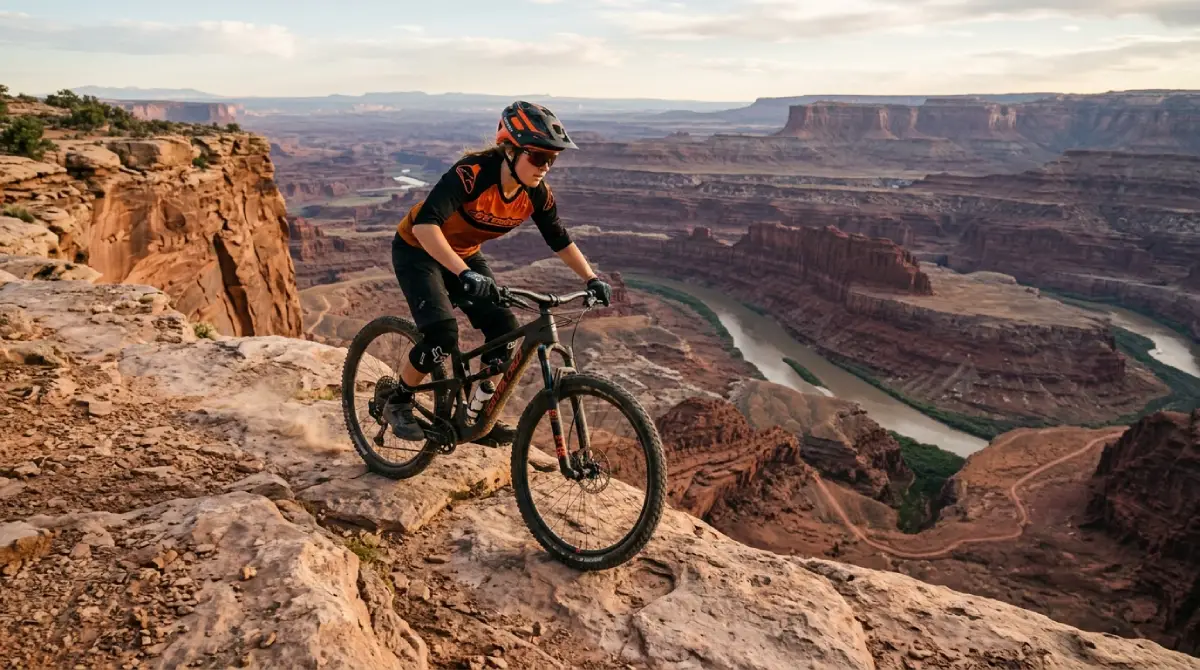
Klondike Bluffs: The Klondike Bluffs trail system delivers some of the most beginner-friendly and intermediate riding in the Moab area, with flowing slickrock and dirt singletrack that introduces newer riders to the Moab surface without the punishing demands of the famous trails. The system also features dinosaur tracks visible from the trails, adding a distinctive geological and paleontological layer to the riding.
Captain Ahab and the Amasa Back area: For expert riders seeking technical challenge, Captain Ahab on the Amasa Back mesa delivers one of the most respected technical descents in Moab, with committed rock features and exposure that reward advanced skills. The Amasa Back area shares terrain with the Poison Spider Mesa Jeep trail, another example of the bike and 4x4 communities operating in the same legendary terrain.
Technical specifics:
The modern trail systems offer better-matched difficulty progression than the famous older trails
Klondike Bluffs and the Bar M area are the best starting points for beginner and intermediate riders
Captain Ahab, the Whole Enchilada, and the Slickrock Trail are advanced-level commitments
Trail conditions vary with weather; the dirt singletrack sections become problematic when wet, unlike the more weather-resistant slickrock
Bike vs Jeep: How the Two Adventures Actually Compare
The question quietly shaping most Moab trip planning is whether the day is better spent mountain biking or driving a capable 4x4. Both access the same legendary terrain, both deliver genuine adventure, and the honest answer depends on the traveler, the group, and the goals.
What mountain biking delivers: Mountain biking Moab delivers physical engagement, the intimacy of moving through the terrain under your own power, and access to singletrack that vehicles can't reach. The sport rewards fitness, technical skill, and the willingness to suffer for the views. For riders with the conditioning and the bike-handling ability, nothing matches the experience of descending Porcupine Rim or grinding across the Slickrock Trail.
What a Jeep adventure delivers: A capable 4x4 delivers access to terrain across a much larger range without the fitness requirement, the ability to bring the whole group regardless of cycling ability, climate-controlled comfort between obstacles, and the capacity to cover dramatically more ground in a single day. The named Jeep trails like Hell's Revenge and the Moab Rim Trail deliver technical challenge and rim-top views comparable to the best rides, accessible to drivers who could never complete the equivalent ride on a bike.
The honest comparison: The two adventures are not actually competitors so much as complements. Many Moab visitors do both across a multi-day trip: a hard ride one day, a Jeep day the next, with the vehicle day functioning as active recovery from the physical demands of the saddle. Groups with mixed fitness and ability levels often find the Jeep option more inclusive, since a single capable vehicle brings everyone to the same overlooks regardless of cycling experience. The fuller picture of what the region offers comes through in the broader Moab attractions network, where biking and 4x4 adventures sit alongside river trips, hiking, and the national parks.
The group dynamics reality: The single most common scenario where the Jeep wins is the mixed group. A family, a corporate retreat, or a friend group with varied fitness levels can all experience the same legendary terrain together in a capable vehicle, while a mountain biking day inevitably splits the group by ability. For travelers prioritizing shared experience over individual physical challenge, the 4x4 day delivers the more inclusive adventure.
When to Ride and When to Drive: Planning Your Moab Trip
The seasonal reality: Mountain biking and Jeep adventures share the same optimal seasons in Moab. Spring (March through May) and fall (September through October) deliver the ideal temperatures for both. Summer heat regularly exceeds 100 degrees, making midday riding genuinely dangerous and pushing serious cyclists to dawn starts, while a climate-controlled 4x4 handles the heat far more comfortably. Winter offers solitude and rideable conditions on the slickrock, with the dirt singletrack more weather-dependent.
The fitness honesty: The most important planning question for mountain biking Moab is an honest fitness assessment. The famous trails demand genuine conditioning, and the consequences of overestimating ability range from a miserable day to a heat-related medical emergency. Riders should match trail choice to actual fitness rather than aspiration, starting with the modern beginner and intermediate systems before committing to the famous punishing routes. Travelers uncertain about the fitness demand often find the Jeep option removes the variable entirely.
The multi-day approach: The richest Moab trips combine both adventures across multiple days. A representative itinerary might pair a Klondike Bluffs or Mag 7 ride with a Jeep day on Hell's Revenge or the Moab Rim, with a river trip or a national park visit rounding out the experience. The combination delivers the full range of what makes Moab a singular destination.
What to bring:
Minimum two to three liters of water per person for any ride; Moab's heat and exposure dehydrate riders faster than almost any other destination
Sun protection across the board; the slickrock and singletrack offer minimal shade
A properly maintained bike with appropriate tires for slickrock, or a capable rental from a Moab bike shop
Layered clothing for the temperature swings, particularly on the Whole Enchilada's ecosystem transitions
A weather check before any ride or drive; wet conditions transform both the dirt singletrack and the technical Jeep trails
Honest assessment of fitness and skill before committing to the famous advanced routes
Why Cliffhanger for Your Moab Adventure
The structural reality of mountain biking Moab is that not every traveler, and not every group, is built for the physical demands the famous trails require. The Slickrock Trail humbles fit cyclists. The Whole Enchilada demands genuine technical descending ability. Mixed groups with varied fitness levels inevitably fragment on any serious ride. For travelers who want to experience the same legendary terrain without the fitness barrier, or who want a recovery day between rides, a capable 4x4 delivers the answer.
Cliffhanger's Moab location is the natural starting point for the Jeep side of a Moab adventure.
What Cliffhanger's Moab Rubicons provide:
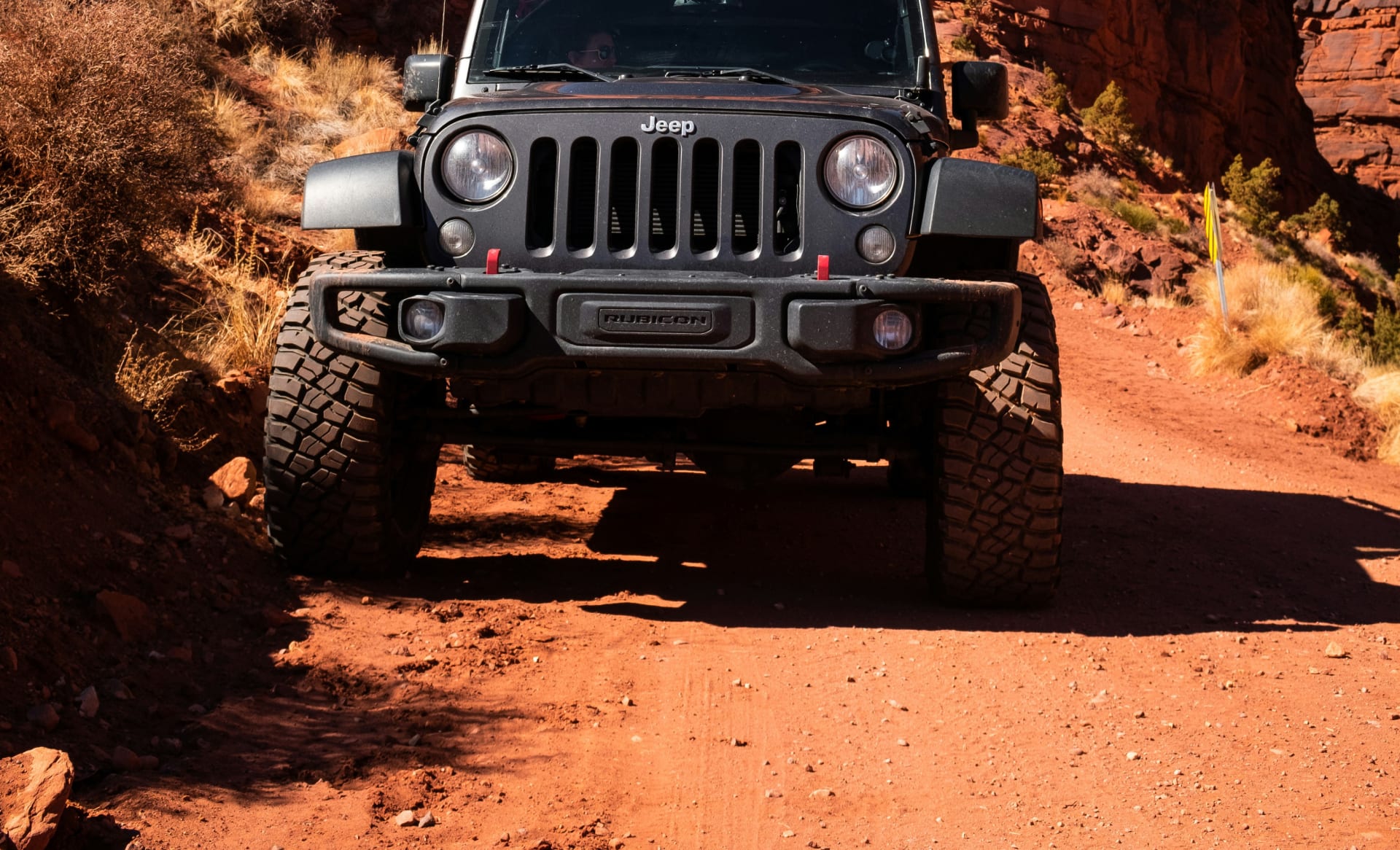
2.5 inch lift with 35 inch aggressive tires: clearance and grip for the slickrock trails and named routes that deliver rim-top views comparable to the best rides
Extreme Rubicons with 3.5 inch lift and 39 inch tires: the configuration for the most technical Jeep trails for travelers wanting maximum capability
Full skid plate protection: oil pan, transmission, and transfer case coverage that turns rock contact into a non-event rather than a trip-ending damage moment
4LO low-range capability: the actual low-range gearing that the technical Jeep trails require, not the AWD AUTO modes that fail on real terrain
Trail-permission contracts: explicit authorization for the named Moab trails and the broader BLM network, with damage and recovery terms structured around real off-road use
Group capacity: room to bring the whole group to the same overlooks regardless of individual fitness or cycling ability
Mountain biking Moab is one of the defining experiences in the sport, and the terrain that made it famous is the same terrain that built Moab's off-road Jeep economy. The richest trips draw from both, pairing hard days in the saddle with capable Jeep adventures that deliver the same legendary scenery without the fitness barrier. For travelers building a complete Moab itinerary, the choice between two wheels and four isn't really a choice at all; it's the foundation of a trip that uses every day to its fullest.
Cliffhanger exists to make sure your trip falls in the first category.
Ready to add a capable Jeep adventure to your Moab biking trip? Contact Cliffhanger Jeep Rentals in Moab and let's put together the configuration that makes your trip what it's supposed to be.