White Rim Trail: Epic Multi-Day Jeep Adventure in Canyonlands
The White Rim Trail Isn't Like Anything Else
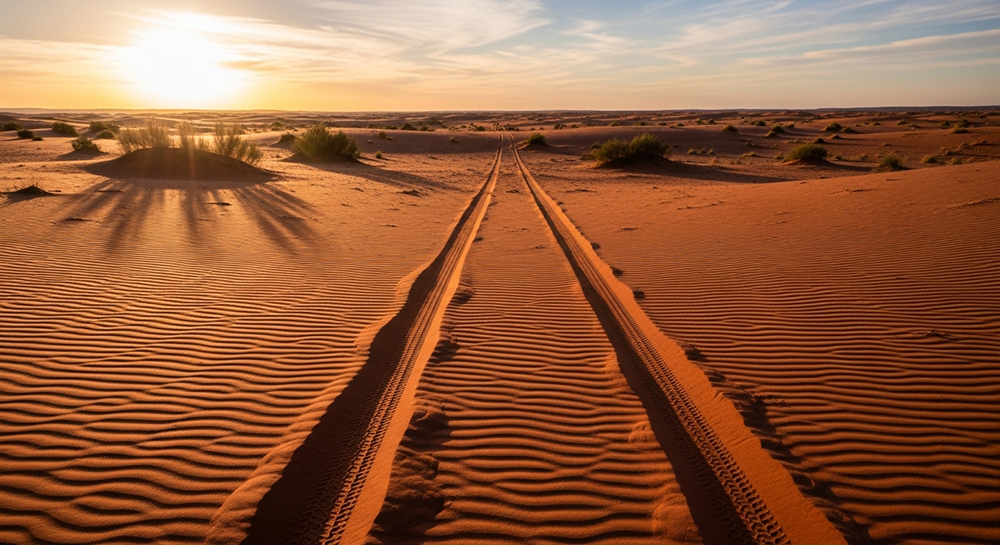
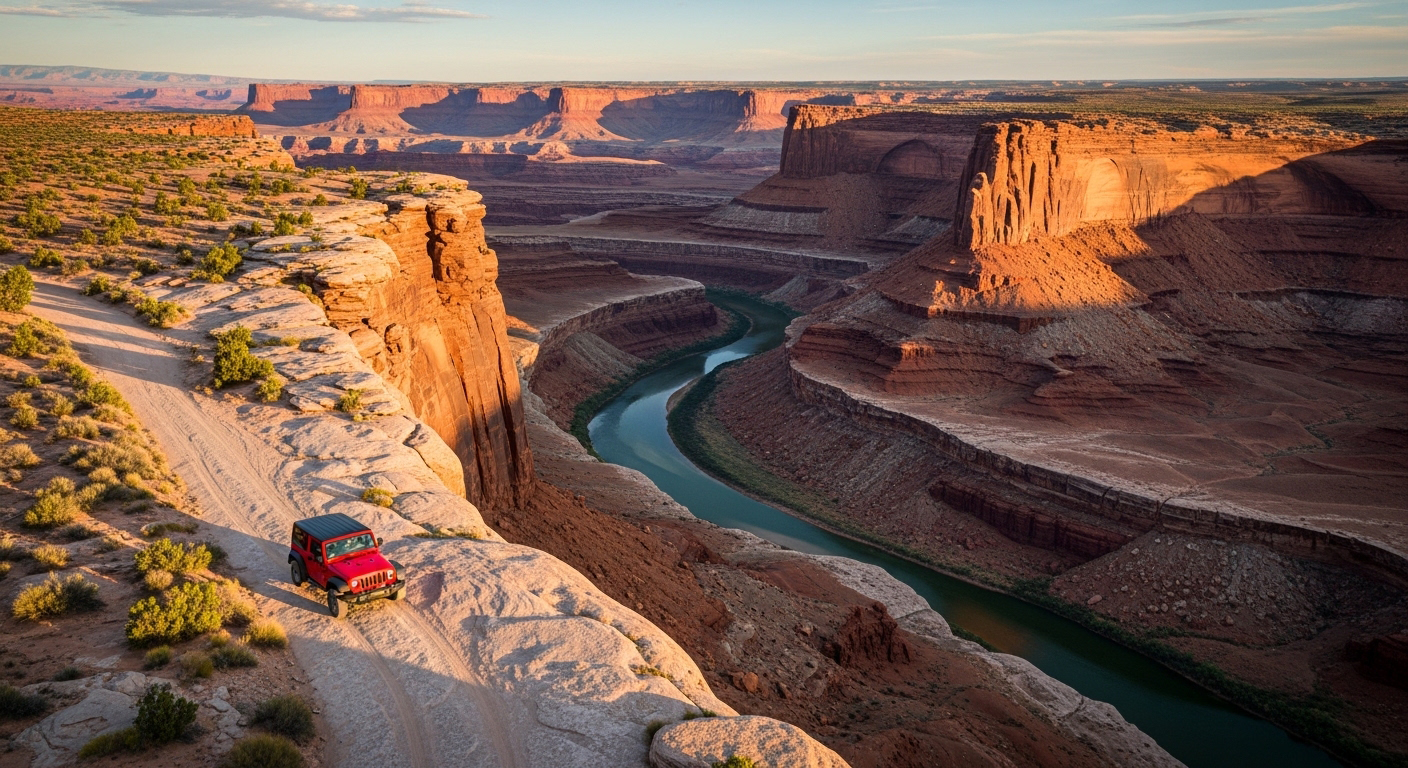
There's a stretch of southern Utah where the land drops away in layers — sandstone shelves stacked on canyon floors, red walls rising a thousand feet, the Colorado River threading somewhere far below. The White Rim Trail runs through all of it. A hundred miles of dirt road looping beneath the Island in the Sky mesa in Canyonlands National Park, it's one of the most raw, remote, and genuinely humbling off-road routes on the continent. Not because it's the hardest trail out there, but because of what it asks of you: a few days, a capable rig, and your full attention.
This Is a Trip That Pays You Back
Some adventures are fun in the moment. The White Rim Trail is the kind that stays with you. The scale of the place doesn't fully register until you're out in the middle of it — camped under a sky with no light pollution, surrounded by geology that makes human timelines feel quaint, watching the canyon walls shift color as the sun moves. People who do this trip tend to talk about it for years. That's not an accident. It's what happens when a place is big enough and quiet enough to actually get through to you — but only if you show up ready for it.
What Is the White Rim Trail?
The White Rim Trail is a 100-mile dirt and slickrock road that loops around the Island in the Sky mesa in Canyonlands National Park, southeastern Utah. It sits on a broad sandstone bench — the "white rim" itself — perched roughly 1,200 feet below the mesa top and several hundred feet above the canyon floors and river corridors below. The trail is managed by the National Park Service and requires a permit for overnight use.
Location: Canyonlands National Park, Island in the Sky district, near Moab, Utah
Total distance: Approximately 100 miles (with access roads adding mileage)
Elevation: Roughly 4,000–5,200 feet throughout the route
Road surface: Dirt, sand, and exposed slickrock — no pavement once you drop in
Access points: Mineral Bottom Road (northwest) and Shafer Trail Road (east)
Why Is It Called the White Rim?
The trail follows a natural sandstone ledge formed by the White Rim Sandstone formation — a pale, cream-colored layer of ancient desert rock deposited roughly 250 million years ago. From the mesa above or the river corridors below, this light-colored band is visible for miles, wrapping around the canyon walls like a geographic fibonacci extension drawn by the landscape itself. That ledge is your road.
The Numbers
The White Rim Trail covers serious ground, and the stats put it in perspective.
Did You Know? The White Rim Sandstone was formed from ancient sand dunes — what you're driving on was once an inland desert, long before canyons existed here.
Did You Know? The trail sits in a layer cake of geology. Below you is the Organ Rock Formation. Below that, the Cedar Mesa Sandstone. Each layer represents a completely different world, millions of years apart.
Did You Know? On a clear day from certain points on the trail, you can see more than 100 miles in multiple directions — and encounter almost no one.
What You're Actually Driving Through
This isn't a trail that stays in one kind of terrain. The White Rim moves through distinct zones as you go, and that variety is a big part of what makes it worth multiple days.
Mesa-top access roads — where the pavement ends and the descent begins, with views that set the stage immediately
The white rim bench — the main shelf road, wide open, with canyon walls above and river corridors below
Canyon floor sections — tighter, rockier, where the walls close in and the scale becomes personal
River corridors — stretches near the Green and Colorado Rivers where cottonwoods grow and the desert softens slightly
Technical obstacles — specific hills and ledges (more on those later) that separate this trail from a gravel road
The White Rim Trail isn't just a route — it's a cross-section of one of the most geologically complex landscapes in North America, driven at whatever pace you're willing to give it.
Why Do This White Rim Trail Trip?
There are a lot of off-road adventures out there. Day trips, weekend loops, fire roads dressed up as trails — most of them are fine. Some are genuinely fun. But the White Rim sits in a different category, and it's not just about difficulty. It's about what the experience actually delivers when you're out there with no cell service, no crowds, and a hundred miles of canyon country ahead of you.
The trail is long enough that you can't rush it without missing the whole point
The scenery changes constantly — you're not grinding through the same landscape for three days
The remoteness is real, not manufactured — you earn the solitude by committing to the trip
The light on red rock at sunrise and sunset does things that photographs don't fully capture
It's one of the few routes where the journey genuinely outweighs any single destination on it
What Makes It Feel Different
A lot of trails offer a taste of the backcountry. The White Rim offers the whole thing. You're not dipping in and out — you're living in the landscape for several days, which changes your relationship to it in ways that are hard to explain until you've done it.
Day trips give you a snapshot; multi-day routes give you the full story
Sleeping in the canyon, away from trailheads and parking lots, resets your sense of scale
The physical commitment of the drive — the technical sections, the long flat stretches, the slow climbs — makes arrival at each campsite feel earned
Wildlife shows up differently when you're not rushing — bighorn sheep, ravens, the occasional fox at dusk
The silence out there is the kind that actually registers, not just an absence of noise but a presence of something quieter
Is This Trip for You?
IF you're an experienced off-roader looking for a multi-day adventure with serious scenery and real remoteness — then yes, this trip was basically built for you. Plan it, book the permit, go.
IF you've done a handful of moderate 4WD trails and want to level up — the White Rim is a reasonable next step, especially with a well-equipped rental rig and some research done in advance. It's not a trap. It rewards preparation more than raw experience.
IF you've never driven off-pavement before — this probably isn't your first trail. Get a few day trips under your belt first, get comfortable with tire pressure and reading terrain, then come back to this one.
IF you're someone who wants a comfortable road trip with some mild scenery — the paved overlooks in Canyonlands are genuinely stunning and worth your time. The White Rim will still be here when you're ready for more.
The White Rim Trail doesn't care how many Instagram followers you have or how new your gear is. It cares whether you showed up paying attention. Do that, and it'll give you something back worth keeping.
Planning the White Rim Trail Trip: The Basics
Getting out on the White Rim Trail takes more advance planning than most off-road adventures — and that's actually a feature, not a bug. The permit system exists because this place is worth protecting, and the limited access means you'll share the trail with far fewer people than you'd find at most comparable destinations. The planning process isn't complicated, but skipping steps has consequences. Here's what you need to know before you start clicking around on recreation.gov.
✅ DO
Book permits as early as the system allows
Check NPS.gov for the most current permit rules
Have backup dates in mind when you apply
Read the specific rules for your campsites
Confirm vehicle and group details before submitting
❌ DON'T
Wait until a few weeks out and expect availability
Rely solely on trip reports from a few years ago
Lock yourself into one window with no flexibility
Assume all sites have the same restrictions
Make changes last minute — amendments can get complicated
The Permit System
Overnight permits for the White Rim Trail are managed through the National Park Service via recreation.gov. Each permit covers a specific itinerary — your entry date, your campsites, and your exit — so this isn't a loose, figure-it-out-as-you-go situation. You're committing to a route and a timeline when you book. Permits are required for all overnight trips, and the number of groups allowed on the trail at any one time is deliberately limited to keep the experience what it is.
How Far in Advance to Book
The reservation window opens four months before your intended trip date, and popular dates — particularly spring weekends — fill up fast.
The four-month window opens at a specific time on recreation.gov; being ready at that moment matters for competitive dates
Weekday permits are generally easier to secure than weekend slots
Last-minute cancellations do happen, so checking back closer to your dates isn't a wasted effort
Shoulder season dates (early March, late October) tend to have more availability than peak spring windows
Quick Tip: Set a calendar reminder for exactly four months before your target date. Log into recreation.gov early that morning. Treat it like buying concert tickets for a show that only happens a few times a year.
Quick Tip: Have two or three itinerary options ready before you start the booking process — flexibility in dates and campsite order dramatically increases your chances of landing a permit.
Quick Tip: Group size is capped at 15 people and 3 vehicles per permit. Plan your crew accordingly before you start booking.
Best Seasons: Spring and Fall
Spring (March through May) and fall (September through November) are when the White Rim Trail runs at its best. Temperatures are manageable, the light is spectacular, and the desert is doing what it does well — looking like a place that took a very long time to become what it is.
Spring: Wildflowers are possible after wet winters; temperatures range from cool mornings to warm afternoons; the most popular window overall
Fall: Arguably the most underrated season — crowds thin out, temperatures stabilize, and the angle of light shifts in ways that make the canyon walls look almost warm
Pro Tip: If you're choosing between spring and fall and flexibility isn't a concern, lean toward mid-October. The permit competition is lower, the temperatures are excellent, and the trail sees noticeably less traffic.
Pro Tip: Whatever season you choose, build your daily schedule around early starts. The best light is in the first two hours after sunrise, and getting miles done before afternoon makes for a more relaxed camp setup.
Pro Tip: Check recent trail condition reports on the NPS website and in Canyonlands-focused Facebook groups before your trip. Conditions after heavy rain or a wet winter can change what's passable — and there's no ranger station once you drop in.
Notes on Summer and Winter
Summer and winter aren't impossible on the White Rim, but they come with real tradeoffs worth knowing about before you commit.
Summer temperatures in the canyon regularly exceed 100°F, and there is no shade to speak of on most of the route. Heat at that level isn't just uncomfortable — it affects your vehicle, your water needs, and your decision-making in ways that compound over multiple days. People do summer trips successfully, but they require very early starts, significant extra water, and a sober respect for what heat does to both humans and machines. Winter brings its own set of complications: the trail can become impassable after snow or rain, access roads ice over, and conditions can change without warning. The NPS sometimes closes sections of the trail in winter, and there's no guarantee the route will be in the same shape it was when you planned the trip.
The Bottom Line: The White Rim Trail is a year-round route in theory, but a spring or fall trip is the version of this adventure that most people are actually picturing when they decide they want to do it. Plan for those windows first, and work backward from there.
How Long Does the White Rim Trail Take?
The trail is roughly 100 miles. In a capable 4WD vehicle on a good day, you could theoretically cover that in one very long push. But "theoretically" is doing a lot of work in that sentence, and the people who've done this trip more than once will tell you the same thing: the miles aren't the point. Here's how the timing actually breaks down.
2-day trip: Possible, but you'll be driving most of both days with minimal time to stop, explore, or breathe
3-day trip: The most common itinerary — a solid balance of daily mileage and actual time in the landscape
4-day trip: The version most veterans recommend — unhurried, with room for short hikes, long camp mornings, and the kind of quiet that takes a day or two to settle into
5+ days: Less common but entirely valid if you want to treat it as a slow wander rather than a route to complete
What Rushing It Costs You
A 2-day White Rim Trail trip technically checks the box. You went, you drove it, you came back. But the thing about this place is that it doesn't reveal itself to people in a hurry. The canyon light shifts over hours, not minutes. The interesting side wanders — a short walk down to the river, an afternoon watching shadows move across the mesa — don't fit into a schedule built around covering ground. When you rush a trip like this, you trade the actual experience for the story of having done it, and those aren't the same thing. The people who come back wishing they'd had more time almost always spent too many hours behind the wheel and not enough sitting still somewhere spectacular.
Why Veterans Say Take Your Time
Ask anyone who has run the White Rim Trail two or three times what they'd do differently on their first trip, and the answer is almost always some version of "slow down." Not because the driving isn't great — it is — but because the driving is only part of what this route offers. The camps at sunrise. The afternoon light on the canyon walls. The moment on day two or three when the outside world starts to feel genuinely far away and the place starts to feel genuinely real. That process takes time. You can't fast-forward it. A four-day itinerary gives the trip room to become what it actually is, rather than just a long drive through impressive scenery. The extra day pays for itself before you're even halfway through it.
Keep In Mind: Permit itineraries are set in advance, so your timeline is locked when you book. Decide how many days you want before you sit down at recreation.gov — changing it later is possible but not always easy, and the campsite availability that fits a 4-day trip looks different from what's open for a 2-day run.

Campsites Along the White Rim Trail
The White Rim Trail has a network of designated primitive campsites spread across the route, each assigned during the permit booking process. You're not free-camping wherever the mood strikes — the NPS assigns specific sites to specific groups on specific nights, which is part of how they keep the impact manageable in a place this fragile. There are roughly 20 designated campsites along the route, most accommodating up to 15 people and 3 vehicles, positioned to give you a night's rest between reasonable daily mileage chunks.
Sites are spread across the full loop, generally spaced 20–35 miles apart
Each site is designated by name and assigned at the time of permit booking
Most sites can accommodate up to 15 people and 3 vehicles
Campsites are first-come, first-served within your permit assignment — you can't swap sites on the fly without an amended permit
Some sites sit near canyon edges with open views; others are tucked into washes with more shelter from wind
What to Expect Out There
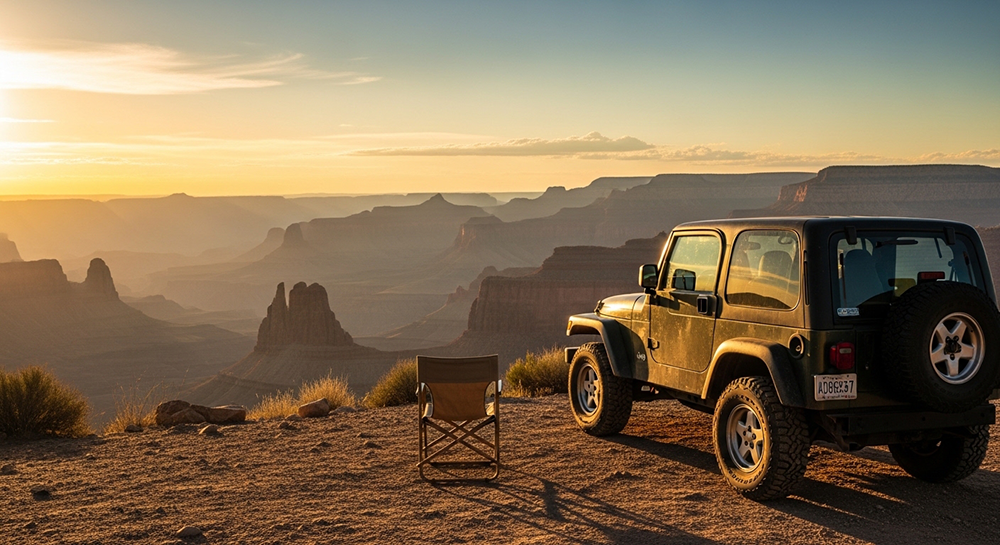
Primitive is the operative word. These aren't campgrounds in any developed sense — no picnic tables bolted to concrete pads, no bear boxes, no camp hosts, no anything provided for you. What you get is a flat(ish) spot in the desert, a designated area for your vehicles, and a vault toilet at most sites. That's it. The experience of camping on the White Rim Trail is genuinely backcountry: you carry everything in, you carry everything out, and the nearest help is however many miles back to the access road. For people who've done a lot of front-country camping, the adjustment is real. For people who've done backcountry trips before, it'll feel familiar — just with a Jeep instead of a pack.
What Not to Expect
This is where some people get caught off guard, so it's worth being direct about it. There is no water available anywhere on the route. None. Every drop you'll drink, cook with, or use for any purpose has to come in with you — the general recommendation is a minimum of one gallon per person per day, and more in warm weather. There are no hookups of any kind, no shower facilities, no camp stores, and no cell service on the vast majority of the route. There are also no bail-out options once you're in. If something goes wrong — mechanical issue, medical situation, change of plans — you're dealing with it from wherever you are on a 100-mile dirt loop in a national park. That's not meant to be alarming, just honest. Preparation isn't optional out here; it's the whole game.
Standout Sites Worth Knowing
Not all campsites are created equal, and a little research before you book can go a long way toward getting the most out of your nights on the trail. A few sites consistently get mentioned by repeat visitors for good reason.
Labyrinth Camp — positioned near the Green River with some of the most open, sweeping views on the entire route; a favorite for its river proximity and wide sky
Gooseberry Camp — sits below the dramatic Gooseberry Canyon walls with a feeling of being genuinely enclosed by the landscape
Airport Tower Camp — named for the striking sandstone tower nearby; memorable setting with good photo opportunities at golden hour
Potato Bottom — a cottonwood-lined stretch near the Green River that feels almost lush compared to the rest of the route; one of the most sheltered camps on the trail
Murphy Camp — elevated position with long views across the canyon; worth requesting if your itinerary allows for it
Vehicle Requirements & What to Bring
The White Rim Trail is not a road that forgives underprepared vehicles. It's not the most technically brutal trail in the American West, but it's long, it's remote, and it has enough rocky sections, loose sand, and steep shelf road to sort out rigs that aren't up to the task — usually at the worst possible moment. The short version: you need a capable, properly equipped 4WD vehicle with decent clearance, good tires, and enough fuel and supplies to be self-sufficient for however many days you're out there. The longer version is below.
At Cliffhanger Jeep Rental, the vehicles are outfitted specifically for trips like this one. That means you're not showing up with a stock SUV and hoping for the best — you're driving something that has been built and maintained with the White Rim in mind. For people who don't own a trail-ready rig, or who simply don't want to put their own vehicle through 100 miles of canyon country, renting a purpose-built Jeep is the straightforward answer.
What the Trail Actually Demands From Your Vehicle
Not every 4WD vehicle is the same, and the White Rim has a way of revealing the difference. Here's what matters out there and why.
4WD with low range — mandatory for technical sections, steep descents like Hardscrabble Hill, and loose terrain where momentum alone won't save you
Ground clearance — a minimum of 8.5 inches is generally cited, with more being better; rock ledges and embedded boulders are not theoretical obstacles
Tire size and condition — 33-inch all-terrain or mud-terrain tires are the baseline; worn street tires are a liability on slickrock and in sand
Skid plates — protecting the undercarriage matters on a trail where you can't call a tow truck
Spare tire (full size) — one spare is the minimum; two is smarter on a 100-mile loop with no tire shops
Air compressor and tire deflator — airing down to 18–22 PSI on technical sections improves traction significantly; you'll need to air back up before driving out
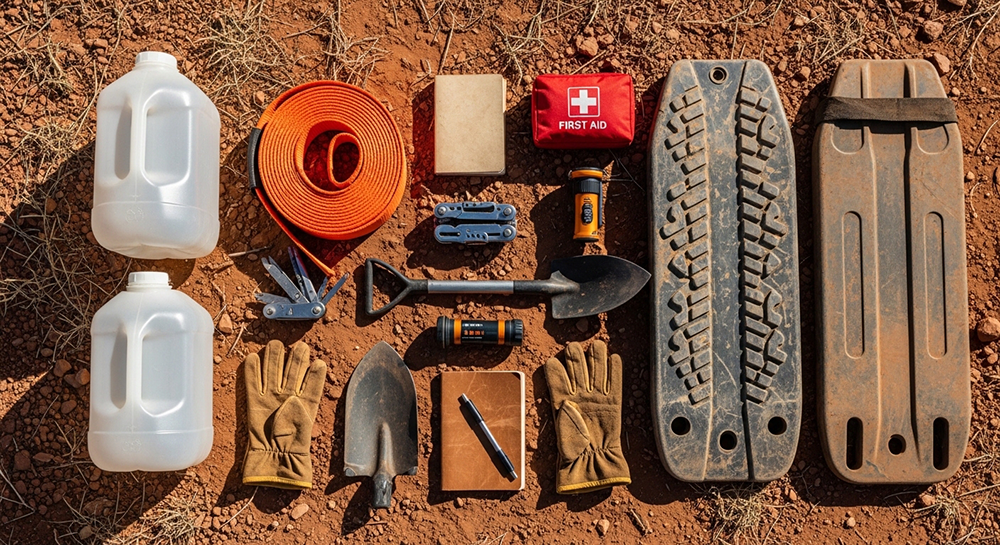
Recovery gear — tow strap, shackles, hi-lift jack, and traction boards at minimum; knowing how to use them matters as much as having them
Extra fuel — the trail is roughly 100 miles plus access roads; factor in your vehicle's consumption and carry extra; there are no gas stations once you drop in
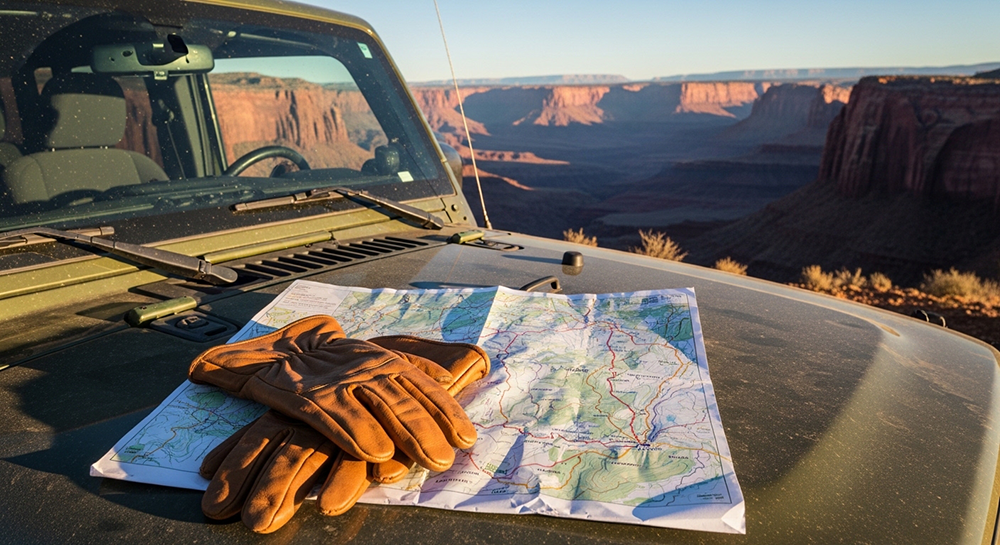
Navigation — a downloaded offline map or paper topo; cell service is largely nonexistent on the route
Supplies: The Math of Being 100 Miles From Anywhere
Once you drop into the White Rim Trail, the nearest hardware store, grocery, or pharmacy is not a short drive away — it's a commitment. Everything you need for the duration of your trip has to come with you, and the list is longer than most people initially think.
Water is the most critical variable. The standard recommendation is one gallon per person per day, which sounds like a lot until you're on day two in 85-degree heat cooking a meal, washing your hands, and refilling a water bottle. Round up, not down. Food should be practical and calorie-dense — this isn't the trip for elaborate cooking setups, though plenty of people do pull off a decent camp meal with a two-burner stove.
Beyond the basics, think about the things you'd grab in an emergency at a hardware store: duct tape, zip ties, a basic tool kit, a first aid kit that's actually stocked. A headlamp with fresh batteries. A paper map of the route as a backup to your GPS. The mindset shift that makes this list manageable is simple: assume you are completely on your own out there, because you are, and pack like it. The people who over-prepare for the White Rim Trail have a great trip. The people who under-prepare have a story they're not entirely proud of.
Renting vs. Bringing Your Own Rig
There's a version of this conversation that gets unnecessarily tribal — the idea that real off-roaders only use their own vehicles and that renting is somehow cutting corners. That's not a useful frame. The actual question is simpler: which option gets you on the White Rim Trail in the best possible position to have a great trip? For some people that's their own rig. For a lot of people, it's a rental. Here's how to think through it honestly.
The Real Tradeoffs
Bringing your own vehicle has genuine advantages. You know the rig, you know its quirks, and if something goes sideways mechanically you're not dealing with an unfamiliar system. If you already own a properly equipped trail vehicle — full-size spare, skid plates, recovery gear, recent maintenance — and you've run it on comparable terrain before, then driving your own Jeep makes complete sense. The tradeoff is real though: a 100-mile loop over rocky, sandy, unforgiving terrain puts wear on a vehicle. Tires take a beating. Undercarriage components get tested. Suspension works hard. If your rig is your daily driver or you're not fully confident in its current condition, that wear has a cost that follows you home.
Renting a purpose-built vehicle from a local outfitter changes the calculus in a few meaningful ways. The equipment is already dialed in — right tires, right clearance, recovery gear on board, maintained specifically for this kind of use. You're not gambling on whether your stock SUV can handle Hardscrabble Hill; you're driving something that has done it before. There's also the local knowledge factor, which is easy to underestimate. A good rental outfitter isn't just handing you keys — they're giving you a trip briefing, current trail conditions, campsite nuances, and the kind of practical information that doesn't show up in a guidebook. That's worth something. Especially on your first White Rim Trail trip, walking in with solid intel and a rig you trust removes two of the biggest variables that turn adventures into ordeals.
Quick Tip: Before committing to your own vehicle, honestly assess its last service date, tire condition and age, and whether you have the recovery gear listed in the previous section. If any of those answers are uncertain, a rental starts looking a lot more practical.
Quick Tip: When evaluating rental options, ask specifically about what's included — spare tires, recovery gear, air compressor, offline maps. A purpose-built rental should come with all of it. If it doesn't, factor in what you'd need to source separately.
Quick Tip: The wear and tear on your own vehicle over 100 miles of canyon terrain is real. Run the math on tires, potential alignment issues, and the cost of any trail damage against the rental price. For a lot of people, the numbers are closer than they expect.
Quick Tip: Ask your outfitter about their pre-trip briefing process. The best ones will walk you through current conditions, known obstacles, and campsite-specific details. That conversation alone can make a meaningful difference in how prepared you feel dropping in.
Key Sections & Highlights of the White Rim Trail
The White Rim Trail doesn't have one defining moment — it has several, spread across a hundred miles of terrain that keeps changing character on you. What follows isn't a turn-by-turn breakdown; it's a feel for the sections that tend to stick with people long after the trip is over. Think of it as a heads-up on what's coming so you can pay attention when it matters most.
Hardscrabble Hill — one of the most technically demanding climbs on the route; sets the tone early for what the trail asks of your vehicle
Mineral Bottom — a dramatic descent to the Green River corridor; where the canyon floor becomes your world for a stretch
Murphy Hogback — a narrow ridgeline section with steep drop-offs on both sides; the kind of terrain that earns its name
Labyrinth Canyon views — long, open stretches with canyon walls unfolding in every direction; the section that most often produces the "okay, now I get it" moment
Shafer Trail switchbacks — the steep, exposed entry and exit road that makes it immediately clear you've left the ordinary world behind
What Each Section Actually Feels Like
Hardscrabble Hill is where a lot of people get their first real sense of what the White Rim Trail is asking of them. It's a rocky, loose climb that rewards momentum and punishes hesitation. In a well-equipped rig with proper tire pressure you'll get up it without drama — but it focuses your attention in a way that a gravel road does not. It's a good early reminder that this is a trail, not a road, and that distinction matters for the next 90 miles.
Mineral Bottom is the point where the Green River stops being something you're looking down at from above and becomes something you're next to. The descent is steep and the switchbacks are tight, but the payoff is one of the more dramatic terrain shifts on the route — canyon walls rising above you, the river moving quietly nearby, the desert doing something almost gentle for a stretch. Camps in this area tend to be favorites for good reason.
Murphy Hogback is the section that gets talked about most among people who've done the trail a few times. It's a narrow shelf cut along a ridgeline with serious exposure on both sides — not a place to be distracted or in a hurry. The views from up there are expansive in a way that's hard to describe without sounding like you're overselling it, but you're not. It genuinely looks like a landscape that was designed to make humans feel appropriately small.
Labyrinth Canyon is where the trail opens up and the scale of the whole thing becomes fully apparent. Long straightaways with canyon walls stretching out in every direction, the kind of terrain where you'll find yourself stopping the vehicle just to stand in it for a minute. The light here in the late afternoon does things that photographers chase and never quite nail. If there's a section of the White Rim Trail where people tend to go quiet and just look around, this is it.
The Shafer Trail switchbacks deserve a mention even though they're the entry and exit, not a mid-route feature. Coming down from the Island in the Sky mesa on those tight, exposed switchbacks — or climbing back out at the end — is a moment that bookends the whole trip with a kind of punctuation. You know you've gone somewhere when you look back up at those switchbacks from the canyon floor below.
Remember: The White Rim Trail is a living route — conditions on any of these sections can change after rain, freeze-thaw cycles, or heavy traffic. What's smooth in October might be washed out in April. Check current conditions with the NPS and your rental outfitter before you drop in, and treat any trail description (including this one) as a starting point, not a guarantee.
Wildlife, Geology & the Bigger Picture
Most people come to the White Rim Trail for the driving. They stay — mentally, in the way a place occupies your thoughts for months afterward — because of everything else. The canyon walls aren't just scenery. They're a record. Every layer of rock you pass tells a piece of a story that started long before anything with a backbone existed on this continent, and the rivers at the bottom of it all are still writing new chapters in real time. Paying attention to what's actually out there turns a great off-road trip into something harder to categorize.
What the Rocks Are Telling You
The White Rim Sandstone formation — the pale ledge the trail runs on — was laid down roughly 250 million years ago as desert sand dunes, compressed over time into rock by the weight of everything that came after it. Below it sits the Organ Rock Formation, a deeper red, representing ancient river deltas and floodplains from an even earlier period. Below that, the Cedar Mesa Sandstone. Each band of color visible in the canyon walls is a different chapter — a different climate, a different geography, a different world entirely.
The red and white stripes that make this landscape so visually striking are essentially a cross-section of time made physical, readable to anyone willing to slow down long enough to look at it. The White Rim Trail runs along one of the most legible pages of that record. You're not just driving through a canyon — you're moving through a timeline that makes the entirety of human history look like a rounding error. The Colorado and Green Rivers, threading through the canyon floors below the trail, are the active forces still shaping what future layers will look like. They've been cutting downward for five to six million years and they're still at it, unhurried, indifferent, and quietly magnificent.
The Living Landscape
The geology gets most of the attention out here, but the White Rim Trail runs through a functioning desert ecosystem that rewards the kind of observation that only happens when you're moving slowly and camping in place.
Desert bighorn sheep are the most dramatic wildlife encounter the route offers — they move through terrain that looks completely impassable with a confidence that borders on casual, and spotting a small herd on a canyon wall above you is one of those moments that stops conversation mid-sentence. Ravens work the thermals above the mesa edges and tend to show up wherever humans are camped, curious and unhurried.
Coyotes are heard more than seen, usually at dusk or just before sunrise. Collared lizards, canyon wrens, the occasional mule deer near the river corridors — the life out here is distributed and patient, adapted to an environment that doesn't offer much and takes back quickly what it gives. The cottonwoods near the Green River at Potato Bottom and Labyrinth Camp are a visual surprise after miles of open slickrock — actual shade, actual green, the sound of water nearby. They feel earned by the time you reach them, which is probably the right way to feel about anything worth having out here.
Common Mistakes to Avoid on the White Rim Trail
Every trail has a learning curve, and the White Rim Trail has enough remote, unforgiving miles that the mistakes people make out here tend to matter more than they would closer to civilization. None of these are exotic errors — they're the predictable ones, made by otherwise prepared people who underestimated something specific. The good news is they're all avoidable with a little honest pre-trip thinking.
Going too fast — covering ground efficiently feels productive until you realize you've driven through the best parts without actually seeing them; speed also increases mechanical wear and reduces your reaction time on technical terrain
Underestimating tire wear — 100 miles of slickrock, sand, and rocky trail is genuinely hard on rubber; worn tires that would be fine for another few thousand highway miles can fail out here, and a single spare isn't always enough
Skipping or misreading the permit — showing up without a valid permit or at the wrong campsite creates problems that range from an awkward conversation with a ranger to being turned around entirely; the permit is specific and the NPS takes it seriously
Bringing too little water — the one-gallon-per-person-per-day recommendation isn't conservative padding; it's based on real desert conditions, and running short on water in a remote canyon with no resupply options is a situation that escalates quickly
Assuming cell service exists — people routinely expect at least occasional signal and plan accordingly; the White Rim has essentially none for the majority of the route, which affects navigation, emergency communication, and the instinct to look something up when you're not sure
Things People Wish Someone Had Told Them
These are the smaller, less obvious lessons — the kind that don't show up in the standard trip prep checklist but come up consistently when people who've done the trail talk honestly about what caught them off guard.
"I didn't realize how much the afternoon wind picks up in the canyon. Everything that isn't weighted down or packed away will be somewhere else by morning."
"We aired down for the technical sections but forgot to bring a reliable way to air back up before the exit road. Driving highway speeds on 18 PSI is not a great time."
"The vault toilets at campsites are there, but you need to bring everything else — toilet paper, hand sanitizer, a WAG bag for sites that require them. Read the specific requirements for each campsite before you go, not when you're already there."
"We planned our daily mileage based on the map and didn't account for how often we'd want to stop. Three hours of planned driving turned into six, which isn't a problem until your camp setup is happening in the dark."
"Nobody told us how cold the nights get even in late spring. We were sweating through the afternoons and genuinely cold by 10pm. Layer range out there is wider than you'd expect."
"The trail looks different in person than it does on satellite view. Some sections that look like a straightforward road have rocky ledges and loose sections that require real attention. Don't plan your pace based on Google Maps."

Practical Tips for White Rim Trail First-Timers
The difference between a trip that goes smoothly and one that doesn't usually isn't luck — it's the small practical decisions made before you ever leave the trailhead. None of the tips below are complicated. They're just the things that experienced White Rim Trail travelers do consistently, and that first-timers occasionally skip because they seem minor until they aren't.
Start early each day — the best light is in the first two hours after sunrise, afternoon heat and wind build quickly, and early starts give you buffer time if a section takes longer than expected
Air down your tires — dropping to 18–22 PSI on technical and sandy sections dramatically improves traction and ride quality; carry a reliable gauge and a compressor for airing back up before exit roads
Bring a paper map as backup — downloaded offline maps are great until your phone battery dies or your mount rattles loose on a rocky section; a paper topo of the route costs almost nothing and has never needed charging
Connect with rangers beforehand — a quick call to the Canyonlands visitor center before your trip gets you current trail conditions, any closures or washouts, and the kind of on-the-ground detail that online trip reports from three months ago don't have
Read your permit carefully — campsite assignments, group size limits, and specific site rules (including WAG bag requirements at certain camps) are all in there; knowing the details before you're standing in a canyon at sunset is considerably better than discovering them after
The Pre-Trip Briefing: Why It Matters More Than It Sounds
Most people treat a rental pickup as a transaction — show up, sign the paperwork, get the keys, go. The smarter move is to treat it as the first part of the trip itself. A good outfitter has current, specific knowledge about what the White Rim Trail looks like right now: which sections are in good shape, which campsites have particular quirks, where the technical obstacles tend to catch people off guard, and what conditions have been like in the days leading up to your departure. That information doesn't live on any website. It comes from people who are on that trail regularly and paying attention.
At Cliffhanger Jeep Rental, the pre-trip briefing is built into the process — not as a liability disclaimer read-through, but as a genuine conversation about your specific itinerary and what to expect on it. First-timers especially tend to leave that conversation feeling noticeably more confident than they walked in, which is exactly the right way to feel before dropping into a hundred miles of canyon country.
Ready to plan your White Rim Trail adventure? The team at Cliffhanger Jeep Rental is based in Moab and knows this trail the way most people know their commute. Whether you're sorting out vehicle options, working through your itinerary, or just trying to figure out where to start — reach out and let's talk. A well-planned White Rim trip is one of the best things you can do in the American Southwest. We're here to help make sure yours goes the way it should.
The White Rim Trail Stays With You
There's a specific feeling that happens when you drive back up the Shafer Trail switchbacks at the end of a White Rim trip — climbing out of the canyon, the mesa top coming back into view, the paved road appearing like something from a different world. It's not just relief that the trip went well, or satisfaction at having covered the miles. It's something quieter than that. A kind of recalibration. The canyon has a way of adjusting your sense of scale in ways that don't fully reset when you leave, and that's not nothing. Most people who do this trip come back to regular life slightly different from how they went in — more patient, maybe, or just more aware of how much is out there that doesn't require a screen or a signal to be worth paying attention to.
Most People Only See This in Photos
The White Rim Trail exists in a strange cultural space where almost everyone has seen images of it — the pale sandstone bench, the canyon walls dropping away, the rivers threading through the floor far below — but relatively few people have actually been there. That gap between the photograph and the place is considerable. The scale doesn't translate. The silence doesn't translate. The feeling of waking up in a camp surrounded by canyon walls with no other sounds doesn't translate. These are things that only happen when you actually go, and going requires a permit, a capable vehicle, a few days, and the decision to stop putting it off. The people who've done the White Rim Trail don't really talk about the photos they took. They talk about the mornings. The drives. The moments where the place got through to them in ways they weren't fully expecting.
This One's Worth Doing Right
There are trips you take, and there are trips that take something from you — in the best possible sense. The White Rim Trail is the second kind. It asks for preparation, commitment, and a few days of your actual life. What it gives back is proportional to what you bring to it, which is about as honest a deal as adventure travel offers.
When you're ready to make it happen, Cliffhanger Jeep Rental is the place to start. Purpose-built rigs, local expertise, and a team that genuinely wants your White Rim Trail trip to be the kind you're still talking about years from now. Book your vehicle or get in touch here — and go do the thing most people only see in photos.