Hell's Gate Moab: Conquer the Most Famous Obstacle in Utah
Hell's Gate Moab: Where Moab's Most Infamous Obstacle Separates Prepared Drivers from Expensive Recoveries
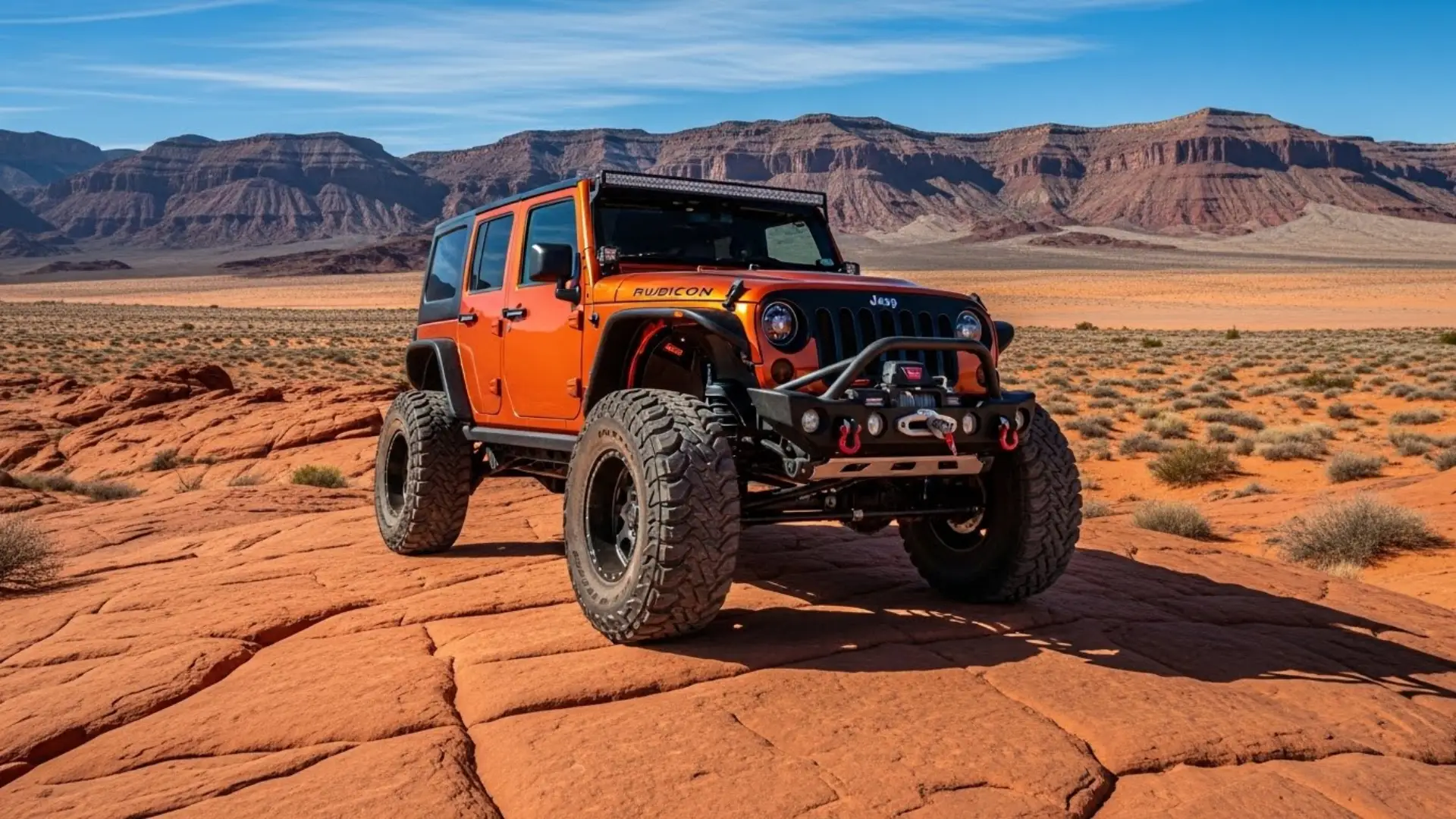
Here's what the trail maps and YouTube videos conveniently omit about Hell's Gate Moab: the optical illusion that makes a 20-30 degree climb look almost vertical from the driver's seat, the way the chute narrows from "manageable" to "are you sure this is wide enough" as you commit to the ascent, and the harsh reality that missing the correct line near the top doesn't just mean you'll need to try again—it means you'll experience the unique thrill of rolling backwards down 30+ feet of slickrock while your passenger questions every life decision that led to this moment.
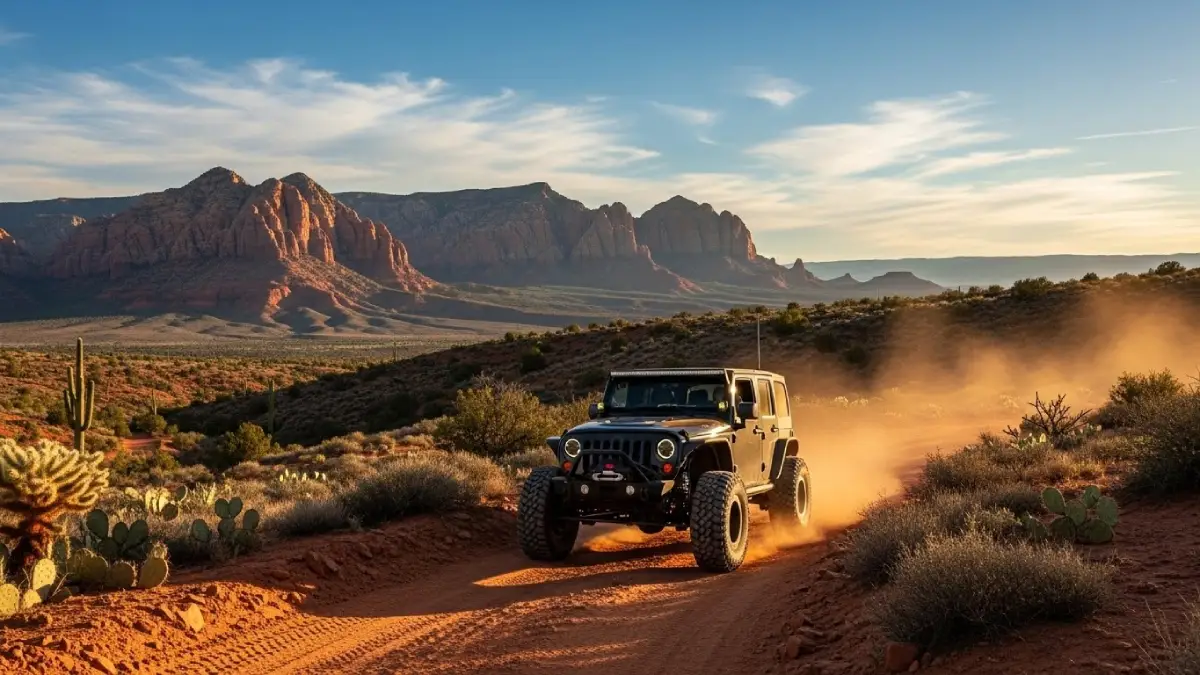
Hell's Gate isn't the Hell's Revenge trail—it's the trail's signature obstacle, an optional side excursion that functions as Moab's most effective mechanism for sorting confident drivers from overconfident ones. The distinction matters because you can complete Hell's Revenge without ever attempting Hell's Gate, which thousands of visitors do annually while feeling perfectly satisfied with their Moab experience.
But for those who commit to dropping into the horseshoe-shaped chute where recovery equals watching your rig tumble if things go wrong, Hell's Gate represents something deeper than just another technical challenge—it's a legitimate test of equipment, judgment, and the willingness to trust strangers screaming instructions you can't see the reason for yet.
The statistics reveal an uncomfortable pattern: Hell's Gate generates more spectator gatherings per hour than any comparable obstacle in the Sand Flats Recreation Area, primarily because watching vehicles attempt this climb provides entertainment value that ranges from "impressive technical driving" to "how many times will physics allow that Jeep to bounce before something expensive breaks?"
Beyond the Instagram Spectacle
Most visitors experience Hell's Gate as spectators, parking at the base to watch others attempt the climb while internally debating whether their own vehicle and skill level justify the risk. This cautious approach demonstrates wisdom that many discover only after committing to obstacles that exceeded their preparation.
What separates successful Hell's Gate attempts from recovery situations isn't luck—it's the convergence of appropriate equipment, competent spotting, correct line selection, and the judgment to recognize when conditions or capability don't align with the obstacle's demands.
Hell's Gate earned its reputation through a specific combination of geological features and psychological factors that compound into challenges greater than the individual elements suggest. The V-shaped notch carved into slickrock creates a natural funnel that narrows progressively as you climb, transforming what begins as a straightforward ascent into a three-dimensional puzzle where tire placement, approach angle, and momentum management must synchronize perfectly within an increasingly confined space.
The difference comes down to understanding what you're really dealing with:
Optical illusions created by perspective: From the base, Hell's Gate appears steep but manageable—until you're pointed upward with nothing visible through your windshield except sky, realizing your eyes lied about the actual angle
Progressive difficulty that commits you: The lower section establishes false confidence through moderate challenges, then the chute narrows and steepens exactly when backing down becomes impractical without significant risk
Line selection where inches matter: Near the top, the correct path narrows to specific tire placement zones where missing by even 6-8 inches transforms success into sideways sliding that quickly becomes backwards tumbling
No bypass once committed: Unlike many Moab obstacles offering chicken-out options, Hell's Gate operates as a one-way commitment where the only exits are up and over or backwards down through terrain you just climbed
Why Hell's Gate Became Moab's Signature Obstacle
Hell's Gate didn't achieve its legendary status through marketing campaigns or social media promotion. The reputation developed organically through decades of drivers discovering that this particular section of Hell's Revenge combined technical demands, consequence potential, and visual drama in ways that tested capability more effectively than obstacles that seemed more intimidating on paper.
The Geological Formation That Creates the Challenge
Hell's Gate exists because ancient geological processes carved a specific pattern into Navajo Sandstone that creates challenges beyond what typical slickrock offers. The horseshoe-shaped notch formed through differential erosion where water and wind exploited weaknesses in the rock structure, creating a natural chute that funnels vehicles into progressively tighter confines while simultaneously increasing the grade.
The slickrock surface that makes Hell's Revenge famous for its exceptional traction reveals limitations at Hell's Gate where the chute's geometry creates situations where traction alone doesn't guarantee success. The V-shape forces tires against opposing walls while climbing, creating friction vectors that can work for you or against you depending on precise line selection. This three-dimensional puzzle rewards drivers who understand force distribution and punishes those relying on horsepower and optimism alone.
Geological features that make Hell's Gate uniquely challenging:
V-notch geometry: The converging walls create natural wedging that helps or hinders depending on your line—correct placement uses wall contact for stability, incorrect placement creates binding that stops forward progress
Progressive narrowing: The chute width decreases from approximately 8-10 feet at the base to barely vehicle-width at the critical upper section, eliminating margin for line corrections once committed
Compound angles: The obstacle combines climbing grade with lateral tilting as the V-shape forces one side of your vehicle higher than the other—managing both simultaneously tests suspension articulation and driver composure
Slickrock texture variations: While Hell's Revenge slickrock generally provides excellent traction, Hell's Gate includes sections where sandstone smoothness creates challenges during the steepest portions where traction matters most
Exit ledge transitions: Successfully climbing to the top requires navigating a final transition where the chute meets level ground—this demands precise throttle control to avoid wheel spin that can send you sliding backwards at the moment success seemed certain
The Psychological Element That Amplifies Difficulty
Beyond mechanical challenges, Hell's Gate operates on drivers' psychology in ways that amplify perceived difficulty beyond objective measurements. The confined space, increasing grade, and lack of visual reference for the correct line create situations where your brain's threat assessment systems activate exactly when clear thinking becomes most critical.
From the driver's seat, Hell's Gate presents unique perceptual challenges that don't exist on open slickrock. Your windshield shows only sky once committed to the steepest sections, eliminating the visual feedback drivers rely on for speed and distance judgments. This sensory deprivation forces reliance on spotters whose instructions often contradict what your instincts scream about momentum, angle, and when to add power versus when to ease off.
Spectator pressure adds another psychological layer that separates Hell's Gate from less-observed obstacles. The base area typically hosts 5-15 vehicles whose occupants watch attempts with cameras ready, creating performance anxiety that affects decision-making for drivers unaccustomed to technical off-roading with an audience. This pressure manifests in two failure modes: conservative approaches that sacrifice necessary momentum, or aggressive attempts that substitute confidence for competence.
The Hell's Revenge Trail Context
Understanding Hell's Gate requires understanding its position within the Hell's Revenge trail system. Hell's Gate functions as an optional side obstacle located roughly midway through the 6.5-mile loop that defines Hell's Revenge as one of Moab's most popular yet demanding trail experiences. You can complete Hell's Revenge successfully without ever attempting Hell's Gate—the main trail bypasses this obstacle entirely, allowing drivers to enjoy spectacular slickrock terrain without committing to the signature challenge that draws experienced drivers seeking legitimate tests of capability.
Hell's Revenge Overview
Hell's Revenge operates as Moab's premier slickrock trail experience, offering 6.5 miles of sandstone surfaces that provide traction characteristics unlike anywhere else on Earth. The trail winds through Sand Flats Recreation Area just minutes from downtown Moab, delivering a technical roller coaster ride that combines steep climbs, dramatic descents, off-camber traverses, and optional obstacles ranging from manageable to genuinely difficult.
The trail earned its difficulty rating of 6 out of 10 for the main route, escalating to 8-9 out of 10 when including optional obstacles like Hell's Gate, the Escalator, and Tip-Over Challenge. This rating reflects the sustained technical demand that Hell's Revenge presents—not isolated difficult sections surrounded by easy terrain, but continuous challenges that require focus, capability, and confidence throughout the entire route.
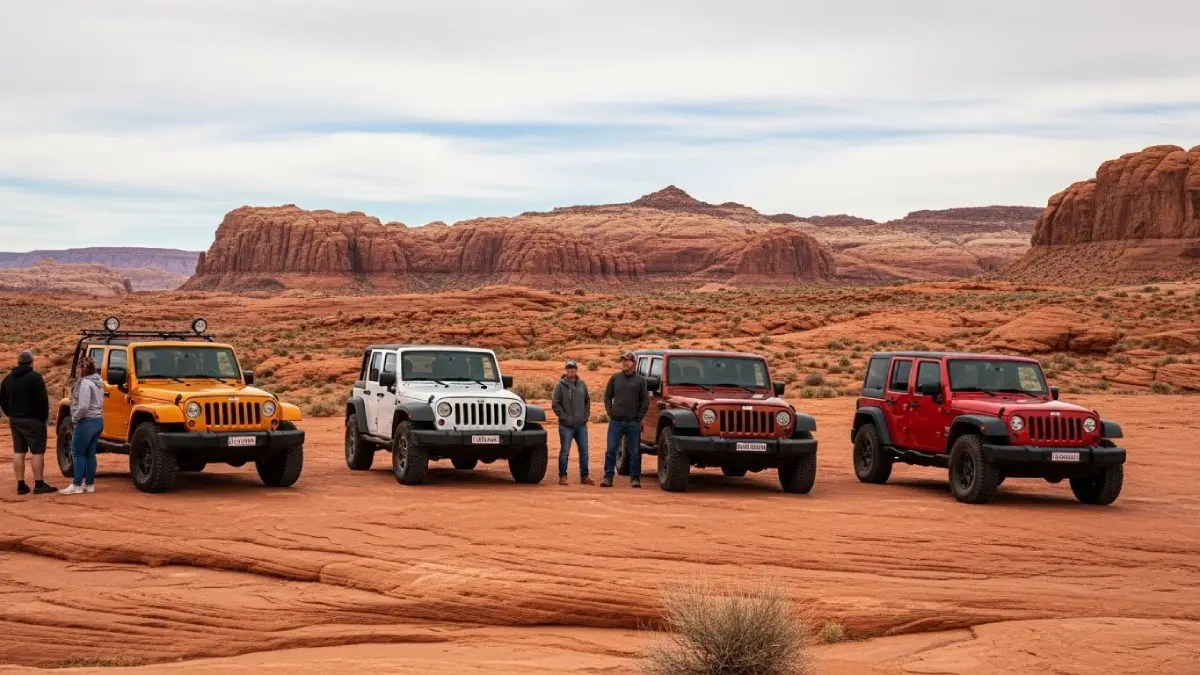
Hell's Revenge trail characteristics:
6.5-mile loop: Complete circuit typically requires 2-3 hours for moderately paced driving with photo stops and obstacle attempts, though experienced drivers can complete it faster while cautious newcomers often take longer
Slickrock surfaces: Approximately 70-80% of the trail traverses Navajo Sandstone slickrock that provides exceptional traction through micro-textures invisible to casual observation but critical for maintaining grip on steep grades
Steep climbs and descents: Multiple sections feature 15-25 degree grades that test cooling systems during climbs and braking confidence during descents, with some optional lines approaching 30+ degrees
Exposure sections: Several areas feature shelf-road characteristics where the trail narrows with significant drop-offs, creating psychological challenges beyond mechanical demands
Optional obstacles: Hell's Gate, the Escalator, Tip-Over Challenge, Mickey's Hot Tub, and various other named features offer progressive difficulty increases for drivers seeking additional challenges
Trail Access and Requirements
Hell's Revenge operates within Sand Flats Recreation Area, requiring paid access through an entrance station located approximately one mile east of downtown Moab on Sand Flats Road. The trail begins just past the entrance station, with clearly marked trailhead parking and information boards detailing rules, safety requirements, and current conditions.
Access requirements and logistics:
Entrance fees: $5 single-day pass, $10 seven-day pass, or $25 annual pass for private vehicles; out-of-state OHVs require $30 annual permit
Vehicle requirements: High-clearance 4WD strongly recommended; trail is not recommended for stock SUVs or vehicles without legitimate off-road capability
Skill requirements: Bureau of Land Management designates Hell's Revenge for experienced drivers with advanced equipment due to hazardous terrain and limited bypass options for difficult sections
Trail marking: Routes marked with painted yellow flame symbols on slickrock surfaces, with signs indicating optional obstacles and bypass routes where available
Bike trail crossings: Hell's Revenge intersects the famous Slickrock Bike Trail in multiple locations—motorcycles and mountain bikes have right-of-way at these crossings
Hell's Gate: The Technical Reality
The gap between drivers who successfully navigate Hell's Gate and those who create recovery situations comes down to specific preparations and capabilities that address the obstacle's actual demands rather than assumptions about what "should" work based on experience with similar-looking challenges elsewhere. Understanding these requirements prevents expensive lessons about how Moab's signature obstacle differs from typical off-road situations.
The Approach and Commitment Point
Hell's Gate begins innocuously enough—a side trail that branches from the main Hell's Revenge route, dropping down a moderate slickrock descent into the horseshoe-shaped bowl that forms the obstacle's lower staging area. This initial descent serves dual purposes: it positions vehicles for the upcoming climb while simultaneously committing drivers to an obstacle where backing out becomes significantly more complicated than proceeding forward.
The staging area at Hell's Gate's base provides space for 3-5 vehicles and typically hosts spectators who've chosen observation over participation. This gathering point offers final opportunities to assess conditions, watch other vehicles attempt the climb, and make the critical decision about whether your equipment and skill level match what the obstacle demands. Many drivers make their smartest decision of the day right here—watching a few attempts, recognizing the challenge exceeds their preparation, and choosing to skip Hell's Gate while enjoying the rest of Hell's Revenge without regret.
For those who commit, the climb begins with a 15-20 foot run-up section that establishes momentum before the grade steepens and the chute narrows. This approach zone allows drivers to build confidence through moderate technical demands before the obstacle reveals its true nature. The transition from approach to committed climb happens gradually enough that recognizing the point of no return requires experience many first-timers lack.
The Climb: Section by Section
Hell's Gate divides into distinct sections that each present unique challenges requiring specific techniques and responses. Understanding this progression helps drivers anticipate what's coming rather than discovering each new challenge as it appears—often too late for optimal preparation.
Lower Section (First 10-15 Feet): Moderate grade of 20-25 degrees with adequate width for comfortable tire placement establishes initial climbing rhythm. This section tests basic 4WD capability and traction management without introducing the complications that define upper portions. Drivers should establish appropriate gear selection here—typically 4-Low with first or second gear depending on vehicle power and gearing. The goal involves maintaining steady momentum without excessive wheel spin that wastes traction before you need it most.
Middle Section (15-25 Feet): Grade increases to 25-30 degrees while the chute begins narrowing perceptibly, requiring attention to tire placement as wall proximity increases. The V-shape becomes more pronounced, creating situations where one side of your vehicle rides higher than the other—testing suspension articulation and driver comfort with off-camber angles. This section demands consistent throttle application that balances momentum maintenance with traction preservation. Spotters become increasingly valuable here as your sight lines decrease and correct line selection matters more with each foot gained.
Critical Upper Section (Final 8-12 Feet): The chute narrows to barely vehicle-width while grade approaches 30+ degrees, creating the conditions where Hell's Gate earns its reputation. Tire placement becomes critical—inches matter as you navigate the narrowest portion where wall contact occurs simultaneously on both sides. Your windshield shows only sky, eliminating visual references that help gauge speed and distance. Spotter instructions become your primary navigation tool, and trusting those instructions over your instincts separates successful climbs from backwards slides.
The correct line threads between opposing walls through a path that shifts subtly based on vehicle wheelbase, tire size, and current surface conditions. Miss the line by six inches left or right, and wall contact transitions from helpful friction to binding that stops forward progress. Lose momentum here, and gravity wins—vehicles that stop on Hell's Gate's steepest section either need winch assistance or experience the backwards descent that makes great spectator video.
Exit Transition: Successfully reaching the top requires navigating a final ledge where the steep chute meets relatively level ground. This transition demands precise throttle control—too little and you don't quite make the lip, too much and sudden traction causes wheel spin that can break loose just as success seemed certain. Many Hell's Gate attempts fail at this exact moment after successfully navigating the entire climb, creating frustration that compounds when you're now positioned poorly for a second attempt.
Line Selection: Where Success Lives or Dies
The difference between clean Hell's Gate ascents and recovery situations often comes down to line selection accuracy measured in inches rather than feet. The correct path through Hell's Gate shifts based on vehicle dimensions, but certain principles remain constant regardless of what you're driving.
Critical line selection principles:
Enter centered with momentum: The approach should position your vehicle centered in the chute with 5-8 mph momentum that carries through the initial grade increase without requiring immediate throttle increase
Favor the right wall initially: Most vehicles benefit from slightly right-biased positioning through the lower section, using gentle wall contact for reference while maintaining forward progress
Commit to the middle as it narrows: As the chute constricts, optimal line shifts toward center where the V-shape's narrowest point provides natural guidance through wall contact on both sides
Watch front-left tire placement at the top: The critical section requires specific front-left tire positioning on a shelf feature that provides the grip necessary for the final push to the exit ledge
Trust spotters for micro-adjustments: Drivers cannot see the critical line features from inside the vehicle—spotter instructions about "two inches left" or "hold this line" must override instincts
Vehicle Requirements for Hell's Gate Success
The gap between vehicles that conquer Hell's Gate cleanly and those that require recovery comes down to specific capabilities that address the obstacle's unique demands. General "off-road readiness" doesn't translate directly to Hell's Gate capability—this obstacle rewards particular combinations of clearance, traction, protection, and power delivery that work synergistically when properly configured.
Essential Mechanical Capabilities
Hell's Gate success requires more than just 4WD and aggressive tires. The obstacle's combination of steep grades, confined space, and unforgiving consequences for errors demands vehicles configured with purpose-built systems that handle sustained technical challenges rather than occasional mild off-roading.
Ground Clearance Requirements: Hell's Gate demands minimum 10 inches of clearance measured at the vehicle's lowest points including differentials, transfer case, exhaust, and fuel tank. The rock obstacles throughout Hell's Revenge trail leading to Hell's Gate justify this clearance, while the obstacle itself rewards even more ground clearance when navigating the V-notch where approach and departure angles come into play simultaneously. Stock crossovers claiming 8-9 inches of clearance prove inadequate once loaded with passengers and gear—add 1-2 inches of lift or accept regular undercarriage contact that transforms adventure into expensive repair.
4WD System with Low Range: True 4WD systems with two-speed transfer cases providing low-range gearing prove essential for Hell's Gate's sustained steep sections where maintaining momentum without excessive wheel speed becomes critical. All-wheel-drive systems designed for highway traction assistance lack the gearing multiplication and durability that Hell's Gate demands. Low-range gearing typically provides 2.5:1 to 4:1 reduction that multiplies engine torque while keeping wheel speed manageable—allowing precise throttle control on steep grades where high-range first gear spins tires uselessly.
Approach and Departure Angles: Hell's Gate's steepest sections demand approach angles exceeding 30 degrees and departure angles exceeding 25 degrees to clear the obstacle without front or rear bumper contact. These measurements matter more at Hell's Gate than on most trails because the V-notch geometry creates situations where both angles come into play simultaneously as one end of your vehicle climbs while the other still navigates lower sections.
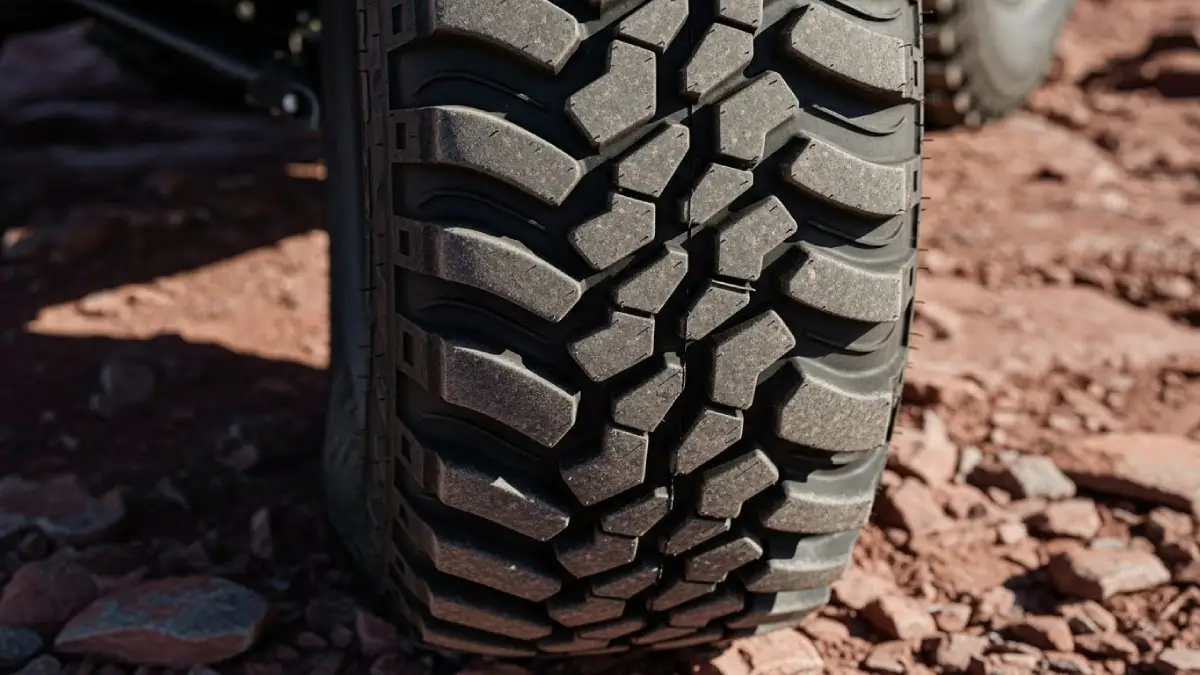
Traction Enhancement: Aggressive all-terrain or mud-terrain tires with tread depth exceeding 10/32nds provide the grip that makes Hell's Gate possible on slickrock surfaces where smooth tires slip. While slickrock generally offers excellent traction, Hell's Gate's steepest sections include areas where sandstone smoothness creates marginal conditions during climbs—aggressive tread patterns make the difference. Tire pressure adjustments help—reducing from highway pressures to 15-20 PSI increases contact patch and improves grip on rock surfaces, though this requires ability to re-inflate before leaving the trail.
DO's for vehicle capability:
DO verify ground clearance exceeds 10 inches measured at lowest points with full fuel, gear, and passenger loading
DO confirm 4WD system includes true two-speed transfer case with low-range reduction ratio of 2.5:1 or greater
DO check approach and departure angles meet minimum 30-degree and 25-degree thresholds respectively
DO equip aggressive tires with substantial tread depth and sidewall construction rated for sharp rock contact
DO consider lockers or limited-slip differentials that improve traction when one tire loses contact on articulated obstacles
DON'Ts for vehicle capability:
DON'T attempt Hell's Gate in crossover SUVs with AWD systems designed for wet pavement rather than technical terrain
DON'T assume manufacturer "off-road packages" provide adequate capability without verification of actual specifications
DON'T ignore approach angle limitations that become apparent when your front bumper contacts rock before tires reach the climb
DON'T rely on street tires or worn all-terrains with minimal remaining tread depth for slickrock traction
DON'T convince yourself that "careful driving" compensates for inadequate vehicle capability on obstacles where physics determines outcomes
Protective Modifications That Prevent Damage
Hell's Revenge trail leading to Hell's Gate includes numerous rock obstacles, embedded stones, and terrain features that create undercarriage contact even with careful line selection. Unprotected vehicles suffer expensive damage including punctured oil pans, torn exhaust systems, damaged fuel tanks, and bent suspension components that transform adventure into financial disaster.
Skid Plate Protection: Comprehensive skid plate coverage protecting oil pan, transmission, transfer case, fuel tank, and critical suspension components proves essential for Hell's Revenge trail completion without damage. Stock skid plates on vehicles marketed as "off-road capable" typically provide minimal coverage over limited areas—aftermarket options offering full undercarriage protection make the difference between completing the route confidently and nursing damaged vehicles back to town.
Rock Sliders: Body-mounted rock sliders protect rocker panels and lower body sections while providing solid mounting points for jacking and recovery operations if needed. The frame-mounted construction takes impacts that would create expensive body damage on unprotected vehicles and transfers forces to structural components designed to handle loads.
Recovery Points: Front and rear recovery points rated for vehicle weight prove essential not for Hell's Gate itself but for the overall Hell's Revenge experience where occasional assistance helps navigate obstacles without drama. Quality recovery shackles and properly mounted recovery points transform potential problems into minor delays rather than trail-ending situations.
The Role of Spotters: Your Critical Success Factor
The difference between clean Hell's Gate ascents and recovery situations often comes down to spotter quality rather than driver skill or vehicle capability. Competent spotters see line features invisible from the driver's seat, provide guidance during critical moments when your vision shows only sky, and prevent the small errors that compound into significant problems on obstacles where inches matter and momentum cannot stop.
What Effective Spotters Provide
Spotters serve multiple roles simultaneously: navigation aids who identify optimal paths, safety monitors who watch for dangers invisible to drivers, and psychological anchors who provide confidence through clear communication during stressful moments. This multi-faceted role demands experience that casual trail companions often lack—making the distinction between drivers who accept spotting help from experienced observers versus those who rely on well-meaning but inexperienced friends.
Critical spotter functions at Hell's Gate:
Line Identification: Spotters standing outside vehicles see the correct path through Hell's Gate's narrow sections where drivers see only sky and surrounding rock. This perspective advantage allows spotters to identify the specific tire placement zones where success lives, guiding drivers through adjustments measured in inches rather than feet.
Real-Time Guidance: As vehicles climb through changing conditions, spotters provide continuous feedback about line maintenance, obstacle clearance, and upcoming challenges. Instructions like "two inches driver side," "hold this line," and "steady throttle" give drivers concrete actions during moments when instincts conflict with requirements.
Safety Monitoring: Spotters watch for binding, excessive articulation, or situations developing toward tipping points. This external perspective catches problems before they become critical, allowing preventive adjustments rather than reactive recoveries.
Consequence Prevention: Experienced spotters recognize when momentum loss or line deviation creates conditions where continuing becomes riskier than backing down for reset. This judgment prevents the backwards tumbles that create legendary Hell's Gate videos.
Spotter Communication Protocols
Clear communication separates effective spotting from well-intentioned chaos. Standard hand signals and concise verbal instructions work when driver and spotter establish protocols before attempting obstacles rather than improvising during stressful moments.
Effective communication patterns:
Pre-run briefing:
Spotter and driver discuss signals, communication methods, and decision authority before attempting obstacles
Continuous updates:
Spotters provide steady information stream rather than silence followed by urgent corrections
Specific instructions:
"Two inches left" beats "a little more" for precision guidance where inches matter
Confidence signals:
Positive reinforcement like "perfect line" or "you've got this" maintains driver confidence during challenging sections
Stop signals:
Clear, unmistakable signals for immediate stopping prevent situations developing past recovery points
Why Professional Rental Services Transform the Hell's Gate Experience
The choice between attempting Hell's Gate in your personal vehicle versus partnering with professional rental services comes down to straightforward economics and risk assessment: do you want to invest thousands modifying a vehicle for occasional use while accepting insurance gaps and navigating unfamiliar obstacles without local expertise—or would you rather drive proven equipment backed by comprehensive support and current conditions intelligence?
Purpose-Built Fleet Advantages
Ready to experience Hell's Gate without the vehicle modification headaches? Cliffhanger Jeep Rentals provides purpose-built vehicles specifically configured for Moab's technical terrain, eliminating the guesswork and expense of preparing personal vehicles for challenges that exceed typical off-road demands.
Professional rental fleets exist because modifying personal vehicles for specialized technical use rarely makes economic sense for occasional adventurers. The suspension upgrades, protective modifications, traction enhancements, and drivetrain components that transform stock vehicles into Hell's Gate-capable machines cost $8,000-$20,000 depending on starting platform and modification depth. These investments make sense for vehicles seeing regular technical use—they become questionable for annual or occasional trips where rental costs would take years to exceed modification expenses.
Beyond economics, rental vehicles come with operational validation that personal modifications can't easily replicate. Cliffhanger's fleet navigates Hell's Revenge and Hell's Gate repeatedly throughout each season, revealing which modifications actually matter versus which sound impressive but provide minimal practical benefit. This operational feedback eliminates the trial-and-error process where owners discover their modification choices prove inadequate only after committed to obstacles miles from assistance.
Rental fleet advantages for Hell's Gate:
Proven capability on the specific obstacle you're attempting: These vehicles conquer Hell's Gate successfully multiple times weekly, demonstrating capability through operational history rather than theoretical specifications
Comprehensive insurance designed for technical terrain: Damage that would create expensive insurance claims or out-of-pocket costs on personal vehicles becomes the rental company's operational cost rather than your financial emergency
Modification cost avoidance for occasional use: Spending $15,000 upgrading your daily driver for one or two annual trail trips makes less financial sense than renting appropriate vehicles when needed
No long-term ownership burden: Rental eliminates the maintenance requirements, garage space demands, and fuel efficiency sacrifices that modified vehicles impose year-round for seasonal use
Professional equipment selection based on operational experience: Rental operators know which tire compounds, skid plate designs, and suspension configurations actually work on Moab trails versus which fail under real-world conditions
Local Expertise and Current Conditions Intelligence
Vehicle capability represents only half the Hell's Gate success equation—the other half comes from current conditions knowledge and technical expertise that takes seasons to develop through direct experience. Professional rental operations accumulate this intelligence through daily interactions with trail conditions, obstacle changes, and seasonal variations that casual visitors simply can't match without years of repeated visits.
Trail conditions change weekly as weather affects surfaces, obstacle lines evolve as vehicle traffic patterns shift, and seasonal factors influence traction and difficulty levels. What worked perfectly last month might present entirely different challenges this month after monsoon rains altered surfaces or increased traffic modified preferred lines. Rental operations maintain current intelligence through fleet returns, building real-time condition pictures that guidebook information and internet forums can't provide.
Local expertise advantages:
Current obstacle condition reports: Rental operations know whether recent weather affected Hell's Gate's traction characteristics or if traffic patterns shifted optimal lines
Timing strategies: Understanding when Hell's Gate sees lightest traffic allows scheduling that reduces waiting times and spectator pressure
Spotter recommendations: Rental operations can connect drivers with experienced spotters familiar with Hell's Gate rather than relying on trail companions with theoretical knowledge
Emergency support relationships: Professional operations maintain connections with local recovery services that prove invaluable when situations exceed planned parameters
Cliffhanger Jeep Rentals: Your Hell's Gate Solution
Cliffhanger Jeep Rentals operates from Moab—literally minutes from Hell's Revenge trailhead—providing advantages that distant operations or personal vehicle ownership can't match. The proximity means fleet vehicles navigate Hell's Revenge and Hell's Gate daily during peak season, accumulating route-specific experience that translates directly into vehicle configuration, maintenance protocols, and customer guidance that works for actual conditions rather than theoretical scenarios.
Fleet specifications reflect operational experience on Moab's technical terrain including Hell's Revenge, Fins and Things, and Poison Spider Mesa. Vehicles feature suspension modifications proven adequate for sustained technical challenges, comprehensive skid plate protection positioned based on observed contact patterns, and tire selections balanced for slickrock traction and durability. These aren't modifications chosen from catalog descriptions—they're solutions refined through operational feedback where inadequate choices reveal themselves immediately.
Cliffhanger advantages for Hell's Gate success:
Moab-based operations with daily Hell's Revenge experience: Fleet vehicles and staff accumulate current conditions knowledge through continuous operational contact with the trails you're attempting
Purpose-built vehicles configured for Moab's technical demands: Modifications specifically address slickrock characteristics, steep grades, and obstacle requirements that define Hell's Revenge challenges
Comprehensive insurance for technical trail use: Protection extends to scenarios that void personal vehicle policies, eliminating financial risk that accompanies personal vehicle trail use
No vehicle ownership burden for specialized equipment: Rent capability when needed rather than maintaining modified vehicles year-round for occasional use
Emergency support backed by local expertise: Professional operations provide response capabilities that isolated personal vehicle owners can't match when situations develop beyond planned parameters
The proximity factor creates expertise depth that distant operations or personal owners can't easily replicate. When your rental base sits in Moab, the operation deals with Hell's Revenge conditions daily rather than relying on secondhand reports or outdated information. Staff members often run routes personally, maintaining firsthand knowledge of current challenges and optimal timing. This immediate operational feedback loop creates expertise that transforms Hell's Gate from a complex unknown into a well-understood challenge where you focus on execution rather than uncertainty.
Hell's Gate Success: The Reality Check
Success at Hell's Gate isn't guaranteed by expensive equipment or confident attitudes alone—it requires the convergence of appropriate preparation, competent spotting, correct line selection, and the judgment to recognize when conditions or capability don't align with the obstacle's demands. Understanding what actually determines outcomes helps you prepare effectively rather than discovering critical gaps after you're positioned at the base watching your confidence evaporate.
What Success Actually Requires
The difference between drivers who conquer Hell's Gate cleanly and those who create recovery situations comes down to specific preparations and capabilities that address the obstacle's actual demands. These requirements aren't arbitrary obstacles—they reflect physical realities of steep grades in confined spaces where margins disappear when any critical element proves inadequate.
Essential success factors:
Vehicle capability matching obstacle demands: Your vehicle needs genuine capability verified through specifications rather than assumptions—true 4WD with low-range gearing, adequate clearance and angles, traction systems that work on slickrock surfaces
Experienced spotter with Hell's Gate familiarity: Competent spotters familiar with the obstacle provide guidance based on operational knowledge rather than theoretical understanding—this experience gap determines success probability more than any other single factor
Driver confidence balanced with humility: Hell's Gate rewards drivers who trust their equipment and spotters while maintaining realistic assessment of conditions and capability—overconfidence creates problems while appropriate confidence enables success
Current conditions awareness: Understanding how recent weather or traffic patterns affected the obstacle allows appropriate line selection and technique adjustments that compensate for variable conditions
Judgment to skip when conditions don't align: The smartest Hell's Gate decisions often involve choosing not to attempt the obstacle when conditions, capability, or preparation prove inadequate—watching others succeed while you observe demonstrates wisdom rather than weakness
Experience Hell's Gate with Proper Preparation
Ready to experience Moab's most famous obstacle during your visit? Cliffhanger Jeep Rentals transforms Hell's Gate from a preparation challenge into a straightforward adventure where you focus on driving rather than worrying about whether your equipment proves adequate for the demands ahead.
Our purpose-built fleet provides the specialized vehicles that Hell's Gate's combination of steep grades, confined space, and technical demands requires—vehicles modified through operational experience on this specific obstacle rather than generic configurations that sound adequate but prove marginal when challenges intensify. Suspension systems handle articulation demands while maintaining stability. Skid plate protection prevents the undercarriage damage that sidelines unprepared vehicles. Proven tire selections provide slickrock traction without compromising durability for the approach trail.
Beyond vehicle capability, our Moab-based expertise provides the current conditions intelligence and technical knowledge that takes seasons to develop through direct experience. We maintain obstacle condition reports based on daily fleet returns, timing strategies that reduce waiting and spectator pressure, and emergency support relationships that provide response options when situations exceed planned parameters. No vehicle ownership burden for specialized equipment. No modification costs transforming daily drivers into trail machines. No learning curve discovering what actually works through expensive trial and error.
Contact Cliffhanger Jeep Rentals today to book your Hell's Revenge adventure including Hell's Gate. Let us handle the vehicle preparation, equipment verification, and local expertise while you focus on experiencing one of Moab's most legendary obstacles. Transform potential challenges into confident achievements—because attempting Hell's Gate shouldn't require months of vehicle modification and thousands of dollars in equipment upgrades when proven solutions already exist.
Whether you choose to attempt Hell's Gate or observe from the base while enjoying the spectacular Hell's Revenge route, Cliffhanger Jeep Rentals provides the equipment, support, and expertise that separate successful Moab adventures from expensive lessons about the difference between adequate preparation and wishful thinking.