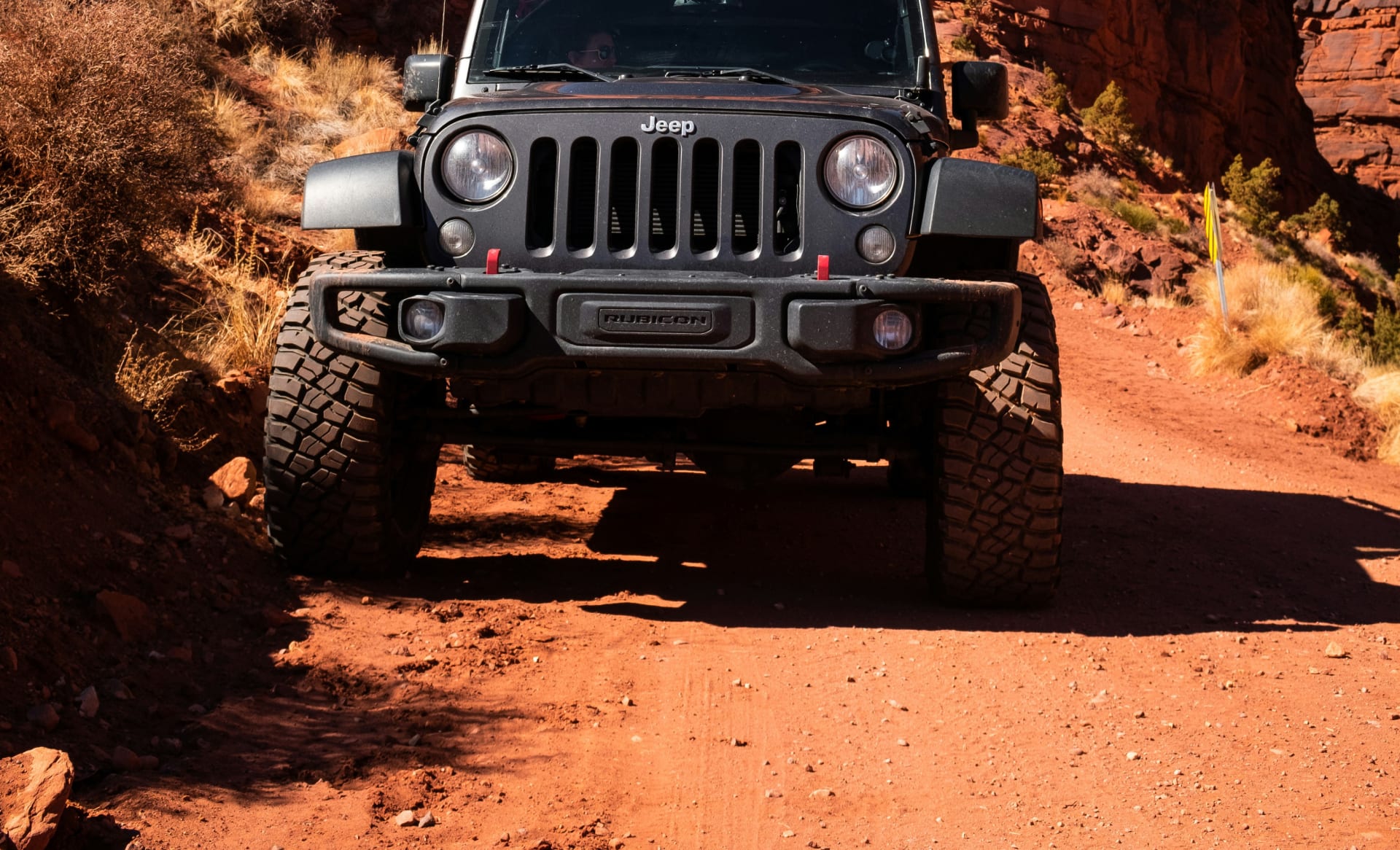
Utah Backcountry Adventures: The Reality Behind Utah's Most Legendary Off-Road Terrain
Here's what the glossy travel magazines conveniently omit about Utah backcountry adventures: the 800-foot vertical climbs on exposed cliff edges barely wider than your vehicle, the afternoon thunderstorms that transform sandy washes into raging torrents within minutes, and the harsh reality that cell service disappears approximately 3.2 miles from town—right around the time most tourists realize their rental sedan was never meant for this terrain.
Utah's backcountry isn't just another scenic drive—it's a 30,000-square-mile proving ground where sandstone slickrock, technical rock crawling obstacles, and legitimate wilderness conditions test vehicle capability and driver judgment with ruthless efficiency. The landscape that creates those Instagram-worthy photographs operates according to geological and atmospheric forces that don't care about vacation schedules or overconfidence.
The statistics reveal an uncomfortable pattern:
Grand County Search and Rescue responds to over 200 backcountry incidents annually, with the majority involving inadequately prepared vehicles, inexperienced drivers attempting trails beyond their capability, or tourists who assumed "moderate difficulty" meant something similar to their hometown dirt roads.
What "Utah Backcountry Adventures" Actually Means
The phrase "backcountry adventures" gets thrown around by tourism marketing departments until it loses all meaning. Here's the actual definition: remote terrain accessible only by high-clearance 4x4 vehicles, operating beyond cell phone coverage, requiring technical driving skills, and presenting consequences ranging from expensive vehicle damage to genuine emergency situations.
Utah's backcountry encompasses everything from the relatively accessible Gemini Bridges trail to the genuinely extreme challenges of Pritchett Canyon and Gold Bar Rim. The terrain includes:
Slickrock surfaces - Petrified sand dunes with grip coefficients that change based on temperature, moisture, and tire pressure. The same surface that provides excellent traction at 20 PSI becomes dangerously slippery at street pressure.
Technical rock obstacles - Named features like "Hell's Gate," "The Escalator," and "Tipover Challenge" that require precise line selection, throttle control, and understanding of approach angles that most drivers never develop.
Remote canyon systems - Areas like the Needles District where the nearest paved road sits 45 miles away and emergency response times measure in hours rather than minutes.
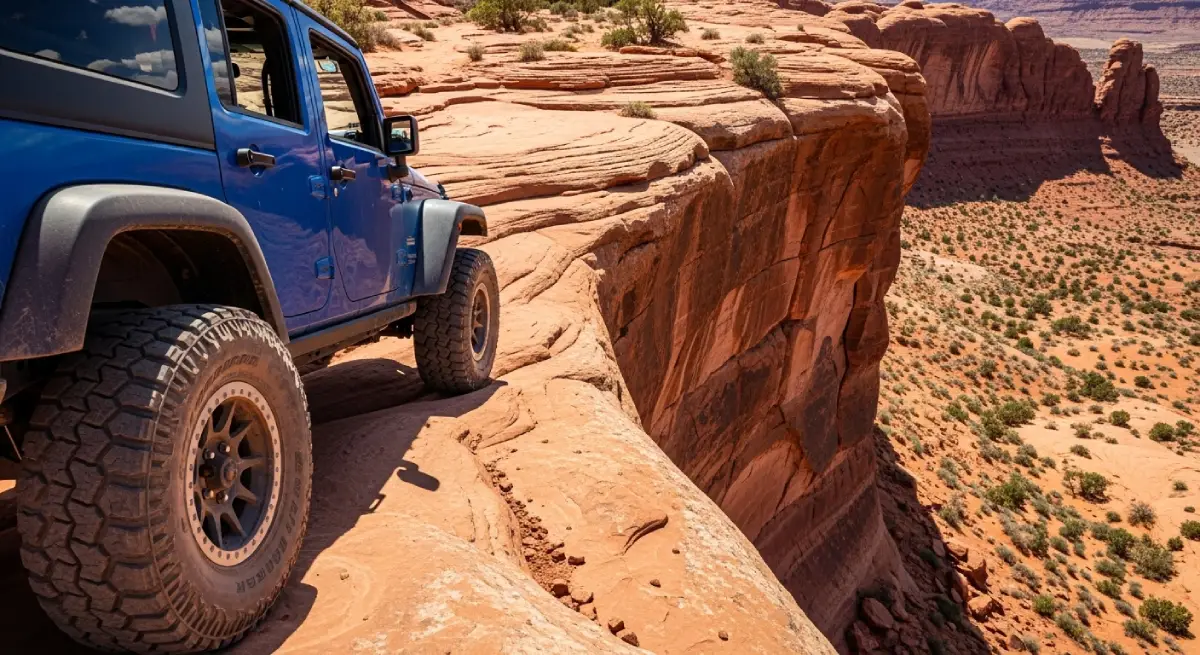
Exposed cliff edges - Sections of trails like Kane Creek where the passenger-side tires track 18 inches from 400-foot drops with no guardrails, margin for error, or second chances.
The Bottom Line: Real Utah backcountry adventures operate in environments that test equipment limits and punish inadequate preparation through natural consequences rather than warning signs.
Hell's Revenge: Utah's Most Iconic Backcountry Trail
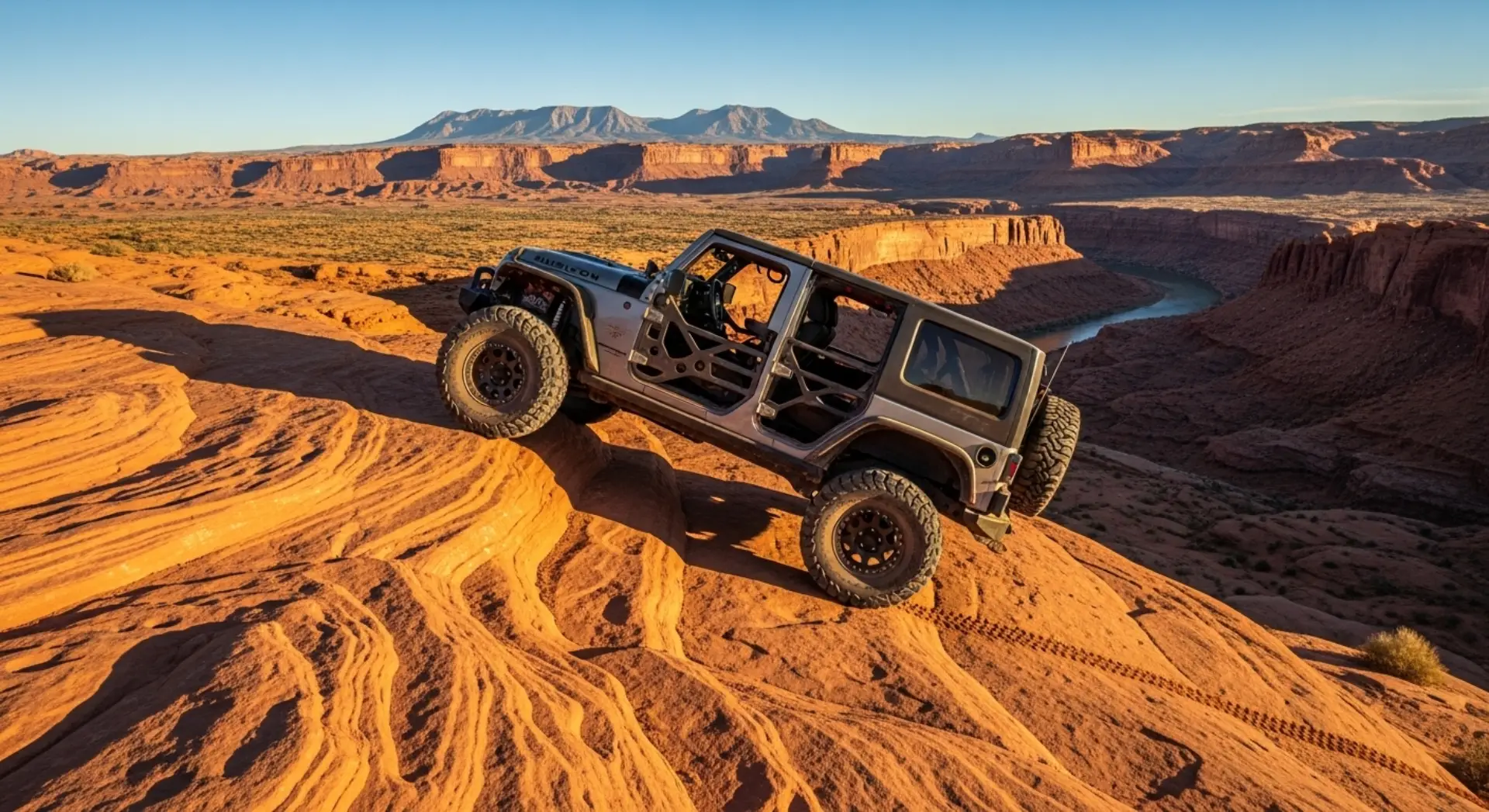
Hell's Revenge stands as Utah's calling card for backcountry adventures—a 6.5-mile roller coaster of petrified sand dunes that attracts over 50,000 visitors annually and generates more social media content than perhaps any other off-road trail in North America. The trail's popularity creates a dangerous illusion: if this many people complete it successfully, how hard could it actually be?
The reality check arrives at approximately mile 2.3, where "Hell's Gate" presents drivers with a near-vertical 45-degree descent that looks impossible from the top and feels barely controlled during execution. This single obstacle generates more vehicle damage, rollovers, and rescue calls than the rest of the trail combined.
The Technical Reality
Hell's Revenge demands specific capabilities that standard vehicles simply don't possess:
Approach and departure angles exceeding 35 degrees to clear the steep ledges without high-centering or damaging bumpers. Most stock SUVs max out around 25 degrees.
Articulation allowing wheels to maintain contact with radically uneven surfaces. The trail features sections where opposite corners lift 18+ inches simultaneously.
Low-range gearing providing precise control on steep descents where gravity acceleration exceeds safe speeds in normal drive ratios.
Ground clearance of at least 10 inches to navigate the rock ledges and avoid undercarriage damage on the protruding sandstone formations.
The trail's slickrock surface provides exceptional traction when approached correctly—but also amplifies mistakes. A line selection error that might scrape your rocker panel on dirt becomes a $3,000 damage incident on unforgiving sandstone.
Optional Obstacles That Aren't Really Optional
Hell's Revenge features several "optional" obstacles with intimidating names. Here's the truth: they're only optional if you're comfortable backing up a quarter mile on exposed slickrock with cliffs on both sides to find the bypass route. Most drivers who choose the bypass discover it's more stressful than running the obstacle.
Hell's Gate - The signature descent that appears in countless videos. It's not the steepest obstacle you'll encounter (that distinction belongs to sections of Black Bear Pass), but the exposure and commitment required make it psychologically challenging.
The Escalator - A series of ledges requiring momentum management. Too slow and you stall mid-obstacle; too fast and you damage the vehicle or lose control at the top.
Mickey's Hot Tub - A depression in the slickrock that fills with water after rain. It's only 18 inches deep but the steep exit requires proper line selection or you're stuck.
The Bottom Line: Hell's Revenge separates Utah backcountry adventure capability from overconfident assumptions faster than any other trail. It's simultaneously accessible enough that properly equipped beginners can complete it and challenging enough that experienced drivers still experience moments of genuine concern.
Poison Spider Mesa: Where Technical Skills Become Non-Negotiable
While Hell's Revenge attracts the crowds and social media attention, Poison Spider Mesa represents a significant step up in both technical difficulty and commitment. This 13.2-mile trail combines everything that makes Utah backcountry adventures legendary: technical rock crawling, cliff-edge exposure, navigation challenges, and consequences that escalate from "expensive" to "genuinely dangerous" with remarkable efficiency.
The Reality of Technical Rock Crawling
Poison Spider Mesa features obstacles that require specific techniques most drivers have never practiced:
Wheel placement precision where mistakes measure in inches rather than feet. "The Wedgie" obstacle demands line selection accurate enough that missing by 6 inches means potential rollover.
Momentum management balancing forward progress against maintaining control. Several sections require enough speed to climb ledges but not so much that you launch into the rocks at the top.
Throttle modulation in situations where too much power breaks traction and too little stalls the attempt. The learning curve typically includes multiple failed attempts at key obstacles.
Spotter communication for obstacles where the driver's sight lines don't reveal critical information about wheel position or clearance.
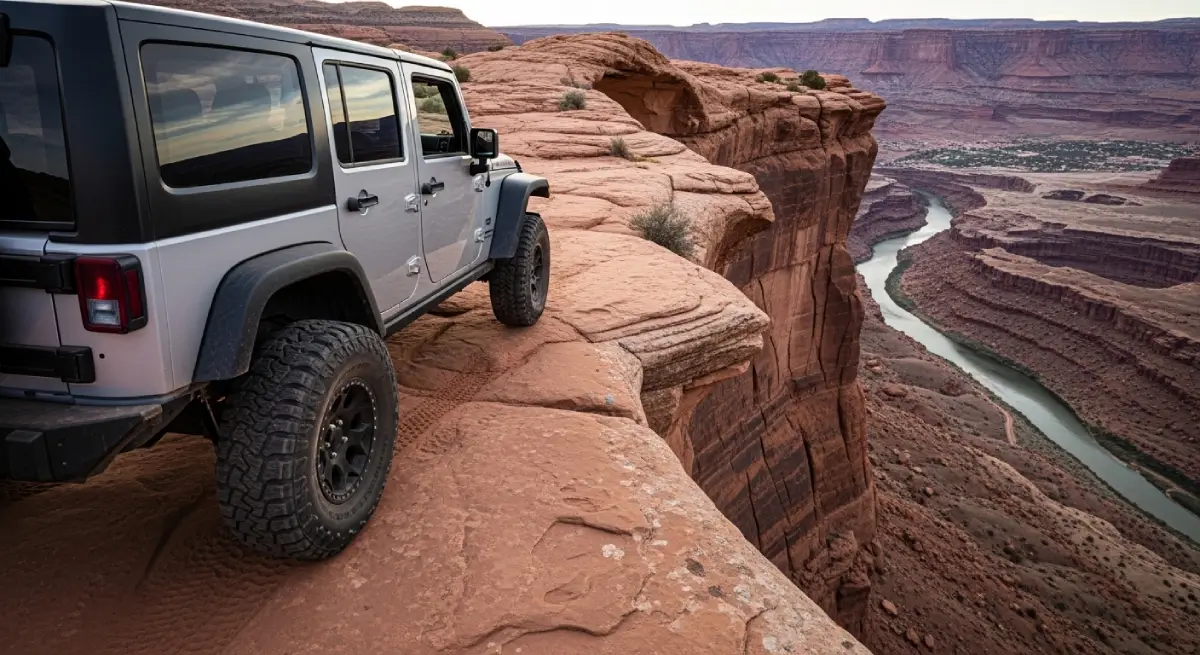
The trail includes "Little Arch"—a natural sandstone arch located approximately 20 feet from a cliff edge overlooking Moab. It makes for spectacular photographs but presents a genuine turning challenge for longer wheelbase vehicles. Getting the perfect photo angle requires parking on slickrock with significant exposure and no margin for error.
Exposure That Tests Psychological Limits
The section connecting to Gold Bar Rim runs along cliff edges where the outside wheels track uncomfortably close to 600-foot drops. The slickrock provides reliable traction, but the visual exposure triggers instinctive fear responses that make rational decision-making challenging.
First-time passengers often freeze or vocalize panic, which creates additional stress for drivers who need to maintain concentration on line selection and throttle control. This psychological element separates Utah backcountry adventures from regular off-roading—success requires managing fear responses while executing technical driving tasks.
The Bottom Line: Poison Spider Mesa rewards competent preparation and punishes inadequate vehicle capability or driver skill through expensive lessons that don't include refunds for optimism.
The White Rim Road: Multi-Day Backcountry Commitment
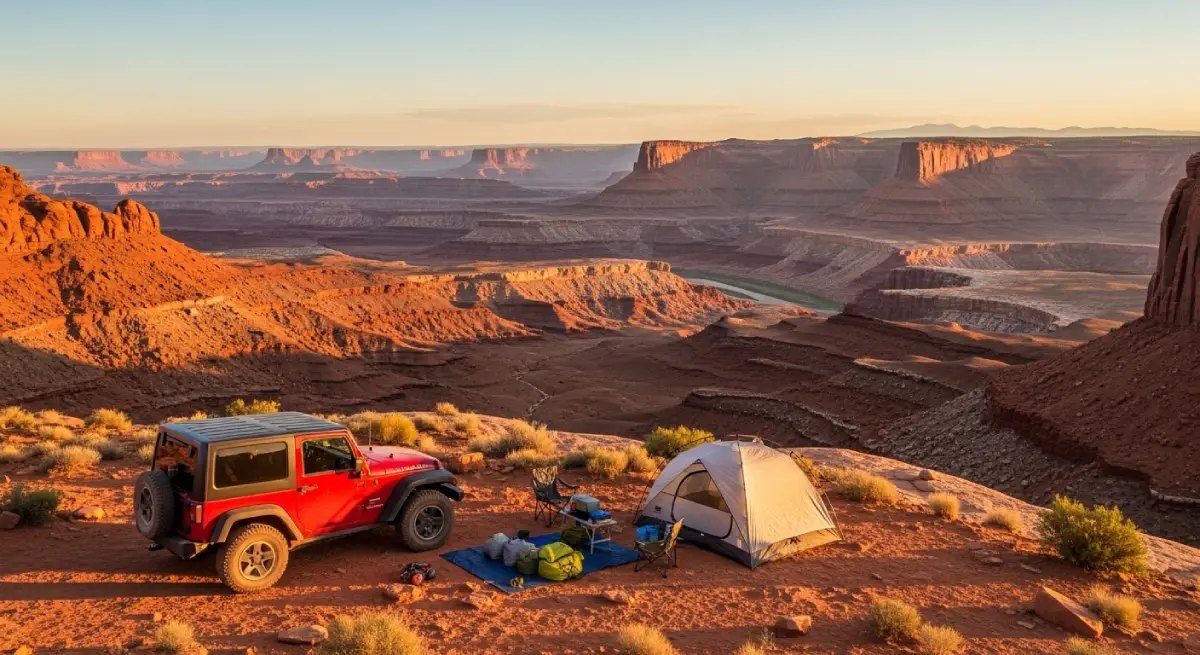
The White Rim Road represents the opposite end of the Utah backcountry adventure spectrum from trails like Hell's Revenge. Instead of intense technical challenges compressed into 6 miles, this 100-mile loop around the Island in the Sky district of Canyonlands presents moderate difficulty sustained over multiple days in genuine wilderness.
What Makes Remote Different
The White Rim requires permits (obtained months in advance), designated camping locations, and preparation that extends beyond vehicle capability to include:
Water management for routes where natural sources don't exist and resupply isn't possible. Planning assumes 1.5 gallons per person per day minimum.
Mechanical self-sufficiency for repairs that range from fixing flat tires to addressing more serious issues that occur 40+ miles from the nearest paved road.
Navigation capabilities beyond smartphone apps. GPS units fail, batteries die, and certain sections require map reading skills to identify the correct route among multiple tracks.
Weather contingency planning for conditions that can make sandy sections impassable or turn washes into raging floods within 30 minutes of distant thunderstorms.
The trail's moderate difficulty rating assumes proper preparation and favorable conditions. That same "moderate" classification becomes "genuinely challenging" during hot weather (shade temperatures exceed 105°F), wet conditions (clay sections become impassable), or when dealing with mechanical issues far from assistance.
The Time Commitment Reality
White Rim Road typically requires 2-3 days for completion, depending on stops for hiking, photography, and side trips to features like Musselman Arch or the Gooseberry viewpoint. The mileage and elevation changes don't sound extreme by backcountry standards, but the sustained nature of the journey and commitment required differentiate it from day trips.
You can't decide at mile 40 that you've had enough and head back to town. The loop structure and permit system mean you're completing the route or requiring rescue. This commitment level attracts adventurers seeking authentic wilderness experiences but requires psychological preparation beyond vehicle capability.
The Bottom Line: White Rim Road rewards meticulous planning and genuine self-sufficiency while punishing inadequate preparation through extended discomfort or expensive rescue operations.
Gemini Bridges: Accessible Backcountry for Strategic Experience Building
Not every Utah backcountry adventure needs to test limits or generate adrenaline spikes. Gemini Bridges represents the accessible end of the spectrum—a 13.2-mile out-and-back trail that provides genuine backcountry experience while remaining achievable for properly equipped beginners.
Why "Beginner-Friendly" Doesn't Mean "Easy"
The trail follows dirt roads rather than slickrock, features moderate grades instead of vertical climbs, and presents technical sections that challenge capability without demanding perfection. This balance makes Gemini Bridges valuable for drivers developing skills before attempting more extreme terrain.
The route traverses typical Utah high desert—pinyon and juniper forest punctuated by red rock formations and distant views of the La Sal Mountains. The Gemini Bridges themselves (two parallel natural arches spanning a deep canyon) aren't visible from the trail but make compelling destinations for short hikes.
Building Skills Strategically
Gemini Bridges allows drivers to experience:
Off-camber sections where vehicles tilt at angles that trigger concern without quite reaching dangerous.
Rocky technical sections requiring line selection but forgiving minor errors through slower speeds and better visibility.
Sandy washes that teach momentum management and traction principles in environments where mistakes cause temporary stuck situations rather than damage.
Navigation decision-making at unsigned junctions that build confidence without severe consequences for wrong turns.
The Bottom Line: Gemini Bridges provides the experience necessary for accurately assessing readiness for more challenging terrain, which ultimately prevents expensive learning experiences on trails that don't tolerate experimentation.
The Needles District: Technical Wilderness Beyond Tourist Infrastructure
Canyonlands' Needles District represents Utah backcountry adventures in their purest form: remote, technical, beautiful, and absolutely unforgiving of inadequate preparation. Located 75+ miles from Moab, this region demands everything simultaneously—vehicle capability, driver skill, navigation proficiency, and self-sufficiency.
Why Most Tourists Never Experience The Needles
The Needles District sits far enough from main tourist routes that visiting requires deliberate planning and time commitment. This natural barrier filters out casual visitors, creating backcountry experiences characterized by solitude and pristine conditions rather than crowds and development.
Trails like Elephant Hill feature technical rock crawling that rivals or exceeds anything in the Moab area, combined with navigation complexity that challenges experienced drivers. The route includes named obstacles like "The Silver Stairs" and tight passages barely wider than full-size vehicles.
The region's remoteness means emergency response times measure in hours. Cell phone service doesn't exist. Mechanical problems or medical emergencies require self-rescue capability or extended waits for assistance. This level of isolation attracts adventurers seeking authentic wilderness but demands preparation that exceeds most tourists' comfort zones.
Permit Requirements That Actually Serve Purpose
Unlike many bureaucratic processes that seem designed to generate revenue or control access arbitrarily, Needles District permits serve legitimate purposes:
Capacity management preventing overcrowding that degrades the wilderness experience and concentrates impact on fragile desert ecosystems.
Group screening ensuring visitors possess required equipment, skills, and understanding of environmental conditions before entering remote terrain.
Safety tracking so search and rescue teams know approximately where to begin looking if groups become overdue.
The permit system requires planning months in advance for popular dates. This isn't bureaucratic obstruction—it's recognition that genuine wilderness experiences require limitations on access to maintain the qualities that make them valuable.
The Bottom Line: The Needles District rewards adventurers willing to invest in proper preparation and solitude while rapidly overwhelming those expecting tourist infrastructure or easy experiences.
La Sal Mountain Loop: Alpine Backcountry Overlooked By Most Visitors
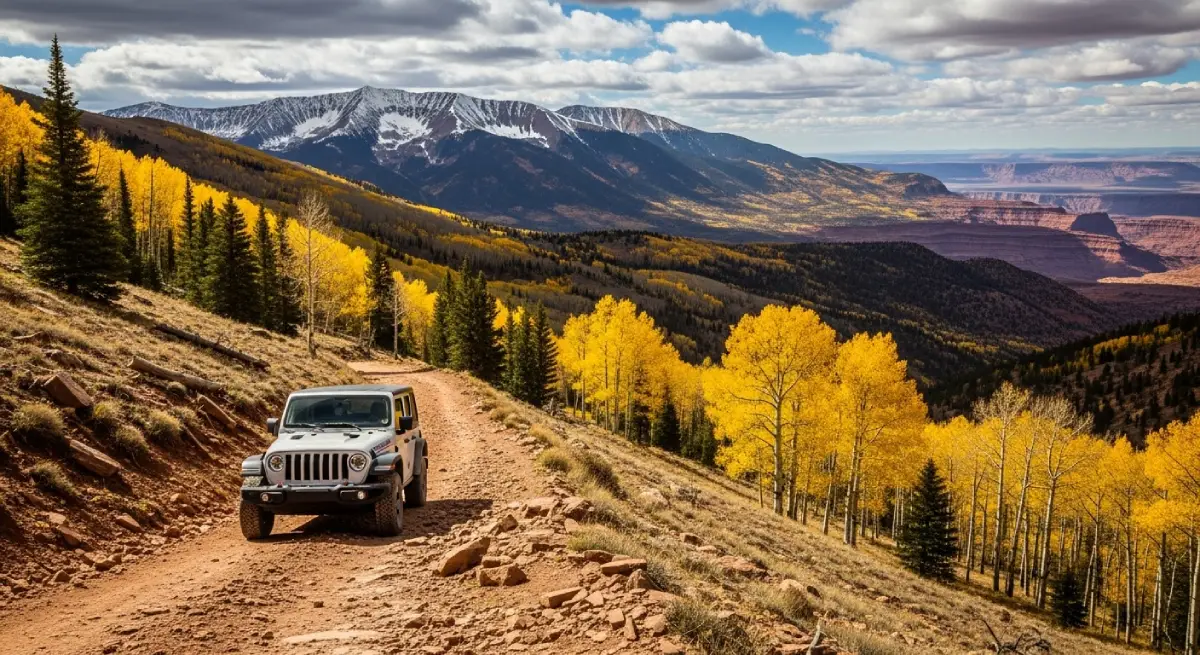
While most Utah backcountry adventure attention focuses on desert slickrock and technical rock crawling, the La Sal Mountains offer dramatically different terrain at elevations reaching 12,000+ feet. This 61-mile loop combines maintained dirt roads with more challenging 4x4 routes through alpine environments that feel nothing like the surrounding desert.
Why Elevation Changes Everything
The La Sal Mountains create their own weather systems and present challenges completely different from desert trails:
Altitude effects that reduce both vehicle and human performance. Normally aspirated engines lose approximately 3% of power for every 1,000 feet above sea level.
Temperature variations spanning 30-40 degrees between canyon bottoms and mountain peaks, requiring clothing layers and preparation for multiple climate zones in single days.
Weather volatility where afternoon thunderstorms develop rapidly and create lightning strike dangers in exposed high-elevation terrain.
Snow conditions that persist into June on north-facing slopes and return as early as September, creating mud and traction challenges even during "summer" months.
The loop provides access to exceptional viewpoints overlooking canyon systems, the Colorado River, and distant mountain ranges. The combination of elevation gain and varied terrain makes this route valuable for experiencing Utah backcountry diversity beyond the desert environments most visitors expect.
The Bottom Line: La Sal Mountain Loop demonstrates that Utah backcountry adventures extend beyond slickrock and technical rock crawling to include high-alpine challenges demanding different preparation and skills.
Why Professional Jeep Rentals Change The Equation
The patterns emerge clearly across thousands of Utah backcountry adventures: success correlates strongly with proper equipment rather than driver experience alone. A skilled driver in an inadequate vehicle still faces limitations, while properly equipped vehicles allow less experienced operators to safely access terrain that would otherwise remain beyond capability.
The Equipment Gap Between Consumer Vehicles and Backcountry Requirements
Rental vehicles and personal SUVs marketed as "off-road capable" typically provide:
8-9 inches ground clearance (backcountry trails demand 10-11+ inches)
Approach angles around 25 degrees (technical obstacles require 35+ degrees)
Open differentials that spin free on uneven surfaces (limited-slip or lockers maintain traction)
Street-oriented tires optimized for pavement rather than slickrock or sand
Electronic traction control that overheats during sustained technical sections
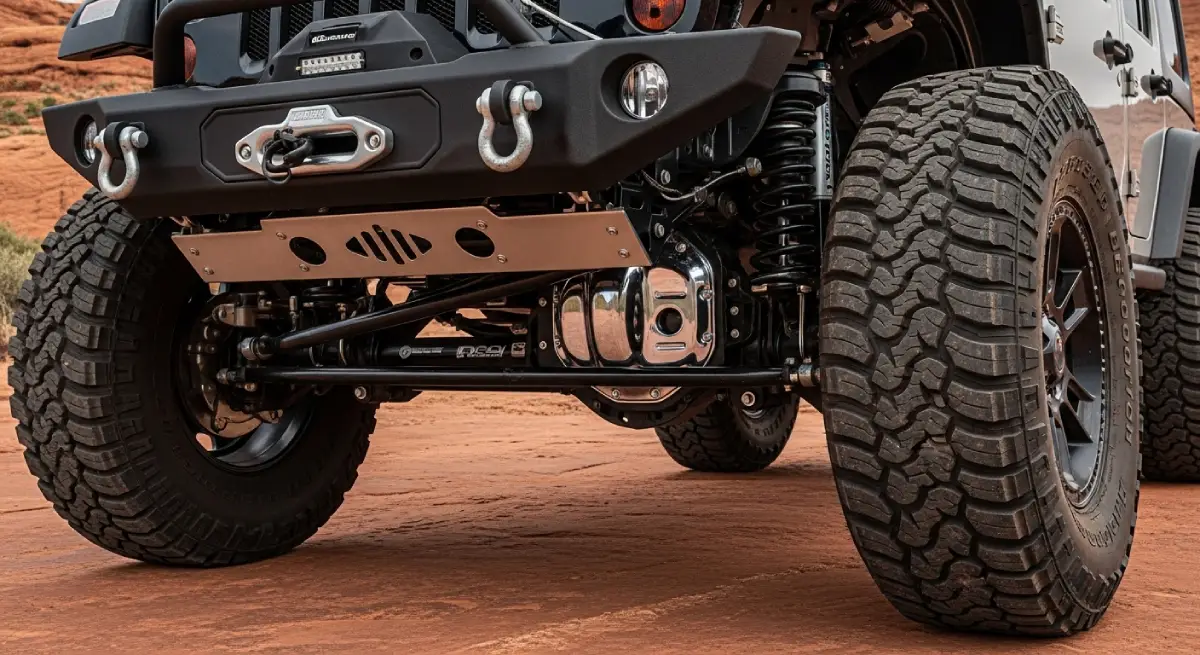
Professional backcountry vehicles address these gaps through:
Suspension lifts providing additional clearance for obstacles that would high-center stock vehicles
Larger aggressive tires with tread patterns designed specifically for rock and sand rather than asphalt
Mechanical upgrades including differential lockers, reinforced skid plates, and upgraded cooling systems
Purpose-built configurations reflecting thousands of hours experience identifying what actually works versus marketing claims
The capability difference isn't incremental—it's transformational. Obstacles that demand perfect technique in stock vehicles become straightforward in properly equipped rigs.
Experience Transmission That Accelerates Learning
Professional Jeep rental services provide more than equipment—they transfer experience accumulated over thousands of backcountry hours:
Pre-trip briefings covering specific trail characteristics, navigation landmarks, and obstacle strategies that transform anxiety into informed confidence
Vehicle-specific instruction on features like differential lockers, traction control systems, and suspension articulation that extend capability
Communication support via radio or phone for questions that arise during actual trail challenges rather than theoretical pre-trip discussions
Route recommendations matching current skill levels and conditions rather than marketing hype or outdated information
This experience transmission dramatically reduces the learning curve and prevents expensive mistakes that arise from not knowing what you don't know about backcountry requirements.
The Insurance Reality Nobody Discusses
Personal vehicle insurance policies typically contain exclusions for off-road use that void coverage precisely when you need it most. Rental car company insurance similarly excludes off-pavement operation, leaving tourists financially exposed for damage occurring on the trails they specifically rented vehicles to access.
Professional Jeep rental services designed for backcountry use include coverage appropriate for the intended terrain. This isn't just paperwork—it represents financial protection for the inevitable rock strikes, undercarriage scrapes, and mechanical stresses that occur during legitimate backcountry adventures.
When Professional Services Make More Sense Than Personal Attempts
The decision between renting proper equipment versus attempting backcountry adventures in personal or standard rental vehicles comes down to honest capability assessment:
Choose professional Jeep rental if:
Your personal vehicle lacks ground clearance, appropriate tires, or 4WD capability
You're visiting from regions where off-road experience comes from dirt roads rather than technical rock
The trails you want to experience demand equipment modifications costing more than rental fees
You value having local expertise available for navigation and technical advice
You prefer knowing emergency support exists if problems develop
Consider personal vehicle if:
You already own properly equipped, modified off-road vehicles
You possess documented experience on similar technical terrain
You've invested time researching specific trail conditions and navigation requirements
You carry appropriate recovery gear and possess the skills to use it effectively
You understand and accept financial responsibility for potential damage
The mathematics favor professional rental services for most visitors: the cost difference between capable vehicles and standard rentals typically runs $100-200 per day, while potential damage from attempting technical trails in inadequate vehicles starts at several thousand dollars and escalates rapidly.
The Bottom Line on Utah Backcountry Adventures
Utah's backcountry rewards competent preparation and properly equipped vehicles while punishing overconfidence and inadequate capability through natural consequences. The landscape's spectacular beauty exists precisely because it resists casual access—remote canyons, technical trails, and genuine wilderness conditions filter out unprepared visitors.
Success in Utah backcountry adventures correlates with honest capability assessment rather than optimistic assumptions. The trails that generate Instagram photographs and YouTube videos look accessible because they're being traversed by properly equipped vehicles driven by skilled operators. Standard rental SUVs and determination can't substitute for genuine capability.
Whether you invest in professional Jeep rental services or arrive with properly equipped personal vehicles, the fundamental requirements remain constant: appropriate ground clearance, technical capability exceeding trail demands, navigation proficiency, emergency self-sufficiency, and understanding that Utah's backcountry operates according to natural laws rather than tourist expectations.
Ready to experience Utah backcountry adventures with equipment designed specifically for this terrain? Cliffhanger Jeep Rentals provides professionally maintained, properly modified vehicles combined with the local expertise that transforms potential anxiety into confident exploration. The slickrock is waiting—but it only reveals its secrets to those who approach with appropriate respect and proven capability.
Experience Utah's legendary backcountry through Cliffhanger Jeep Rentals—where every vehicle is purpose-built for terrain that separates authentic adventure from expensive mistakes.