Team Building Activities Utah: Why Your Group Needs More Than Another Trust Fall
Here's the thing about bringing people together: it's harder than it looks. You can gather your team in a conference room, hand out name tags, and watch everyone smile politely while secretly checking how much time is left. We've all been there. The real challenge isn't getting people in the same room—it's creating conditions where genuine connection actually happens.
The Problem With Most Team Building
Traditional team building activities follow a predictable pattern. Someone from HR books a facilitator. Your team shows up with varying levels of enthusiasm. You play games designed by people who've never met your actual team, solving problems that don't exist in your real work. Then everyone goes back to their desks, and nothing changes.
The issue isn't that these activities are bad, exactly. They're just disconnected from anything that matters. When stakes are artificial, engagement stays surface-level. Your team can tell the difference between manufactured fun and experiences that actually test them.
What Utah's Backcountry Offers
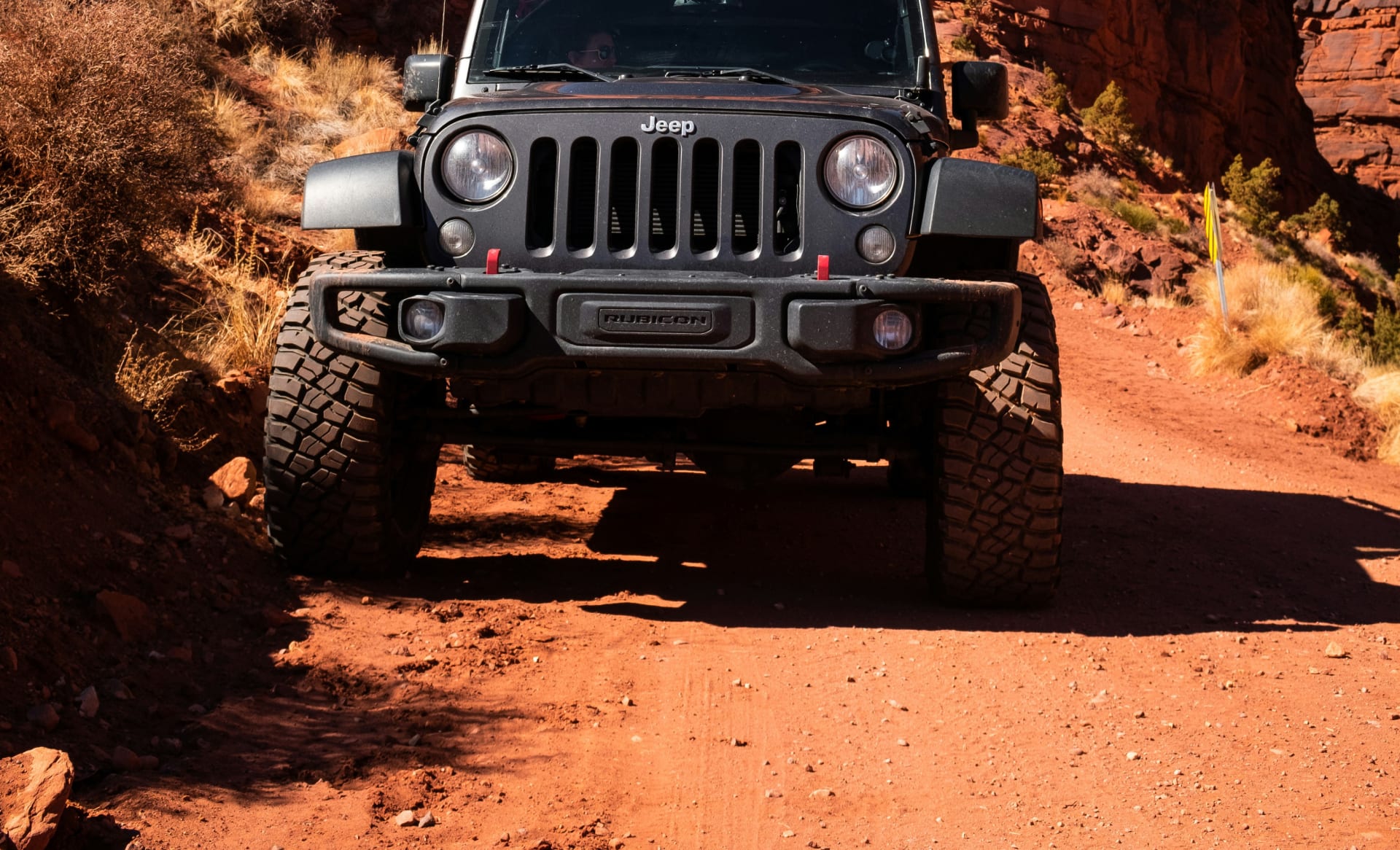
Utah's red rock country presents a different kind of classroom. The terrain doesn't care about your job title or your quarterly goals. A technical trail requires attention, communication, and trust—not because a facilitator told you these things matter, but because the rock in front of you demands it.
When you're spotting someone through a challenging obstacle, or working together to pick a line through a boulder field, something shifts. The pretense drops away. People show up as themselves because the situation requires it. This is where team building activities Utah offers through off-road adventures separate themselves from the usual options:
Real challenges that require actual problem-solving
Natural consequences that make communication matter
Shared experiences that create stories your team will actually retell
Physical engagement that breaks the pattern of sitting in rooms together
Off-Road Adventures as Honest Connection
Off-road Jeep adventures work because they're not trying to be team building—they just are. You're not doing trust falls while someone talks about workplace metaphors. You're navigating actual terrain, making real decisions, and relying on each other because the situation calls for it. The bonding happens as a byproduct of doing something that actually matters in the moment.
That's the difference. When you're looking at team building activities Utah has to offer, the question isn't which one looks good in photos for your company newsletter. The question is which experience will put your team in situations where they have to show up for each other in ways that feel real. The backcountry provides those situations naturally, without pretense or forced metaphors.
The Science of Bonding Through Shared Challenge
Your brain treats shared difficulty differently than shared comfort. When you face uncertainty with other people, your nervous system starts linking those individuals with survival and support. This isn't metaphorical—it's measurable chemistry. The stress hormones that spike during challenging moments get processed alongside the social bonding that happens when you work through those moments together. Your brain literally rewires its assessment of who matters to you.
This explains why soldiers bond during training, why disaster survivors form lasting connections, and why your team remembers the project that almost fell apart more vividly than the one that went smoothly. Adversity, when shared and overcome, creates psychological glue that comfort never can.
How Uncertainty Rewires Group Dynamics
When you put people in unfamiliar situations, their usual social patterns break down. The person who dominates meetings might go quiet on a technical trail. Someone who rarely speaks up might have the exact insight needed to navigate a tricky section. Uncertainty creates a kind of social reset where competence and contribution get redistributed based on the actual moment, not on office hierarchy.
This matters because teams get stuck in patterns. The same people lead. The same people follow. The same dynamics play out in meeting after meeting. But when you change the context completely—like swapping conference rooms for canyon trails—those patterns lose their grip. People surprise each other. And those surprises create new ways of seeing each other that persist long after you're back in the office.
Why Controlled Risk Changes Everything
Here's where team building activities Utah's backcountry provides have a specific advantage: the risk is real but managed. You're not actually in danger, but your brain doesn't entirely know that. The boulder field looks intimidating. The angle feels steep. Your body responds with the same heightened awareness it would in genuinely risky situations.
This controlled activation does something that safe, artificial exercises can't. It makes people care. Not because they're supposed to, but because their nervous system is engaged. When you help someone through a challenging obstacle, or when someone talks you through a moment of doubt, those interactions carry weight. Your brain files them differently than role-playing scenarios in a training room.
The elements that make this work:
Physical challenge that requires focus and presence
Outcomes that matter in the moment, even if the stakes aren't life-or-death
Interdependence that's built into the activity, not artificially imposed
Variability where each situation demands new problem-solving
Immediate feedback that shows whether your team communication is working
Real stakes—even relatively small ones—create real investment. And real investment creates real connection. That's the gap between activities your team tolerates and experiences that actually change how they work together.
Utah's Backcountry: A Natural Team Building Arena
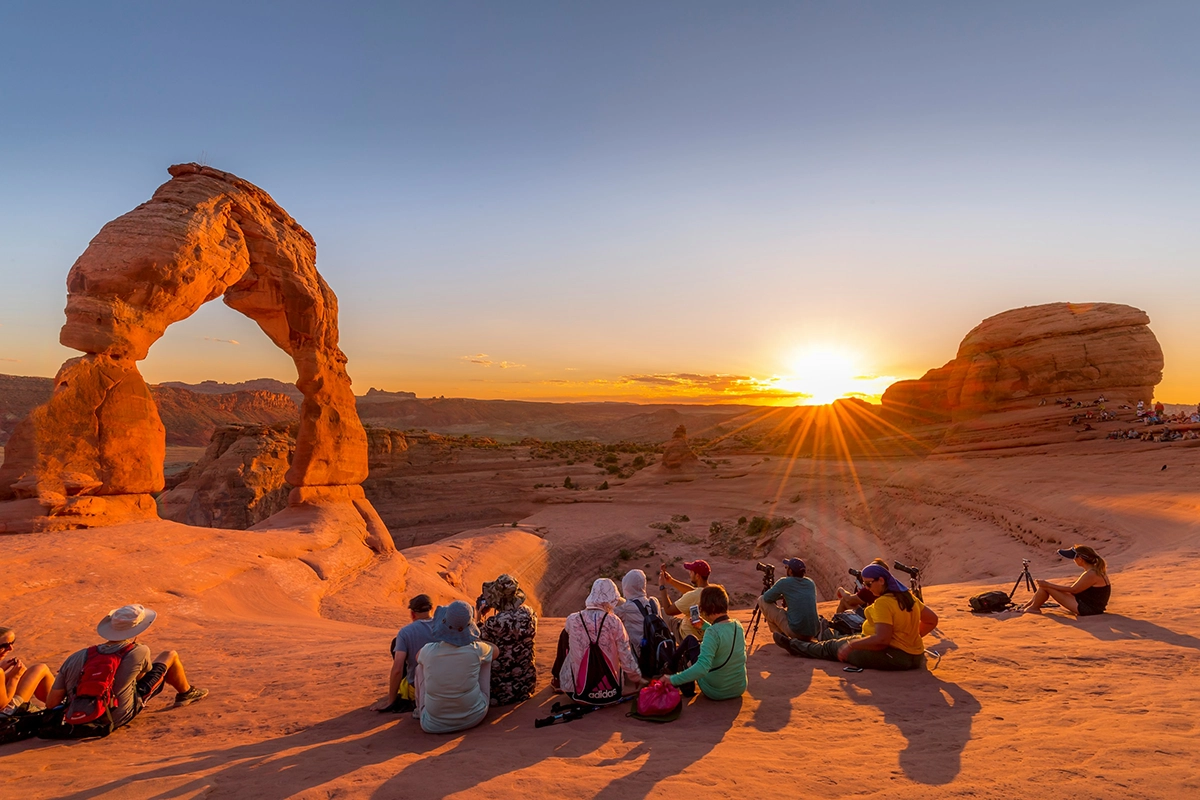
The red rock country around Moab doesn't negotiate. Sandstone slickrock carved by millions of years of wind and water creates obstacles that demand your full attention. These landscapes force groups to communicate clearly, trust each other's judgment, and stay present in ways that office environments rarely require. The terrain itself becomes a teacher—one that doesn't care about your business plan or your org chart.
What Red Rock Terrain Demands From Your Team
Sandstone formations create a unique type of challenge. The rock can be deceptively smooth or suddenly grippy. Angles that look impossible can be passable with the right line and approach. Obstacles that seem straightforward can surprise you. This environment rewards groups that communicate well, assess situations together, and support each other through moments of uncertainty.
What your team will face:
Slickrock sections where traction and momentum matter more than power
Boulder fields requiring careful spotting and clear communication
Steep inclines where trust between driver and spotter becomes obvious
Off-camber sections that test comfort zones and group support
Technical obstacles where multiple perspectives improve decision-making
Trail Variety and What It Offers Different Groups
The beauty of team building activities Utah's backcountry provides is the range. You're not locked into one difficulty level or one type of experience. Some trails test technical skill and nerve. Others reward patience and scenic appreciation. You can match the terrain to where your team actually is, not where some generic team building package assumes they should be.
Options across the spectrum:
Moderate scenic routes perfect for groups with varied experience levels
Technical challenges for teams ready to test themselves
Full-day adventures that include both demanding sections and recovery time
Combination routes that let you adjust difficulty based on how the group is responding
Sunset or sunrise trips that add atmosphere without adding technical difficulty
The Honesty of Weather and Environment
Desert weather doesn't pretend to be convenient. Spring mornings start cold and warm up fast. Summer afternoons can be scorching. Fall brings perfect temperatures but shorter days. Winter adds ice to shaded sections. Each season changes how trails feel and what they demand from groups.
This variability strips away the controlled comfort most teams operate in. You can't thermostat your way through a hot afternoon on the trail. You can't skip the part where everyone needs water and shade. Physical needs and environmental reality become shared concerns that bring people together without anyone having to manufacture the bonding moment. The environment does the work of making everyone human again, which is exactly what teams forget when they spend all their time in climate-controlled buildings staring at screens.
What Makes Off-Road Jeep Adventures Different
Most group activities put your team in observer mode. You watch a presentation, listen to a speaker, or follow instructions from a facilitator who's running the same program they ran last week for a different company. Off-road Jeep adventures flip that dynamic. Your team isn't watching someone else do something interesting—they're the ones making decisions, solving problems, and dealing with consequences in real time.
The Roles That Emerge on the Trail
Inside each Jeep, people naturally take on different responsibilities. These aren't assigned roles with matching lanyards—they're organic positions that shift based on who sees what and who's good at what. Someone needs to drive. Someone needs to watch the line and call out obstacles. Someone needs to track the route and keep the group oriented. These roles matter because the situation requires them, not because a team building exercise says they should.
How participation actually works:
Drivers make constant micro-decisions about speed, angle, and momentum
Spotters read terrain and communicate what the driver can't see from their seat
Navigators track routes, watch for markers, and help the group stay on course
Passengers stay alert for hazards and contribute to group problem-solving
Everyone rotates through roles on longer trips, building appreciation for different perspectives
Groups naturally find their rhythm as people discover what they're good at
Real-Time Problem Solving Without a Script
Here's where off-road adventures separate themselves from typical team building activities Utah companies offer: there's no predetermined solution. Each obstacle is slightly different. Weather changes conditions. What worked on the last trail might not work on this one. Your team has to read the situation in front of them and figure it out together.
This mirrors how actual work happens far better than scripted exercises ever could. Problems at work rarely come with instruction manuals. The best solutions usually emerge from groups talking through options, testing ideas, and adjusting based on what they learn. On the trail, that process happens dozens of times in a few hours. Your team gets practice at the thing they actually need to be good at: making decisions together when the answer isn't obvious.
Physical Presence Changes the Conversation
Nobody's checking their phone when the Jeep is tilted at a steep angle on slickrock.
The physical reality of off-road driving demands attention in a way that conference rooms never do. You're present because the situation requires it. You're listening to your teammates because what they're saying matters right now, not in some abstract future sense. Communication happens face-to-face, often with hand signals and clear callouts, because that's what works when you're navigating technical terrain.
This kind of presence—where people are genuinely focused on the same challenge at the same moment—has become rare. Most teams spend their days in separate rooms on separate video calls working on separate parts of projects. Off-road adventures force everyone into the same physical experience, dealing with the same rocks and the same decisions. That shared reality creates connections that digital communication simply can't replicate.

The Anatomy of a Team-Building Jeep Adventure
Size matters when you're trying to build actual connection. Too small and you don't get the group dynamics that make team building worthwhile. Too large and people disappear into the crowd, going through the motions without meaningful interaction. Off-road adventures work best when groups hit that middle range where everyone participates but nobody gets lost.
What actually works:
Groups of 8-16 people allow for intimacy while maintaining energy
Two to four Jeeps create natural subgroups without fragmenting the experience
Each vehicle holds 4-5 people, rotating roles throughout the day
Smaller teams (under 8) can book private experiences for deeper bonding
Larger groups can split across multiple days or different trail sections
The sweet spot for most corporate teams falls between 10-14 people
Half-Day vs. Full-Day: What the Time Commitment Changes
Half-day trips give you the highlights. You get on the trail, face some challenges, and return before lunch or dinner. They work well for teams testing the waters or dealing with tight schedules. But full-day adventures change the equation. When you're out for six to eight hours, something shifts. The initial nervousness wears off. People settle in. The conversations that happen during mid-day breaks go deeper than morning small talk.
Full-day trips also let you cover more varied terrain. You're not just sampling one type of challenge—you're experiencing how your team adapts across different conditions. Morning energy gives way to afternoon fatigue, which reveals how groups support each other when things get harder. That arc matters. It's closer to how real projects unfold over time, with initial enthusiasm evolving into sustained effort and mutual support.
What Happens When You Mix Experience Levels
Putting experienced off-roaders next to complete beginners sounds like a recipe for frustration. In practice, it's one of the more valuable aspects of team building activities Utah's trails offer. The experienced people can't just dominate—they have to explain, teach, and help others build confidence. The beginners contribute fresh perspectives and ask questions that veterans have stopped asking.
How mixed experience levels strengthen teams:
Veterans practice explaining what they know instead of just doing it
Beginners keep the group from getting overconfident or sloppy
Everyone sees different team members shine in unexpected contexts
Patience and teaching skills get tested and developed naturally
Shared learning creates more connection than shared expertise
Groups develop appreciation for different starting points and growth curves
Guides as Connection Facilitators, Not Just Trail Leaders
Good guides read groups. They notice who's nervous and who's comfortable. They see when someone needs encouragement and when someone needs a gentle reality check. Their job isn't just to keep Jeeps on the trail—it's to create conditions where your team can actually connect.
This means knowing when to let groups struggle a bit with a problem and when to step in with guidance. It means creating moments where quieter team members can contribute and louder ones can listen. Experienced guides understand that the trail does most of the teaching, but timing and framing make the difference between an adventure people tolerate and an experience that actually changes how they work together. They're less like tour guides and more like facilitators who happen to know the terrain really well.

Specific Trails and What They Offer
Different trails test different aspects of how teams work together. Some demand trust. Others require sustained communication. A few test endurance and group patience. Understanding what each trail brings to the table helps match the experience to what your team actually needs.
Hell's Revenge: Technical Challenge and Trust-Building
Hell's Revenge has a reputation, and it's earned. This trail features steep slickrock climbs, off-camber sections, and obstacles that look more intimidating than they actually are—but your nervous system doesn't know that until you're through them. The technical difficulty forces drivers and spotters into tight communication loops where trust becomes obvious rather than theoretical.
What this trail teaches:
Direct communication when stakes feel high and clarity matters
Trust between drivers who can't see everything and spotters who can
Managing fear and doubt while still moving forward as a group
Supporting team members through moments that push comfort zones
Celebrating small victories when obstacles that looked impossible get conquered
Learning that perceived limits often exceed actual limits
Fins & Things: Communication Under Pressure
Fins & Things presents constant decision points. The trail winds through sandstone formations that require reading terrain, choosing lines, and adjusting on the fly. What makes this trail valuable for team building activities Utah offers is the sustained communication it demands. You can't just talk through one obstacle and coast—every few minutes brings a new challenge that needs group input.
Communication skills this trail develops:
Giving clear, specific directions under time pressure
Listening actively when multiple voices offer different perspectives
Reconciling conflicting assessments of the same situation
Speaking up when you see something others might have missed
Staying calm when initial approaches don't work and adjustments are needed
Building consensus quickly without overthinking every decision
Poison Spider Mesa: Endurance and Group Pacing
Poison Spider Mesa is longer and more varied than technical showcase trails. It has challenging sections, but what really tests teams is the sustained effort over several hours. Groups have to pace themselves. They need to manage energy and attention across the whole experience, not just spike for one impressive obstacle. This trail reveals how teams handle fatigue, maintain focus, and support each other when the excitement of novelty wears off.
What sustained effort reveals about your team:
How groups maintain morale when challenges stretch across hours
Whether fast-paced team members can adjust to the group's sustainable speed
Who steps up with encouragement when energy starts flagging
How well the team shares responsibility for keeping everyone engaged
Whether groups can maintain communication quality when they're tired
The difference between starting strong and finishing strong together
Scenic Alternatives for Mixed Experience Levels
Not every team needs maximum technical difficulty. Some groups benefit more from trails that balance challenge with accessibility—routes that let everyone participate without pushing anyone beyond useful stress into counterproductive anxiety. Scenic trails through Castle Valley or along the Colorado River provide enough variability to keep things interesting while prioritizing connection over conquest.
These routes work well for teams with significant experience gaps, groups dealing with physical limitations, or situations where the goal is conversation and connection rather than adrenaline. The terrain still requires attention and teamwork, but the difficulty curve stays manageable. People can talk more, laugh more, and focus on each other rather than just on not rolling the Jeep. Sometimes that's exactly what a team needs—time together in a beautiful place where the setting does most of the work of breaking down walls.
What Teams Actually Learn
The lessons that stick aren't the ones someone lectures about in a debrief session. They're the ones your team discovers by living through situations that matter in the moment. Off-road adventures create dozens of these micro-lessons across a few hours, each one reinforcing skills that translate directly back to work.
What your team takes away:
Decision-making when consequences are real - Not life-or-death real, but real enough that your brain treats the choices seriously. Groups learn to gather input quickly, make calls without perfect information, and commit to decisions even when uncertainty remains. This beats every hypothetical case study ever invented.
Supporting team members outside comfort zones - Some people love technical challenges. Others find them terrifying. Watching how your team handles that gap reveals everything about your culture. Do the confident people get impatient? Do the nervous people get encouragement or eye rolls? The trail makes these dynamics visible.
Celebrating small wins together - Every cleared obstacle is a small victory. Teams that pause to acknowledge these moments—even just with a quick cheer or high-five—build momentum and morale. Teams that just grind to the next challenge without recognition learn something different about themselves, and it's usually not flattering.
Handling frustration and uncertainty as a group - Not every approach works on the first try. Sometimes the line you picked doesn't pan out. Sometimes conditions change. How teams respond to setbacks and confusion—whether they get snippy or supportive, whether they blame or regroup—predicts how they'll handle project setbacks far better than personality assessments ever could.
Recognizing different forms of competence - The person who's great at spreadsheets might struggle with spatial reasoning on the trail. The quiet admin might have excellent instincts for reading terrain. These discoveries reshape how team members see each other's value beyond their job descriptions.
Communicating without passive-aggressive subtext - When you need to tell a driver to stop or turn, you say it directly. There's no room for hints or implications. Teams practice clear, respectful communication because the situation demands it, then often find themselves using the same directness back at work.
The Translation Back to Work
Here's what makes these lessons different from typical team building activities Utah offers through ropes courses or escape rooms: the skills map directly to workplace challenges without requiring mental gymnastics. Making decisions with incomplete information? You do that every day at work. Supporting colleagues who are stressed? That's Tuesday afternoon in most offices. Celebrating progress on long projects? That's what keeps teams motivated through the middle stretches when excitement has faded but the finish line is still distant.
The terrain doesn't teach through metaphor—it teaches through direct experience that happens to apply everywhere else. Your team isn't learning "how navigating a boulder field is like managing a project timeline." They're learning how to make decisions under pressure, support each other through difficulty, and maintain communication when things get complicated. Those skills work on trails. They also work in conference rooms, on project calls, and during quarterly crunches. The transfer happens naturally because the underlying challenge is the same: humans trying to accomplish something together when the path forward isn't obvious.
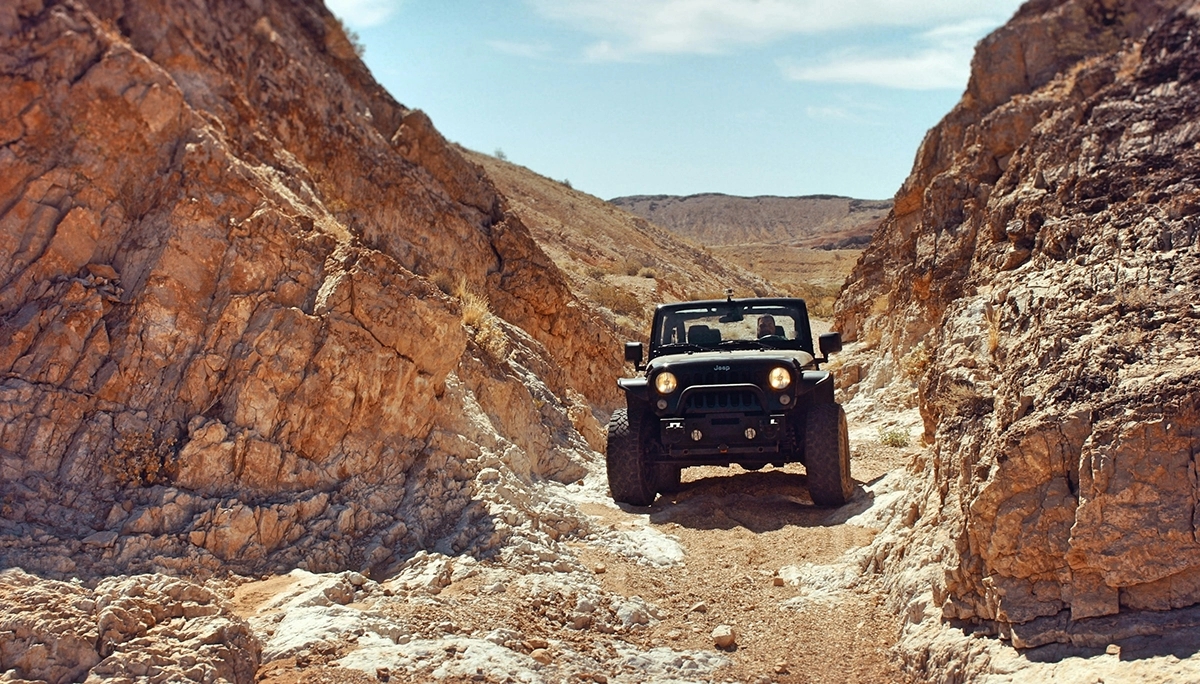
Team Building Activities Utah Teams Actually Remember
You can tell the difference between activities people endured and experiences that changed how they work together. The ones that matter come up in conversation months later. They create inside jokes and shared reference points. They shift how team members see each other and themselves. Forced fun creates forced smiles and polite thank-yous. Genuine connection creates stories people actually want to retell.
Off-road adventures work because they're honest. The challenges are real. The support has to be real. The communication either works or it doesn't, and everyone can see which. Some teams don't need this kind of intensity—they're fine with wine tastings and cooking classes. But other teams have hit a wall. They've done the standard options. They need something that strips away pretense and puts people in situations where they have to show up for each other because the moment demands it.
What sets authentic experiences apart:
Challenges that require actual problem-solving, not playacting
Stakes that make people care without putting anyone in danger
Roles that emerge naturally based on who's good at what
Lessons learned through experience rather than lecture
Stories that your team will reference for years
Connections built through shared difficulty, not manufactured activities
Why Dirt and Rocks Matter for Some Teams
Not every group needs to get muddy and navigate slickrock. But teams that spend all their time in controlled environments—same building, same meetings, same comfortable patterns—sometimes need to break out of that context entirely. The office has rules, both written and unwritten. People know their roles. Hierarchies are clear. Everyone operates within established patterns that resist change.
Red rock country doesn't care about your org chart. The terrain treats everyone equally. Job titles mean nothing to a boulder field. This contextual reset lets teams discover new dynamics that would never emerge in their usual environment. The accountant who's brilliant with spreadsheets might be terrible at reading terrain. The junior developer might have great instincts for navigation. These discoveries don't diminish anyone—they expand how the team sees each person's range of skills and how they contribute value.
Start Planning Your Team's Adventure
Cliffhanger Jeep Rentals in Moab makes it simple to get your team on the trails. Whether you're looking for a half-day introduction or a full-day challenge, we'll help match the right trails to your group's experience level and goals. Our guided adventures take care of the logistics so you can focus on your team. We provide the Jeeps, the expertise, and the local knowledge—you bring the group ready to try something different.
Ready to move beyond conference room team building activities Utah's backcountry offers something better. Contact us to discuss your team's needs, timeline, and what kind of experience would work best. We'll handle the details while you get ready to see your team in a completely different context—one where real challenges create real connection.