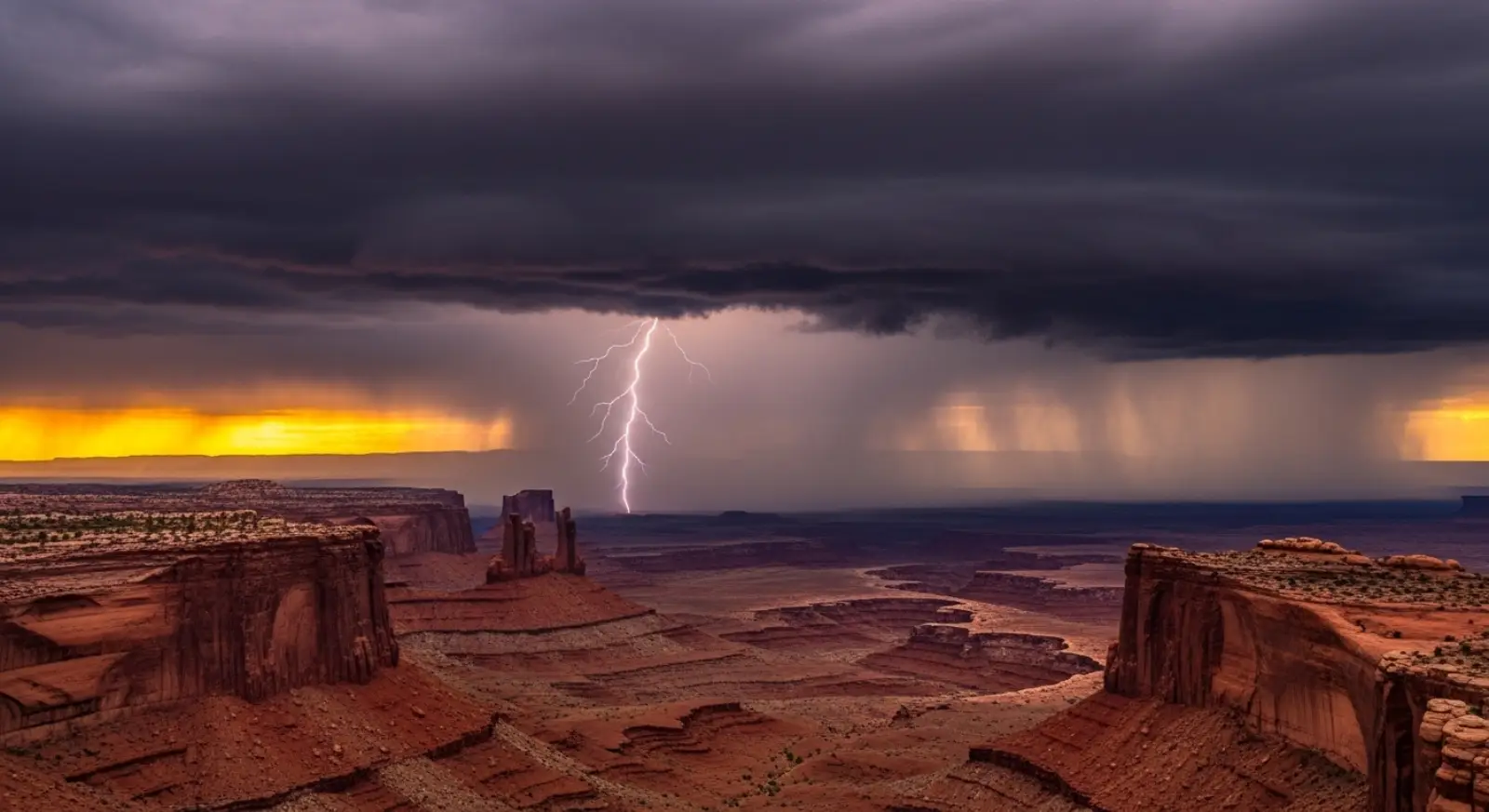
Here's what the tourism websites conveniently omit about Moab weather: the violent June 2024 storm that dumped over 1 inch of rain in 15 minutes—creating a 50-year flood that stranded 20 people and left two dead in what locals now call the worst flooding since 2022—the brutal summer reality where slickrock temperatures exceed 110°F while air temps hover around 100°F, and the dangerous misconception that "arid desert climate" means weather is predictable when Moab's monsoon season brings isolated thunderstorms that transform dry washes into raging rivers faster than tourists can retreat.
Moab weather isn't just another desert climate requiring sunscreen and water bottles. It's a high-desert environment at 4,025 feet elevation that operates on extremes—temperature swings exceeding 40°F within 24 hours, monsoon deluges appearing from clear skies with golf-ball-sized hail and tropical storm-force winds, and the harsh statistical reality that Moab averages only 10 inches of precipitation annually but when rain does fall, it concentrates into violent flash floods that kill unprepared visitors who ignored weather warnings.
The difference between experiencing Moab's legendary trails safely versus becoming another search-and-rescue statistic fundamentally depends on understanding that Moab weather doesn't follow the patterns tourists expect from their hometown climates—and that proper vehicle capability matters exponentially more when weather transforms "easy" trails into technical challenges.
Understanding Moab's Four Distinct Seasons
The confusion about Moab weather stems from treating it as "just another desert" when it's actually a high-desert environment with dramatic seasonal variations that change trail accessibility, vehicle requirements, and survival margins.
Spring (March-May): Prime Season with Unpredictable Storms
Spring brings Moab's highest tourist traffic because temperatures finally moderate after winter cold—but "moderate" comes with dangerous variability that strands unprepared visitors weekly.
Spring weather characteristics:
Daytime temperatures: 60°F-80°F (March averaging 60°F, rising to low-80s by May)
Nighttime lows: 30°F-50°F (freezing temperatures persist through April)
Temperature swings: 40°F+ fluctuations within 24 hours are normal—70°F sunny afternoons drop to 30°F overnight
Precipitation: April receives MORE rainfall than any other month despite "arid desert" marketing. Expect short, violent thunderstorms that are highly localized—one trail gets drenched while another 5 miles away stays bone dry.
Trail conditions: Mud from overnight rain or snowmelt creates traction nightmares on slickrock. What was grippy sandstone yesterday becomes ice-rink slippery when wet. Trails rated "moderate" in dry conditions jump to "difficult" after precipitation.
Crowds: Peak season congestion—Easter Jeep Safari (typically mid-April) brings 25,000+ off-road enthusiasts flooding Moab simultaneously. Expect trail traffic jams, sold-out accommodations, and vehicle rental scarcity.
Morning frost: Even in late April/May, mornings below freezing create ice on shaded slickrock sections invisible to tourists accustomed to day-only temperature monitoring
The spring appeal is obvious—comfortable temperatures for strenuous hiking and off-roading without summer's punishing heat. But tourists consistently underestimate the temperature volatility. That 75°F afternoon requires winter jacket by 8 PM. The overnight camping trip planned for moderate weather becomes freezing misery when temps drop 45°F after sunset.
Summer (June-September): Extreme Heat Meets Monsoon Violence
Summer Moab operates on brutal extremes that test vehicles, bodies, and decision-making equally. This isn't "wear sunscreen and bring water" summer—this is genuine survival-skill-testing heat combined with violent weather that appears from nowhere.
Summer weather characteristics:
Daytime temperatures: 95°F-105°F air temperature (July averaging 100°F+), but slickrock surface temperatures exceed 110°F-120°F
Nighttime lows: 60°F-75°F (the ONLY comfortable hours for strenuous activity)
100°F frequency: July sees 100°F+ temperatures on half the days or more. The 100-degree weather begins as early as May and lingers through September.
Extreme humidity swings: June experiences 14.91% relative humidity (brutal dehydration risk), while monsoon season drives humidity to 40%+ during storms
Monsoon season: Mid-June through September brings the most dangerous weather pattern Moab experiences—violent isolated thunderstorms with:
1-2 inches of rain per hour (flash flood threshold)
Golf-ball-sized hail
Tropical storm-force winds
Lightning strikes up to 60 miles from visible rainfall
Storm duration: 10-30 minutes of absolute chaos followed by clear skies
Flash flood reality: The 2024 summer brought FOUR separate major flooding events. June 21st dropped 1+ inch in 15 minutes creating 50-year flood conditions. August storms exceeded the intensity of the historic 2022 floods that caused millions in damage.
Trail accessibility: Morning-only for strenuous routes. Afternoon heat makes technical trails genuinely dangerous—heat exhaustion, dehydration, vehicle overheating all spike. Afternoon thunderstorms make slot canyons, narrow washes, and low-lying trails death traps.
The summer paradox: This is when most families vacation, but it's genuinely Moab's most dangerous season. Tourists from temperate climates underestimate 100°F+ dry heat. They start trails at 11 AM assuming they'll "tough it out" and end up requiring emergency evacuation when heat exhaustion hits mile 3 of a 7-mile loop.
The flash flood danger isn't theoretical—it's documented and deadly. Two people died in June 2024 floods. Their UTV was found damaged after traveling 0.75-1 mile in flood waters before being pushed into a basin. The couple was exploring Steel Bender Trail when weather hit. The storm appeared with minimal warning—standard summer monsoon pattern.
Fall (September-November): Optimal Conditions with Diminishing Daylight
Fall represents Moab's second prime season—comfortable temperatures without spring's precipitation volatility. But "optimal" comes with the catch that daylight hours shrink rapidly and November cold arrives faster than tourists expect.
Daytime temperatures start at 80°F in September and drop to mid-50s by November, with nighttime lows falling from 50°F in September to 30°F by November when freezing returns. September sees 0.67 inches average precipitation—higher than summer but manageable—while October and November dry out considerably. Temperature stability improves dramatically compared to spring with smaller day-to-night swings and fewer surprise storms.
October specifically represents ideal Moab weather with 70°F daytime highs, 40°F overnight lows, reliable weather patterns, and autumn colors painting the La Sal Mountains. Crowds remain high but less intense than Easter Jeep Safari, attracting serious outdoor enthusiasts prioritizing conditions over school vacation schedules.
The catch is daylight reduction. September offers 12+ hour days, but by November you're down to 10 hours. Trails that take 6-8 hours in summer require earlier starts to avoid finishing in darkness. November mornings regularly drop below freezing making slickrock slippery and requiring vehicles ready for cold-weather operation. Fall's appeal is legitimate—it delivers the comfortable temperatures spring promises with more weather reliability. The catch is timing. Early October is magical. Late November is winter preview with legitimately cold conditions catching tourists who packed for "fall desert weather."
Winter (December-February): Solitude and Snow
Winter Moab eliminates crowds completely but requires genuine cold-weather capability most tourists don't possess. This isn't "mild winter"—this is legitimate freezing conditions with snow that closes trails.
Winter weather characteristics:
Daytime temperatures: 35°F-50°F in lower elevations (Moab town), 10°F-30°F at higher elevations (La Sal Mountains, trail high points)
Nighttime lows: 20°F-25°F average (December sees lows down to 21.2°F)
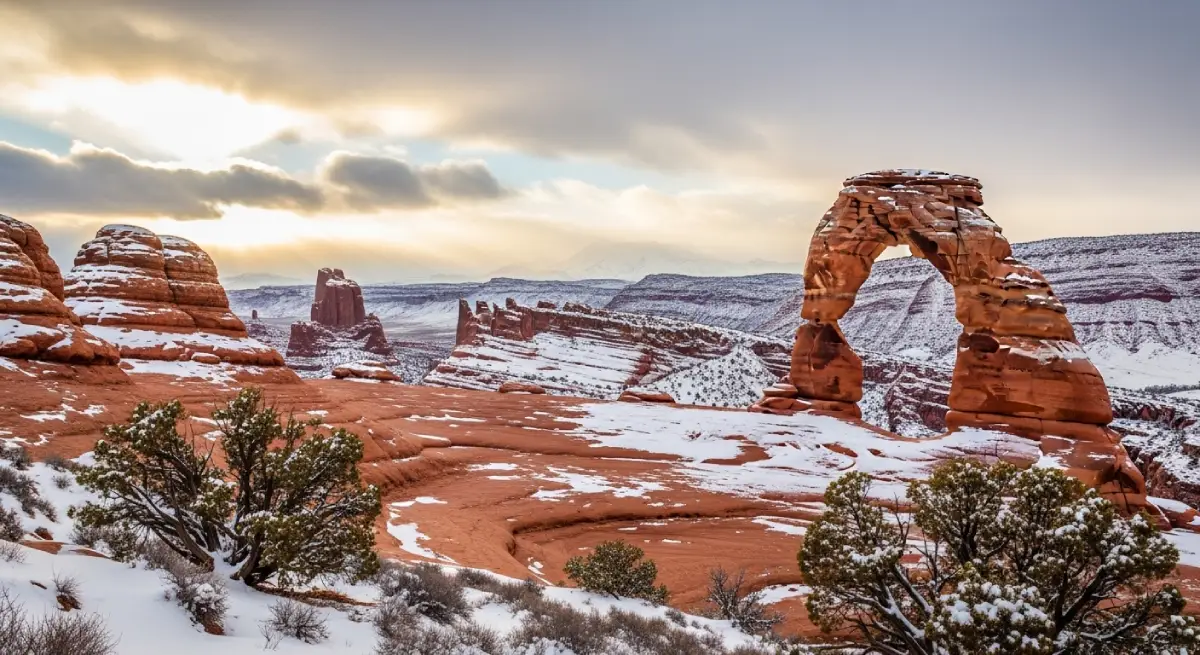
Snowfall: 3.35 inches average in December (highest snowfall month). Snow accumulation at elevation closes trails completely. Lower-elevation trails alternate between muddy and icy.
Freezing duration: Extended below-freezing periods—not just overnight cold but all-day freezing at elevation
Trail conditions: Unpredictable and dangerous—ice on slickrock, snow covering obstacles, mud that freezes into ruts overnight, zero traction on steep sections
Services: Many outdoor operators close entirely. Rental availability drops. Tourist infrastructure scales back.
Daylight: Short days (under 10 hours) limit trail time severely
Crowds: Virtually nonexistent—have major attractions completely to yourself
Winter Moab appeals to visitors prioritizing solitude over optimal conditions. You'll photograph Delicate Arch without 50 other tourists in frame, but you'll also deal with legitimately harsh conditions requiring winter camping gear, cold-weather vehicle preparation, and acceptance that many trails are simply inaccessible.
The Flash Flood Threat Nobody Takes Seriously Until It's Too Late
Moab's flash flood danger deserves separate analysis because tourists consistently underestimate the speed, violence, and lethality of desert flooding—particularly during monsoon season when clear skies can produce deadly floods miles away.
How Flash Floods Kill in Moab
The June 2024 fatalities illustrate flash flood mechanics:
Rapid onset: Storm dropped 1+ inch in 15 minutes. No gradual rain increase providing warning—violent deluge appeared suddenly.
Travel distance: The victims' UTV traveled 0.75-1 mile in flood waters before being pushed into a basin. Flood currents move vehicles hundreds of yards easily.
Debris load: Flash floods carry massive amounts of debris—boulders, fallen trees creating "strainers" weighing tons, mud that buries vehicles
Escape difficulty: Six inches of moving water knocks adults off their feet. Flood waters rise faster than tourists can retreat from slot canyons or low-lying trails.
Remote location: Steel Bender Trail where the fatalities occurred is miles from help with zero cell service. Even if you survive initial flood, rescue takes hours or days.
The 2024 Flood Pattern
Moab experienced four major flooding events in summer 2024—a pattern demonstrating how monsoon season concentrates rainfall into violent bursts. The June 21 flood dropped over 1 inch in 15 minutes in some Moab areas, estimated as a 50-year flood with 2% annual occurrence probability. Mill Creek overtopped banks at multiple points while homes between 100 West and 500 West were surrounded 360° by flood water.
Late June brought a second flood with half inch in 10-15 minutes focusing on north Moab—less severe but occurring before recovery from the first flood completed. Two separate August events followed, with the late-August flood exceeding 2022 historic flooding intensity according to Moab's mayor. The cumulative damage overwhelmed recovery efforts as infrastructure damaged in 2022 floods was still under repair when 2024 floods hit again.
Where Flash Floods Kill
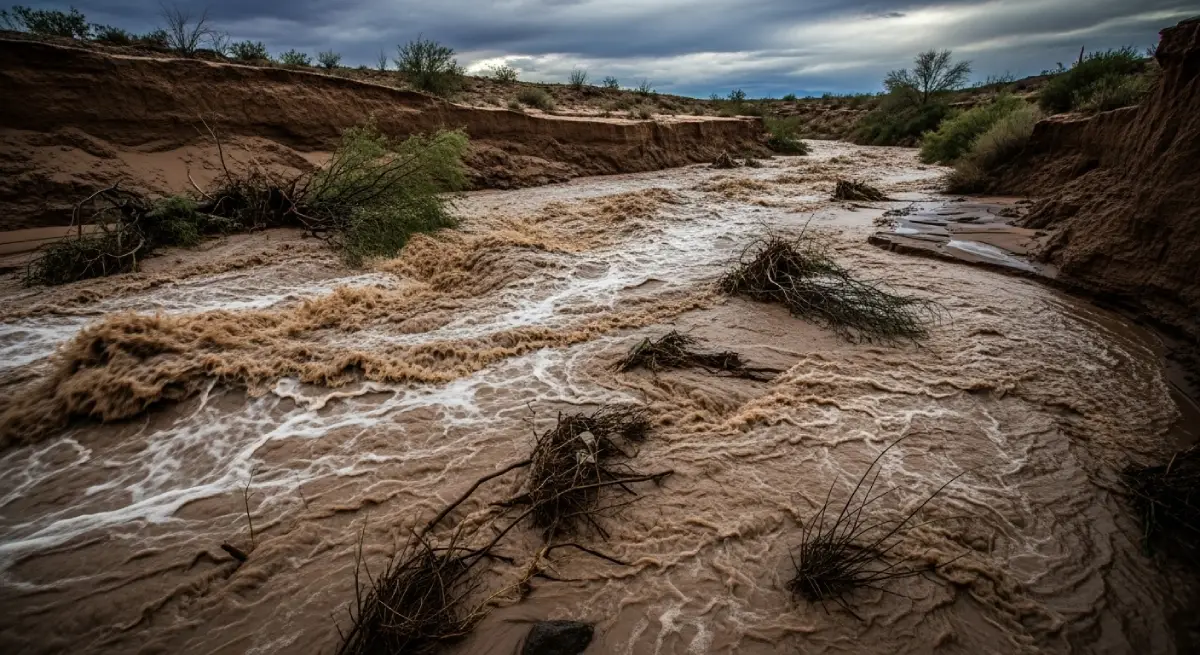
Not all Moab locations present equal flash flood risk. Specific terrain features concentrate danger:
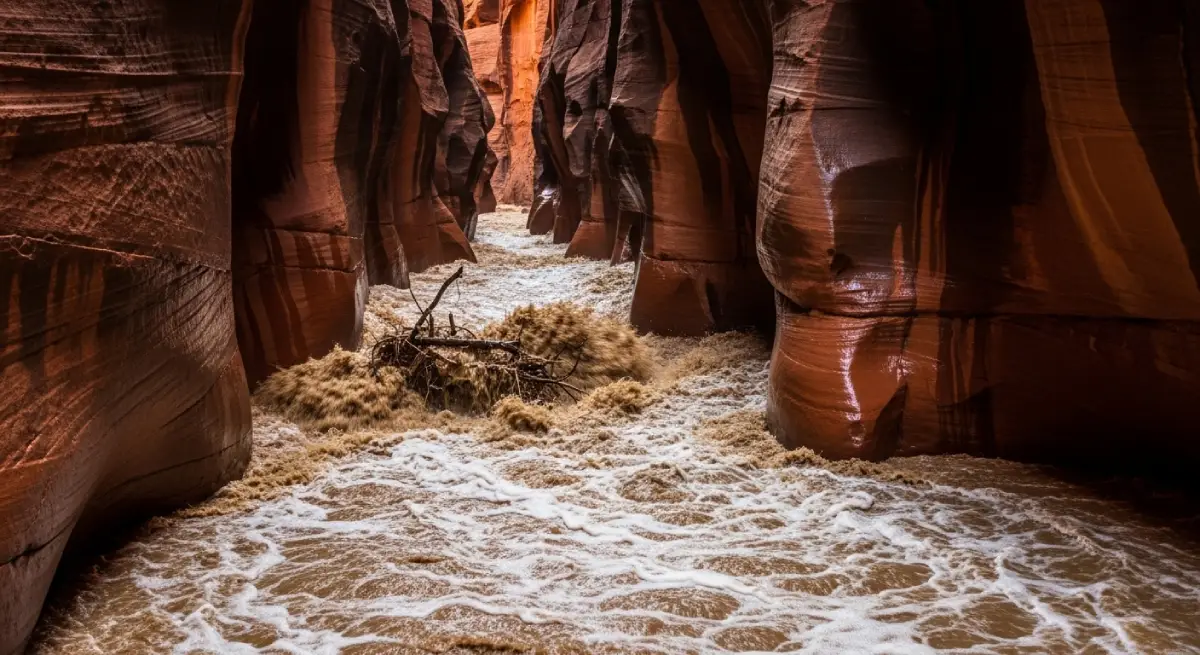
Narrow slot canyons: Water funnels into confined spaces with no escape routes. You can't outrun flood in a slot canyon—walls are vertical, current is faster than you can move.
Dry washes and streambeds: Every dry sandy wash you drive through was carved by water. During monsoons, they transform from dusty trails to raging rivers in minutes.
Low-lying trails near creek crossings: Mill Creek, Pack Creek, other drainages flood violently. Trails near water features become impassable.
Areas below burn scars: The Pack Creek Fire and other burn scars create particularly potent flood risk. Burned soil doesn't absorb water—everything runs off directly into drainages.
Upstream weather doesn't match your location: Lightning can strike 60 miles from visible rainfall. Flash floods arrive from storms you never saw. Clear skies at your location mean nothing if storms rage upstream.
Flash Flood Safety That Actually Works
Download myAlerts app: Grand County emergency alerts and weather warnings provide actual advance notice
Monitor NOAA weather radio: Real-time updates for storms developing
Start early: Complete trail adventures before afternoon thunderstorms develop (typically 2-5 PM)
Avoid narrow canyons during monsoon season: No slot canyon exploration July-September. Period.
Move to high ground immediately: At first sign of water, seek high ground. Don't try to outrun it.
Never drive through flood water: "Turn around, don't drown" applies to 4x4s too. Six inches of moving water floats vehicles. You lose control instantly.
Understand upstream risk: Check weather for entire drainage basin, not just your location
How Moab Weather Changes Vehicle Requirements
The relationship between Moab weather and vehicle capability isn't obvious until you experience how weather transforms trail difficulty. Rain, heat, cold, and floods don't just make trails uncomfortable—they fundamentally change the technical demands.
Rain Transforms "Easy" Trails Into Technical Challenges
Slickrock—Moab's famous petrified sand dune formations—gets its name from being slippery when wet. That grippy sandstone providing traction in dry conditions becomes ice-rink slippery after rain.
Sandstone strength reduction: Wet sandstone loses up to 75% of its strength. The rock itself becomes softer and more prone to breaking apart.
Traction elimination: All-terrain tires that grip confidently on dry rock slide helplessly on wet surfaces. 4WD doesn't help when all four tires are sliding.
Line selection changes: Obstacles you drove over confidently yesterday become impassable when wet. The "easy" route up a slickrock dome requires completely different line when slippery.
Trail damage: Driving muddy trails creates deep ruts that damage the trail permanently and make it rougher for everyone after you
Recovery difficulty: Getting stuck in mud miles from help with zero cell service is exponentially harder than dry-condition recoveries
Hell's Revenge rated "moderate" in dry conditions jumps to "difficult" or "expert" when wet. The steep slickrock climbs that provide grip when dry become terrifying slides backwards when rain hits.
Extreme Heat Destroys Vehicle Cooling Systems
July afternoons exceeding 100°F air temperature combined with 110°F+ slickrock surfaces create vehicle overheating that strands tourists weekly. Stock cooling systems designed for highway driving overheat quickly on technical trails requiring low-speed crawling where engine works hard but airflow over radiator drops to nothing, spiking temps.
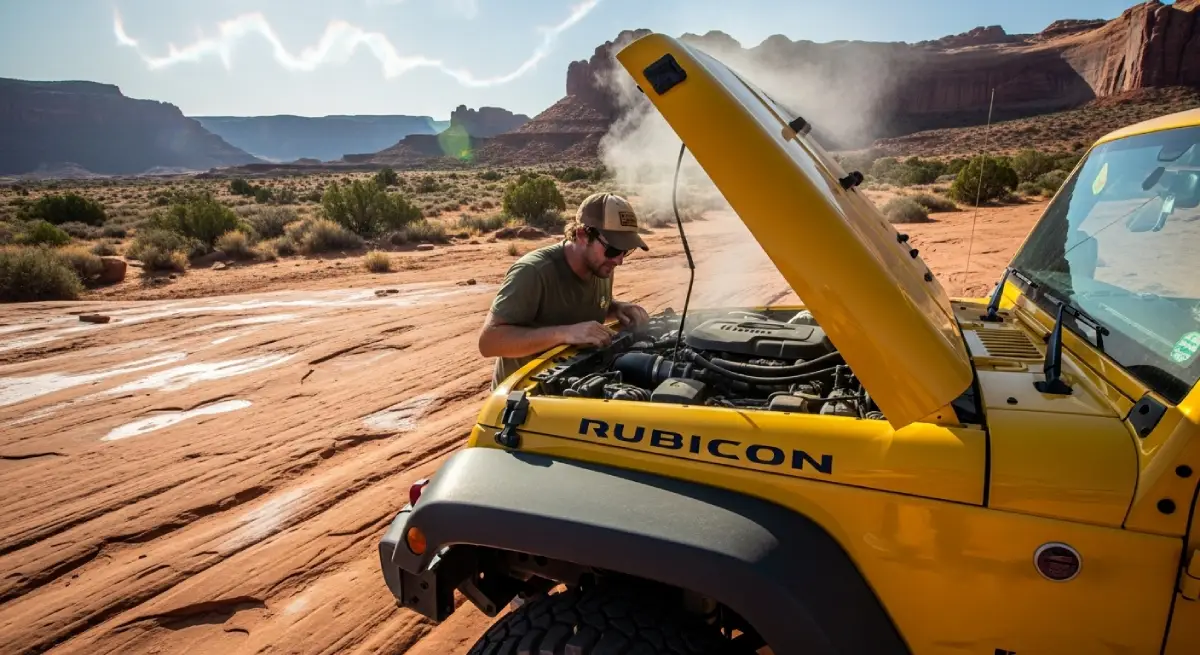
Automatic transmissions generate massive heat when crawling over obstacles. Combined with ambient heat, transmission temps exceed safe limits. Tire pressure spikes from 35 PSI inflated in 70°F morning air to 45+ PSI on 110°F slickrock by 2 PM, causing over-inflated tires to lose traction and risk blowouts.
Extended downhill sections in extreme heat cause brake fade where pedal goes soft and stopping power disappears. Differential oil, transmission fluid, and engine oil all break down faster in extreme heat, while stock fluids in rental vehicles aren't designed for sustained high-temp operation.
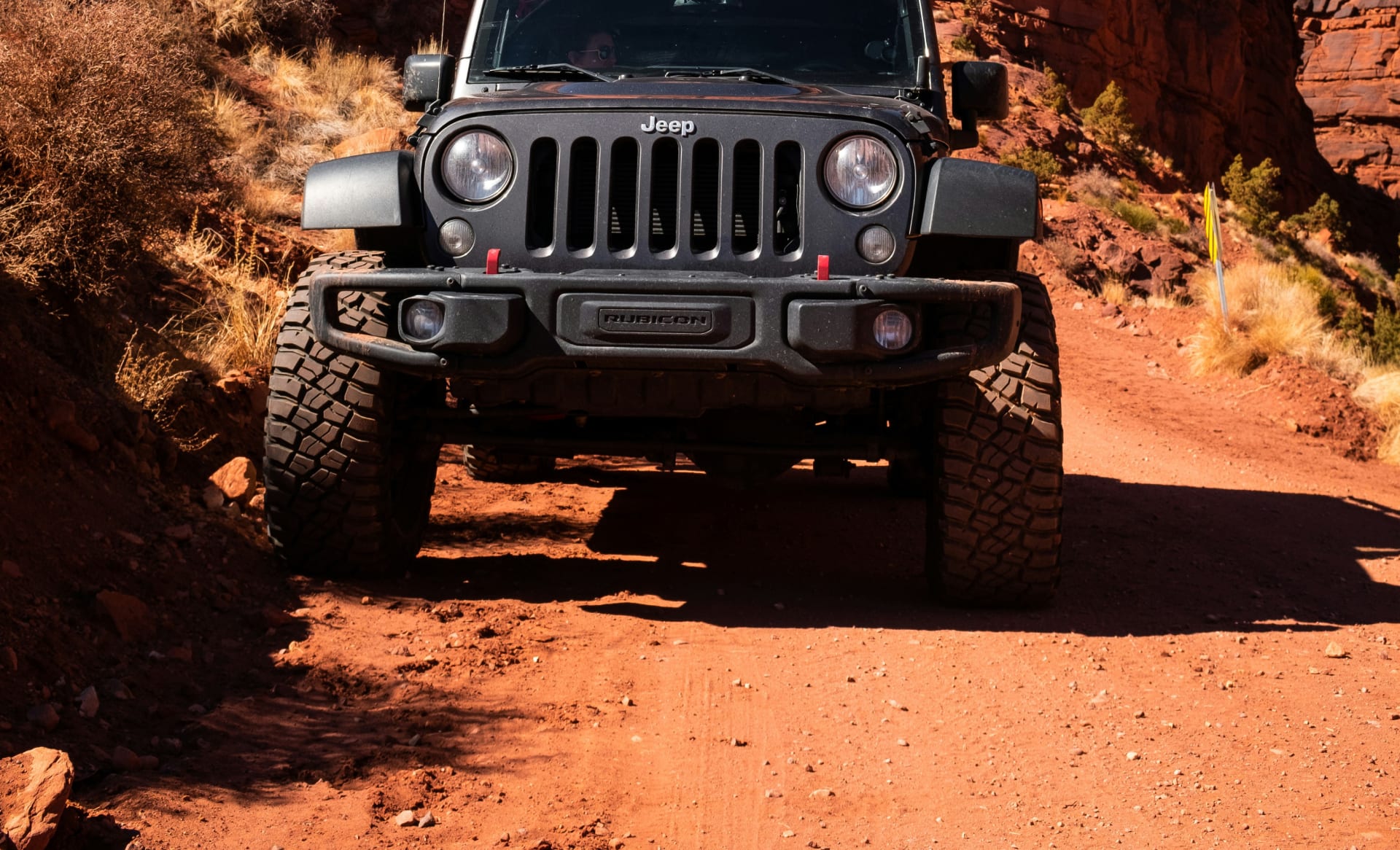
Cliffhanger's modified Rubicons include upgraded cooling systems, transmission coolers, and appropriate fluid specifications specifically because Moab summer heat destroys stock vehicles consistently.
Cold Weather Creates Traction and Starting Problems
Winter and spring freezing temperatures create different vehicle challenges tourists from temperate climates don't anticipate.
Battery capacity drops: Cold weather reduces battery capacity 30-40%. That battery that starts your car reliably at home struggles in 20°F Moab mornings—especially after vehicle sits overnight at trailhead.
Fluid viscosity: Cold engine oil, transmission fluid, differential oil all thicken. Engines turn over slowly, transmissions shift harshly, differentials don't distribute power smoothly.
Tire flexibility: Tires designed for normal temps harden in freezing conditions, losing traction on already-slippery wet or icy surfaces
Slickrock ice: Morning frost or ice on slickrock is invisible to tourists unfamiliar with conditions. The rock looks normal but provides zero traction.
Fuel gelling: Diesel vehicles particularly vulnerable to fuel gelling in extreme cold without proper winter additives
Planning Adventures Around Moab Weather Reality
Successful Moab trips start with honest weather assessment and appropriate timing based on actual conditions rather than optimistic assumptions.
Spring Planning (March-May)
Check extended forecast obsessively: Spring weather changes rapidly. What looked perfect three days ago might be stormy by arrival.
Pack for 30-degree temperature range: 80°F afternoon, 40°F evening, 30°F overnight—all in 24 hours
Start trails early: Finish before afternoon thunderstorms develop (storms typically hit 2-5 PM)
Avoid trails immediately after rain: Wait 24 hours minimum for slickrock to dry. Muddy trails damage permanently when driven wet.
Book accommodations EARLY: Easter Jeep Safari (mid-April) sells out 6-12 months in advance. Spring weekends book solid.
Accept that cold mornings persist: Freezing temps continue through April. Spring doesn't mean warm.
Summer Planning (June-September)
Shift schedule completely: Start trails at 7-8 AM, finish by noon before heat peaks and storms develop
Triple water calculations: 1 gallon per person per day MINIMUM. On hot trails, 2 gallons per person is safer.
Monitor afternoon sky religiously: Clouds building by 2 PM signal storm development. Get off exposed trails and out of narrow canyons.
Download weather apps: myAlerts (Grand County), NOAA Weather Radio app, local forecasts
Avoid slot canyons completely: No exceptions during monsoon season. Flash flood risk is deadly.
Plan indoor afternoon activities: Museum visits, brewery stops, air-conditioned restaurant meals during 2-6 PM danger window
Verify vehicle cooling capability: Rental agreements often prohibit off-road use. Stock cooling systems fail in Moab heat.
Fall Planning (September-November)
Target early October: Best weather-to-crowd ratio of entire year
Still pack warm layers: November nights drop below freezing
Watch daylight hours: November sunset comes early—don't start long trails at noon
Expect some precipitation: September sees higher rainfall than summer months
Book ahead but not as far: Fall doesn't require 6-month advance reservations but weekends still fill
Winter Planning (December-February)
Verify trail accessibility: Many trails close completely due to snow/ice
Pack genuine winter gear: This isn't "mild desert winter"—this is real cold requiring winter camping equipment
Accept service limitations: Many operators close. Rental options decrease dramatically.
Prioritize solitude over conditions: You're trading optimal weather for empty landscapes
Check daily forecasts: Winter storms can dump significant snow, closing roads and trails instantly
The Cliffhanger Advantage for Weather-Impacted Adventures
Moab weather creates the vehicle capability gap that separates confident exploration from expensive mistakes. When conditions deteriorate, proper equipment matters exponentially more.
Weather-Specific Vehicle Capabilities
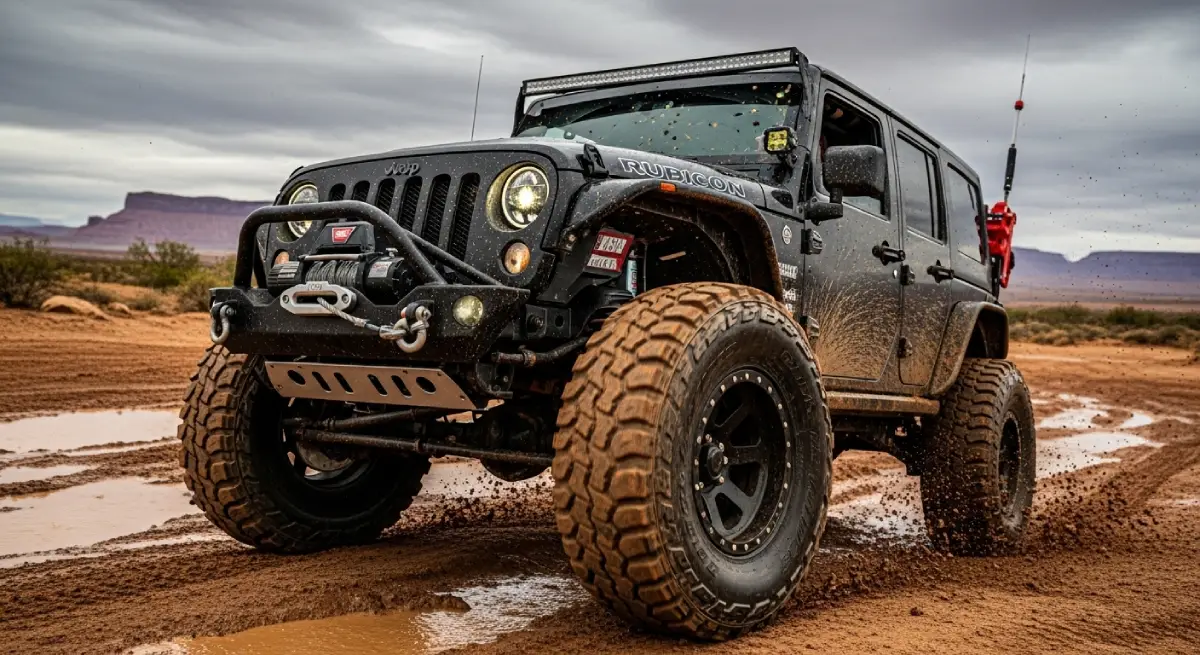
Upgraded cooling systems: Our modified Rubicons include enhanced radiators, transmission coolers, and appropriate fluid specs for sustained 100°F+ operation
Aggressive tire compounds: Tread patterns designed for wet slickrock traction when rain hits unexpectedly
Complete underbody protection: When flash floods create debris fields and washouts damage trails, skid plates prevent oil pan cracks and transmission case damage
Recovery equipment included: When monsoon floods wash out trail sections or mud bogs down vehicles, proper recovery gear becomes essential
Cold-weather preparation: Batteries tested for cold cranking, fluids rated for freezing temps, tires that maintain flexibility
Local Knowledge About Current Conditions
Our Moab location staff monitors weather constantly and provides:
Real-time trail condition updates: Which trails are muddy, where flash floods damaged sections, what routes are accessible today
Weather pattern recognition: Staff familiar with monsoon timing, storm development, safe windows for different trails
Honest difficulty assessment: When weather makes "moderate" trails genuinely dangerous, we tell you
Alternative route suggestions: If your planned trail is weather-impacted, we recommend accessible alternatives matching your skill level
Equipment Designed for Extremes
The investment makes sense mathematically when weather impacts your trip:
No overheating: Modified cooling handles summer heat that destroys stock rental SUVs
Actual 4WD traction: When rain makes trails slippery, proper tires and suspension articulation maintain control
Cold-weather reliability: Vehicles start in freezing temps, batteries maintain capacity, fluids flow properly
Flash flood capability: High ground clearance and sealed electronics survive water crossings that strand stock vehicles
Experience Moab Weather's Complete Character
Moab weather from spring thunderstorms to summer monsoons to winter snow represents the environmental reality that transforms accessible trails into technical challenges. The 40°F temperature swings, the violent flash floods appearing from clear skies, the 100°F+ heat that destroys cooling systems—it's all part of experiencing Moab authentically rather than through tourist-marketing filters.
But experiencing Moab safely across all weather conditions requires honest capability assessment and appropriate preparation. The gap between what tourists expect from "desert weather" versus what Moab actually delivers creates those consistent search-and-rescue statistics and expensive vehicle recoveries.
Cliffhanger Jeep Rentals eliminates that gap. Our modified Rubicons handle Moab's weather extremes confidently because they're designed specifically for the temperature swings, precipitation violence, and trail condition changes that weather creates. Our local staff provides current weather updates and realistic trail assessments that prevent those expensive mistakes.
Ready to experience Moab—from spring's temperature volatility to summer's monsoon chaos to fall's optimal conditions to winter's frozen solitude—with proper equipment and the confidence that comes from vehicles actually built for weather extremes? Contact Cliffhanger Jeep Rentals and discover why thousands of adventurers trust us for conditions where weather separates confident exploration from emergency evacuations.
The slickrock, the slot canyons, the exposed trails, the flash flood zones—it's all waiting. But Moab weather reveals its complete character only to those who approach with honest preparation and proven capability rather than optimistic assumptions about "nice desert weather."