What Moab Vacation Rental Listings Leave Out
Here's what the VRBO descriptions and hotel booking sites consistently omit about Moab vacation rentals: the distance between your accommodation and the nearest trailhead determines how much of your day actually goes toward driving the trails you came to drive, "close to Arches National Park" means something completely different for a visitor spending their mornings at a park entrance versus someone trying to be wheels-down on Hell's Revenge by 7 AM, and the difference between a well-located Moab vacation rental and a poorly located one often costs two hours of driving per day.
Moab isn't a resort town where proximity to the pool matters. It's the 4x4 capital of the American West—a place where the entire point is getting into the canyon country as early as possible, covering as much backcountry as the day allows, and returning to town for dinner before doing it again the next morning. Where you sleep shapes what that day actually looks like.
This guide approaches Moab vacation rentals the way serious adventurers should: by starting with the trails, working backwards to which part of town puts you closest to them, and factoring in practical logistics that booking photos don't capture.
Understanding Moab's Geography Before You Book
Moab is a small town—roughly 5,000 permanent residents stretched along a few miles of US-191 in the canyon between the Colorado River and the La Sal Mountains. Its compact size is deceptive, because the trail systems it provides access to spread in every direction across hundreds of square miles of canyon country.
The directional reality of Moab's trails:
Moab's major trail systems concentrate in four directions from town, and your vacation rental's location relative to those directions either adds or eliminates driving time every single day.
North of town
— Arches National Park entrance, Dead Horse Point State Park access, the start of Highway 313 toward Canyonlands Island in the Sky. Staying on Moab's north side makes these destinations immediate. The Shafer Trail, White Rim Road, and Gemini Bridges all require driving north before heading west into the backcountry.
East of town
— The Sand Flats Recreation Area, Moab's densest concentration of technical slickrock trails. Hell's Revenge, Fins and Things, Slickrock Bike Trail, and Porcupine Rim all originate here. Sand Flats Road climbs directly east out of town into this trail network. Staying on the east side or downtown cuts five to ten minutes off every morning's approach.
South of town
— Kane Creek Boulevard, Hurrah Pass, Chicken Corners, Pritchett Canyon, and Behind the Rocks. The Kane Creek corridor runs southwest from town. South-side rentals position you closest to this trail network and the Colorado River corridor below.
West and southwest
— Potash Road (Utah Scenic Byway 279), the Colorado River canyon corridor, Poison Spider Mesa, and the Shafer Trail connection that eventually reaches Canyonlands. The US-191 and Potash Road intersection sits just north of town, making most vacation rental locations roughly equivalent for this access point.
Understanding which trail system anchors your itinerary before booking determines which part of Moab actually serves your trip.
Moab Vacation Rental Areas: What Each One Delivers
Downtown Moab — Main Street Corridor
Downtown vacation rentals—roughly the stretch between Center Street and 400 North along and adjacent to Main Street—provide the most logistically convenient base for multi-trail itineraries that don't prioritize any single direction.
What downtown delivers:
Walking distance to everything
Restaurants, gear shops, grocery stores, and coffee before morning departures are all reachable without moving the vehicle. For multi-day trips where evenings matter as much as trail days, this convenience compounds.
Central positioning for mixed itineraries
Hell's Revenge, Arches, Dead Horse Point, and Kane Creek are all within 15–20 minutes from a downtown starting point. No single trail system gets a timing advantage, which works well for groups covering different routes each day.
Proximity to Cliffhanger
Cliffhanger Jeep Rentals' Moab location sits close enough to the downtown corridor that vehicle pickup doesn't require significant repositioning before hitting the trail. Staff provide current conditions and trail recommendations at checkout—information that's more valuable when you're not burning daylight getting to the office.
Downtown limitations:
Main Street runs directly through town, and summer traffic can create genuine delays during peak hours. Morning departures before 7 AM avoid most of it. Parking for personal vehicles with trailers or tow rigs requires planning—some downtown properties lack adequate space.
North Moab — Highway 191 North Corridor
Vacation rentals along US-191 north of town—between the edge of downtown and the Colorado River bridge—position guests closest to Moab's most-visited paved destinations while maintaining reasonable access to the technical trail systems east and south.
What north Moab delivers:
Arches National Park efficiency
The park entrance sits five miles north of downtown. Arches requires timed entry reservations April through October, and early entry windows fill first. Staying north means less vehicle time between your door and the entrance station—a meaningful advantage when 6 AM entry windows open.
Dead Horse Point and Canyonlands access
Highway 313 west toward Dead Horse Point State Park and Canyonlands Island in the Sky branches off US-191 approximately nine miles north of town. North-side rentals reach this junction before downtown rentals have cleared the traffic lights on Main Street.
Colorado River views
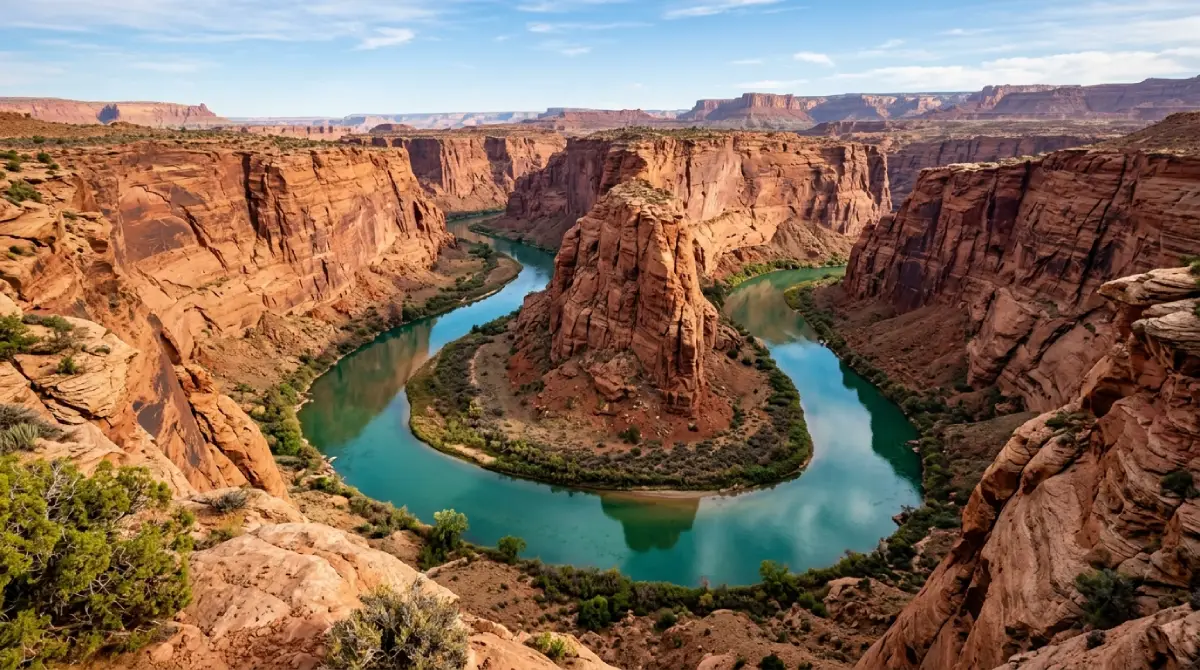
Several north Moab vacation rental properties sit with direct sightlines to the Colorado River canyon. The visual context this provides—understanding the terrain scale before you drive into it—adds something that downtown hotel rooms don't deliver.
North Moab limitations:
Sand Flats Recreation Area (Hell's Revenge, Fins and Things) requires driving back through town or around it. If technical slickrock trails are the primary goal, north-side positioning adds 10–15 minutes each direction. Small cost for single-day trips; cumulative over a week.
Spanish Valley — South Moab
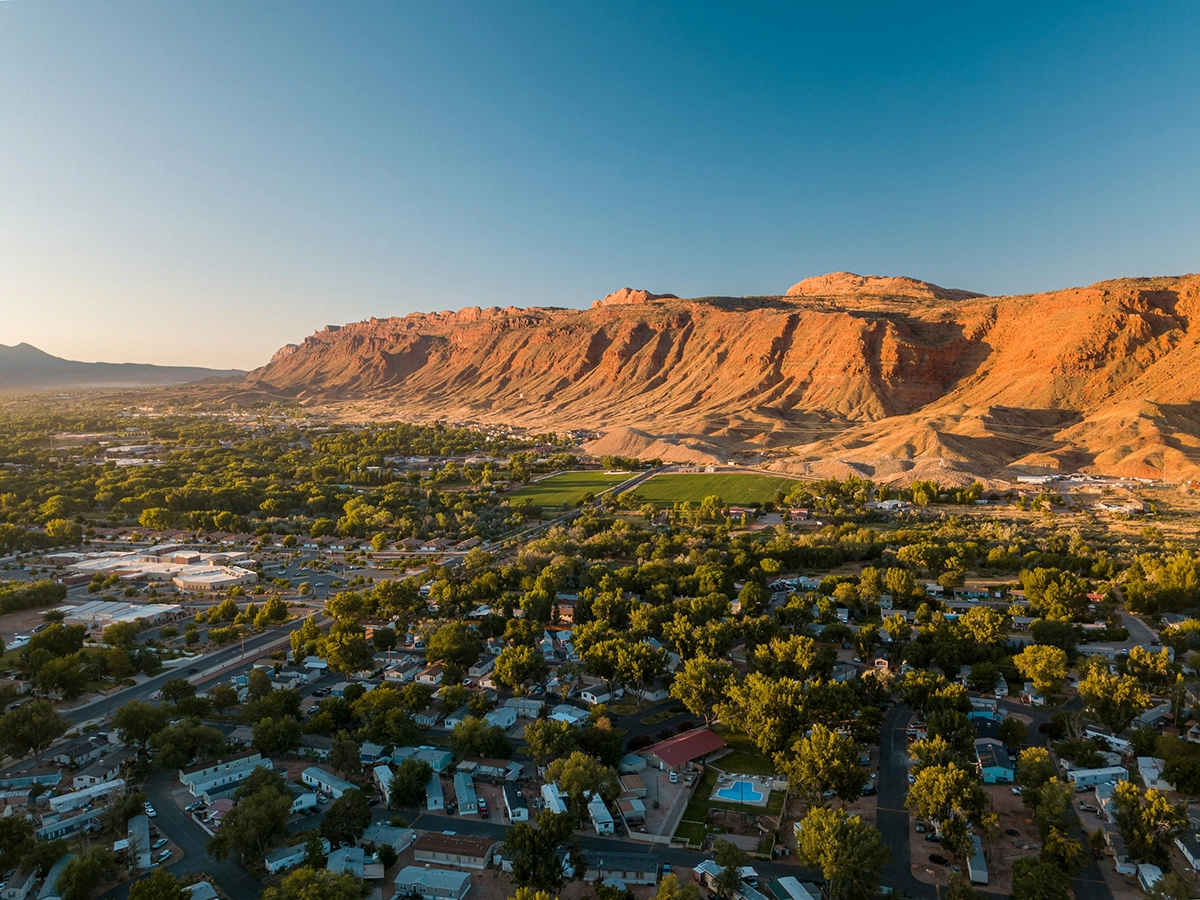
Spanish Valley stretches south of downtown along US-191, transitioning from Moab's commercial strip into a mix of residential neighborhoods, resort properties, and vacation rental communities against the backdrop of the La Sal Mountain foothills.
What Spanish Valley delivers:
Distance from downtown congestion
Spanish Valley vacation rentals sit removed from the Main Street tourist traffic. Morning departures south toward Kane Creek and Hurrah Pass skip the downtown corridor entirely.
Kane Creek and southern trail access
Kane Creek Boulevard branches west from US-191 just south of downtown, providing direct access to Hurrah Pass, Chicken Corners, Pritchett Canyon, and the Kane Creek canyon corridor. Spanish Valley rentals cut the approach to this trail network by eliminating downtown navigation.
Resort-style amenities
Several Spanish Valley vacation rental communities—including properties with resort pools, hot tubs, and full resort amenities—concentrate in this area. For groups where some members want comfort infrastructure alongside trail access, Spanish Valley delivers both without the downtown noise.
La Sal Mountain backdrop
Spanish Valley sits directly below the La Sal Mountains' western face. The visual context from this vantage—the full elevation range from valley floor to 13,000-foot peaks—provides some of the most dramatic sunrise and sunset lighting in the Moab area.
Spanish Valley limitations:
Distance from Sand Flats Recreation Area is the primary tradeoff. Hell's Revenge and the Sand Flats trail network require driving back through town. For Arches and Canyonlands access heading north, Spanish Valley adds 5–10 minutes to the approach.
Moab's Campgrounds and Glamping Options
For visitors who want to minimize the distance between sleeping and trail driving to its absolute minimum, Moab's campground and glamping options place overnight accommodations directly adjacent to or inside the trail networks themselves.
Sand Flats Recreation Area Camping Sand Flats Road campgrounds sit within the recreation area that contains Hell's Revenge, Fins and Things, and the Slickrock Bike Trail. Waking up inside the trail system eliminates approach driving entirely—the trailhead is visible from camp. This option requires self-contained camping capability and reservation planning during peak season, but the positioning is unmatched for Sand Flats-focused itineraries.
Colorado River Corridor Multiple BLM campgrounds line the Colorado River north of Moab along Highway 128 and south along Potash Road. These sites position campers directly along the river corridor with immediate access to Potash Road trails and the upstream canyon terrain. No hookups at most sites—plan accordingly.
Moab Valley RV Resort and Commercial Campgrounds For visitors with RVs or trailers, Moab's commercial campground options along the north corridor provide hookup capability with reasonable proximity to both the northern park destinations and the downtown corridor. Full hookup sites book quickly during peak season—reservations months in advance for spring and fall.
What to Look for in a Moab Vacation Rental Beyond Location
Location determines your trail approach. These additional factors determine whether the rest of the experience works.
Garage or secure covered parking: Moab's sun is aggressive. Vehicles left in direct sun all day return interior temperatures that damage electronics and gear. Rentals with covered parking or garages—increasingly advertised as amenities given how many visitors arrive with Jeeps, trailers, and off-road vehicles—deliver genuine functional value.
Outdoor shower or gear washing capability: Red Moab dust and sand gets into everything. Rentals with outdoor rinse stations, gear storage areas, or simple outdoor shower setups simplify the end-of-day routine significantly. This is worth specifically searching for if you're running multiple trail days.
Early departure logistics: The best Moab trail time happens before 9 AM—before heat builds, before parking areas fill, before tour groups arrive at the most popular trailheads. Rentals that allow quiet early departures without navigating shared hallways, breakfast service schedules, or hotel lobby congestion are worth the premium they often carry.
Full kitchen access: Trail days start early and run long. Having a kitchen for pre-dawn breakfast preparation and pack-your-own lunch capability eliminates the restaurant dependency that costs 45 minutes each morning. Full kitchen vacation rentals deliver this—hotel rooms don't.
Reliable cell and internet service: Cell coverage in Moab proper is solid, but downloading offline maps, checking trail conditions, and reviewing satellite imagery of planned routes before departure requires reliable connection. Verify this specifically for properties advertising remote or canyon-adjacent locations.
How Cliffhanger Fits Into the Moab Vacation Rental Picture
Where you sleep and what you drive are the two decisions that define a Moab trip. The vacation rental question is addressed above. The vehicle question has a direct answer.
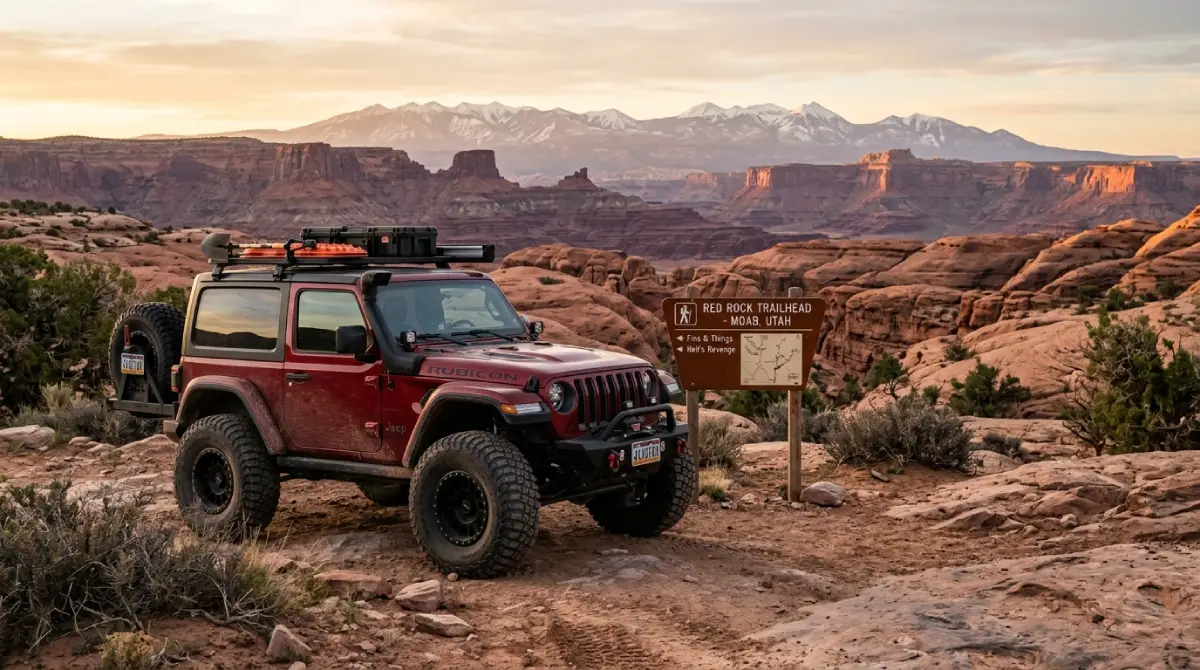
Standard rental vehicles from chain agencies and most local rental operations come with agreements that prohibit unpaved road use. This covers Hell's Revenge, Fins and Things, the Potash Road dirt section, Shafer Trail, and essentially every route that makes Moab worth visiting in the first place. The Jeep badges on the rental lot vehicles don't change what the agreement prohibits.
Cliffhanger's Moab location exists specifically for this problem.
What Cliffhanger's Moab location provides:
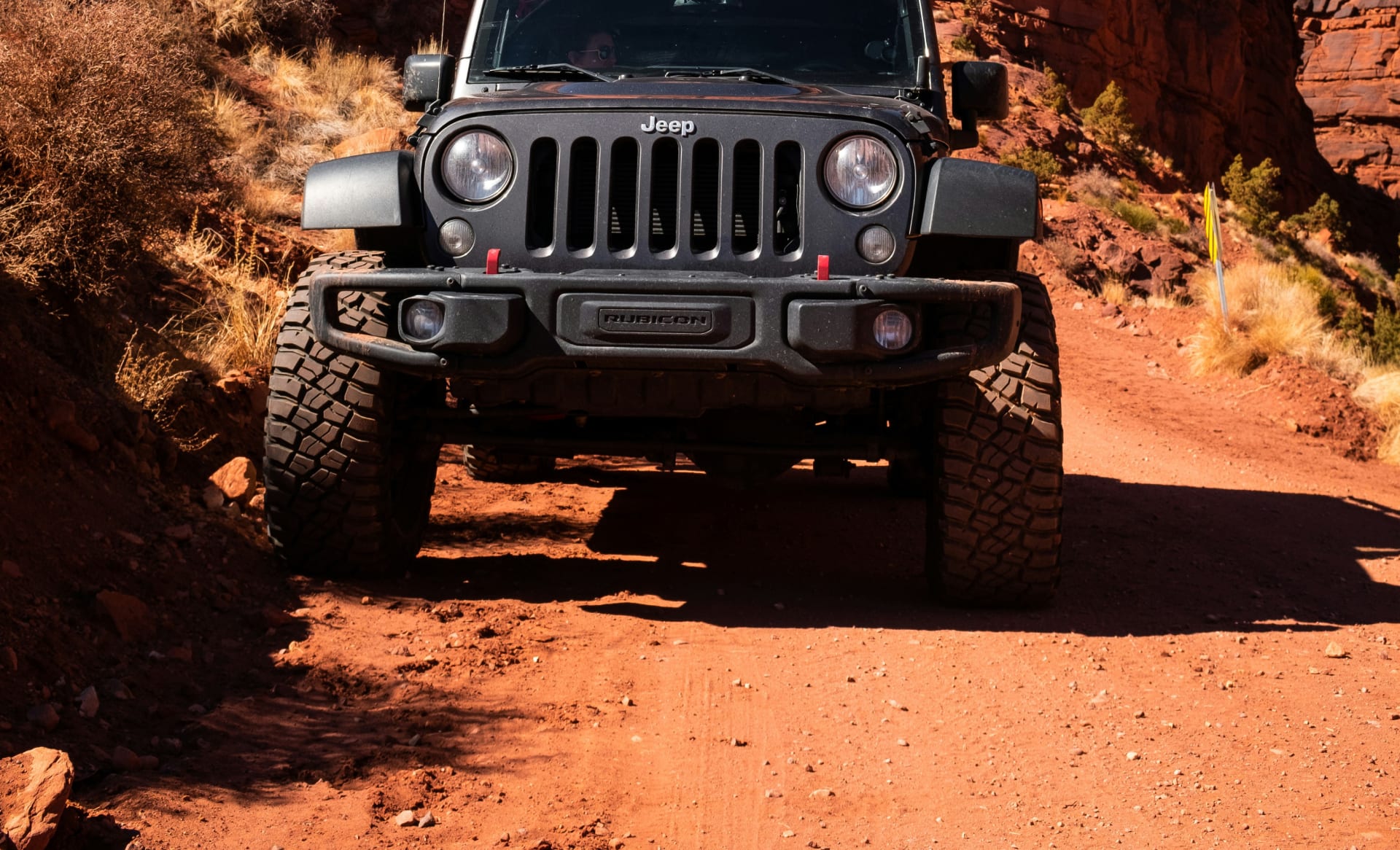
Modified Jeep Rubicons with 2.5-inch lift and 35-inch tires—built for what Moab's trail system actually demands
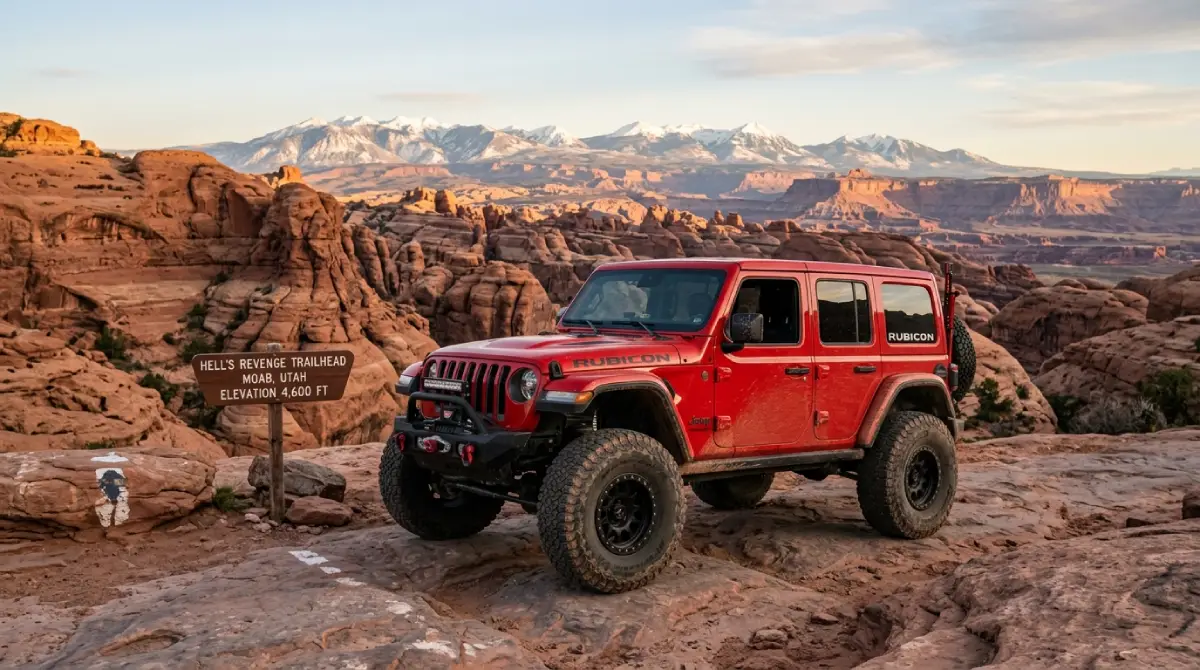
Extreme Rubicons with 3.5-inch lift and 39-inch tires for the most technical terrain
No rental restrictions on unpaved roads—these vehicles are permitted and equipped for Sand Flats, Potash, Kane Creek, and every major Moab trail system
Longest rental days in town—more time on trail per rental day than any other Moab operation
Local staff with current conditions who steer groups toward appropriate trails for their capability level
Positioned centrally enough that pickup doesn't compromise morning departure timing from any major rental area
The combination that works:
A Moab vacation rental positioned near your primary trail system plus a Cliffhanger Rubicon picked up before the trails fill—this is the configuration that delivers what Moab actually promises. The rental handles the sleeping. Cliffhanger handles the terrain.
Planning Your Moab Vacation Rental Booking
Timing matters more than most visitors realize:
Spring (March through May) and fall (September through November) represent peak Moab seasons. Vacation rental inventory in well-located properties fills months in advance for these windows. Booking 3–4 months ahead is standard for spring break, Easter weekend, and the October peak foliage period.
Summer (June through August) has more availability but requires honest heat planning. Trail starts before 7 AM are effectively mandatory. Afternoon temperatures above 100°F make midday trail driving genuinely dangerous. Vacation rentals with pool access become functionally important rather than just nice to have.
Winter (December through February) delivers uncrowded trails, comfortable temperatures for active driving, and dramatically reduced rental rates. Most Moab trails remain driveable through winter with appropriate preparation. Snow occasionally closes higher-elevation access roads temporarily.
Minimum stay requirements:
Most Moab vacation rentals impose 2–3 night minimums during peak season. Properties near Sand Flats and the Colorado River corridor sometimes require longer minimums during spring and fall festival weekends. Budget the trip duration honestly before selecting a property type.
Cell service and emergency planning:
Trail days in Moab's backcountry involve extended stretches without cell service. Cliffhanger vehicles include recovery equipment and local staff reachable by satellite communication when needed. Download offline maps before departure regardless of which trails are planned.
The Moab Vacation Rental Decision Made Simply
Moab vacation rental selection comes down to one honest question before any other: which trail system anchors the trip? Sand Flats and the technical slickrock routes—stay east or central downtown. Arches and Canyonlands—stay north. Kane Creek and the southern canyon system—stay in Spanish Valley or south of downtown. Mixed itinerary across multiple days—central downtown balances all of it.
The rest of the decision—amenities, kitchen access, parking, outdoor gear space—follows from there.
And regardless of where you sleep: the trails Moab is famous for require a vehicle actually permitted and equipped to drive them. Cliffhanger Jeep Rentals in Moab closes that gap. Book the vacation rental, book the Jeep, and let the canyon country deliver what it promises.
Ready to pair your Moab vacation rental with a vehicle actually built for the terrain? Contact Cliffhanger Jeep Rentals and let's put together the combination that makes your Moab trip work the way it's supposed to.