Why Jeep Rental in Moab Changes Things
There's something about standing at the edge of a red rock canyon that makes the everyday feel very far away. Moab sits in the middle of terrain so distinct, so utterly itself, that you can't help but pay attention. The landscape doesn't whisper—it speaks directly.
Most people come to Moab because they've heard about it, or seen photos, or felt the pull of something they can't quite name. Here's what they're really after:
Terrain that only exists in a few places on Earth, with its own rules and demands
A physical experience that requires more than scrolling through Instagram
Access to trails and viewpoints that simply aren't reachable from a standard vehicle
A break from the comfortable monotony of daily life
How Renting a Jeep Opens Doors
A regular car gets you to Moab. That's one thing. But it stops there. A Jeep does something else entirely. It lets you follow the terrain instead of being stopped by it. You see places most visitors never find. You understand why people come back again and again, looking for views that can't be replicated anywhere else. You're no longer a tourist passing through—you're someone actively engaged with the land.
This isn't about ego or showing off. It's about having the actual ability to go where you want, when you want, without asking permission from the road.
What This Guide Will Cover
This resource walks you through the entire process, from deciding which vehicle fits your trip to understanding the trails themselves:
How to think about what type of Jeep makes sense for your skill level and plans
The trails that actually deliver what you came for
What you need to know before you go
How the rental process works, start to finish
Practical advice for staying safe and comfortable while you're out there
Remember: Whether you're flying solo, bringing your family, capturing photos in impossible locations, or just trying to see what you're capable of, the preparation matters. This guide gets you there.
What Makes Moab Stand Apart
Moab isn't just another canyon. There are canyons all over the Colorado Plateau. What makes Moab different is that it combines technical terrain, stunning visuals, and actual accessibility in a way most destinations don't. You can drive here. The trails exist. The infrastructure supports it. But more than that, Moab has earned its reputation because it delivers on its promise.
Other towns in the region have their moments. Moab has sustained its appeal for decades because the experience is genuinely something different.
What separates Moab from the rest:
Red rock formations that are genuinely distinct and visually striking
A proven network of trails tested by thousands of drivers
Access to wilderness that feels remote without requiring expedition-level skills
A town built around the outdoor experience, so lodging, food, and services actually exist
Consistent conditions year-round, with seasons that work better or worse but rarely impossible
The Terrain Actually Requires a 4x4
This isn't marketing speak. You cannot reach many of Moab's best trails, viewpoints, and experiences in a sedan. The ground itself makes that decision for you. Slickrock lives up to its name. Washes deepen. Grades steepen. Water crossings appear. None of this is insurmountable in the right vehicle, but they are impossible in the wrong one.
A 4x4 isn't a luxury here. It's a practical tool that makes the difference between reaching your destination and turning around. The same trails that look manageable on a map reveal their actual nature once you're driving them. Clearance matters. Weight distribution matters. The ability to lock differentials and shift into low gear—these are the tools that separate what's possible from what's not.
How a Jeep Changes Your Access
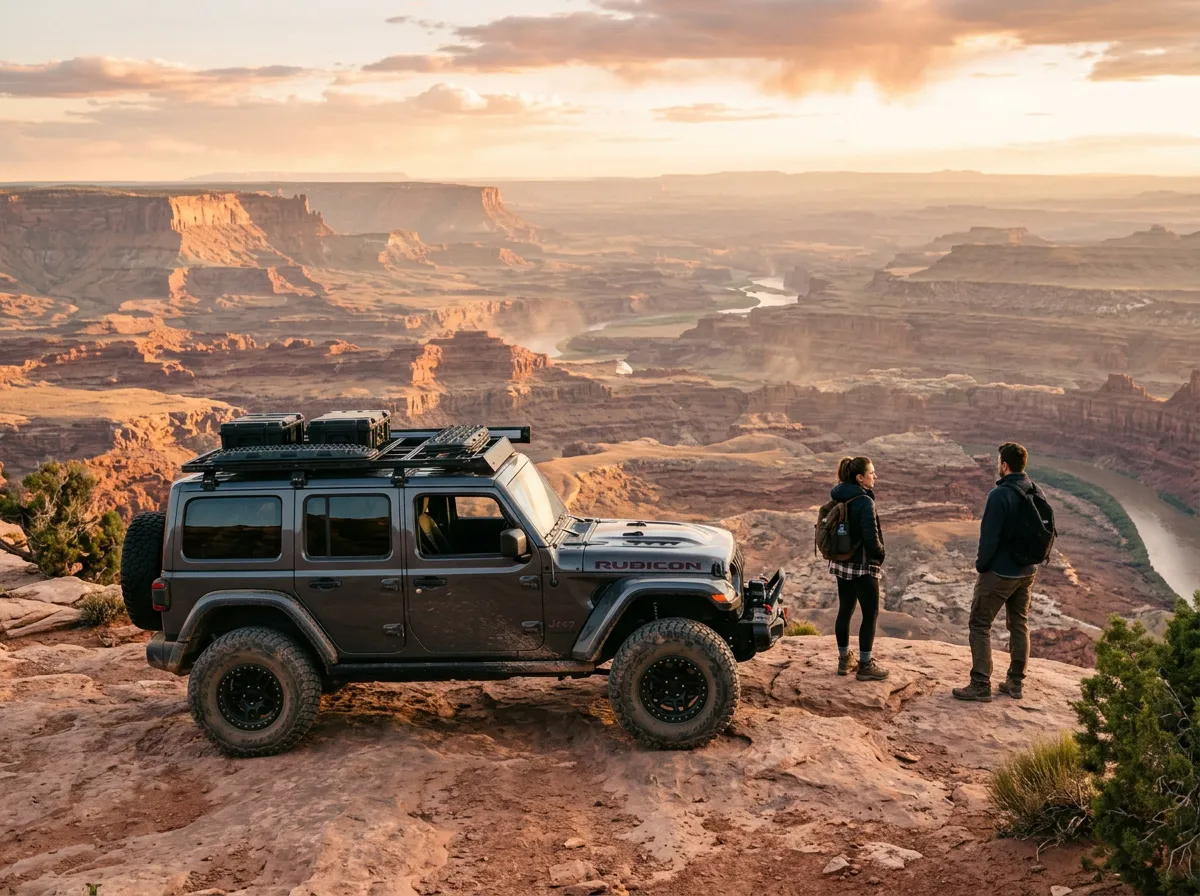
When you have the right vehicle, different parts of Moab open up to you. You're not limited to paved overlooks or maintained hiking trails. You can drive to viewpoints that most visitors never see. You can find your own quiet spots instead of parking in a crowded lot. You can understand the scale and texture of the landscape in a way that's simply not available from a highway.
A Jeep gives you agency. You decide where to go based on what calls to you, not based on what the road allows.
The difference it makes:
Access to ridgelines, overlooks, and viewpoints that are literally unreachable by other means
The ability to spend your time exploring instead of driving back to town for services
Freedom to choose your own pace and route rather than following marked paths
The chance to move through the landscape rather than observing it from a distance
Real options for finding solitude among the red rocks
The Bottom Line
Moab deserves your time because it's built for this kind of experience. It's a place where having a Jeep isn't about showing off—it's about being able to actually do what you came to do. Whether you're there for a week of serious trail time, a weekend escape, or an afternoon of backdrops that take your breath away, Moab gives you real access to something substantial. The terrain demands it, the trails reward it, and the views justify it.
Types of Vehicles We Offer
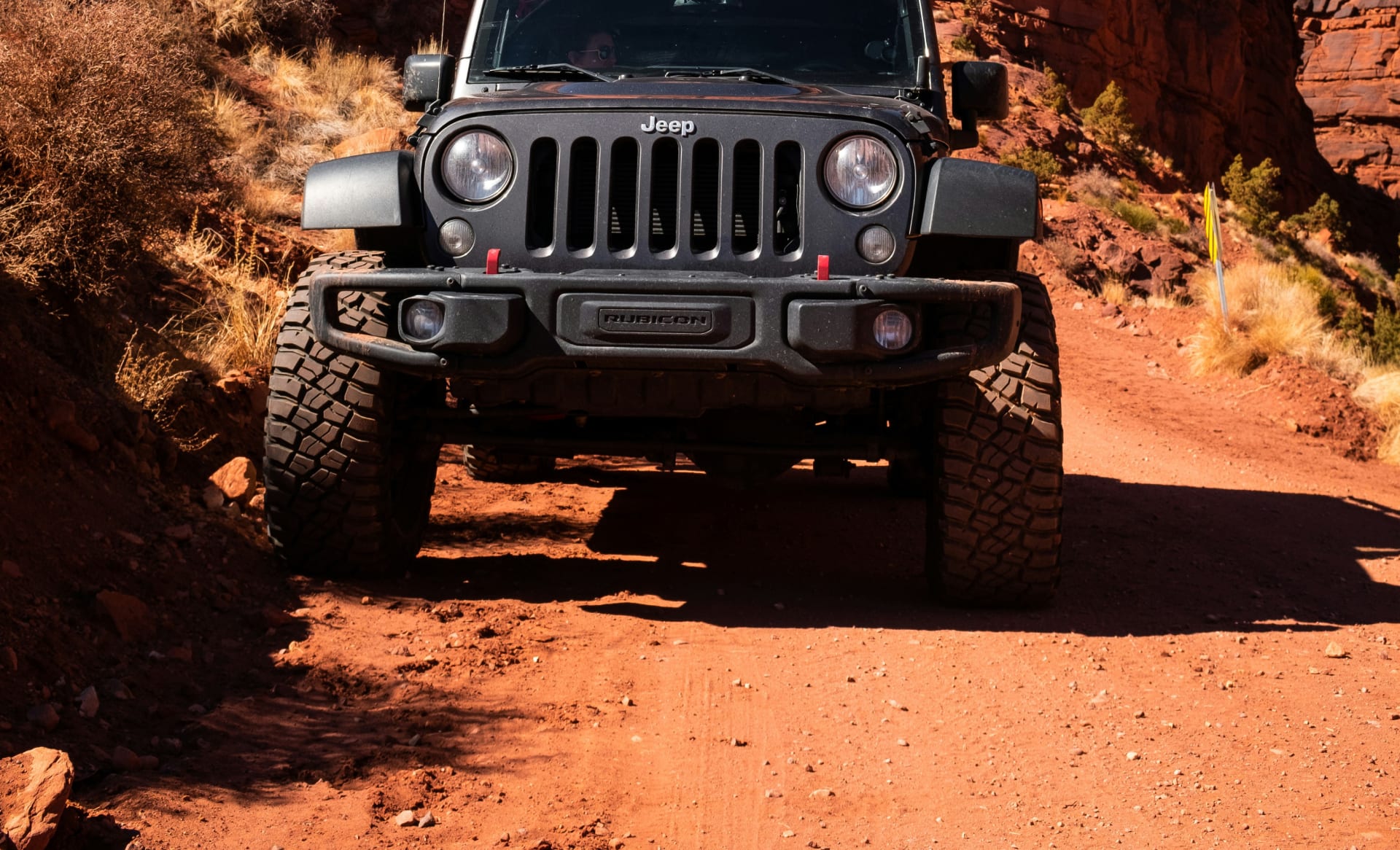
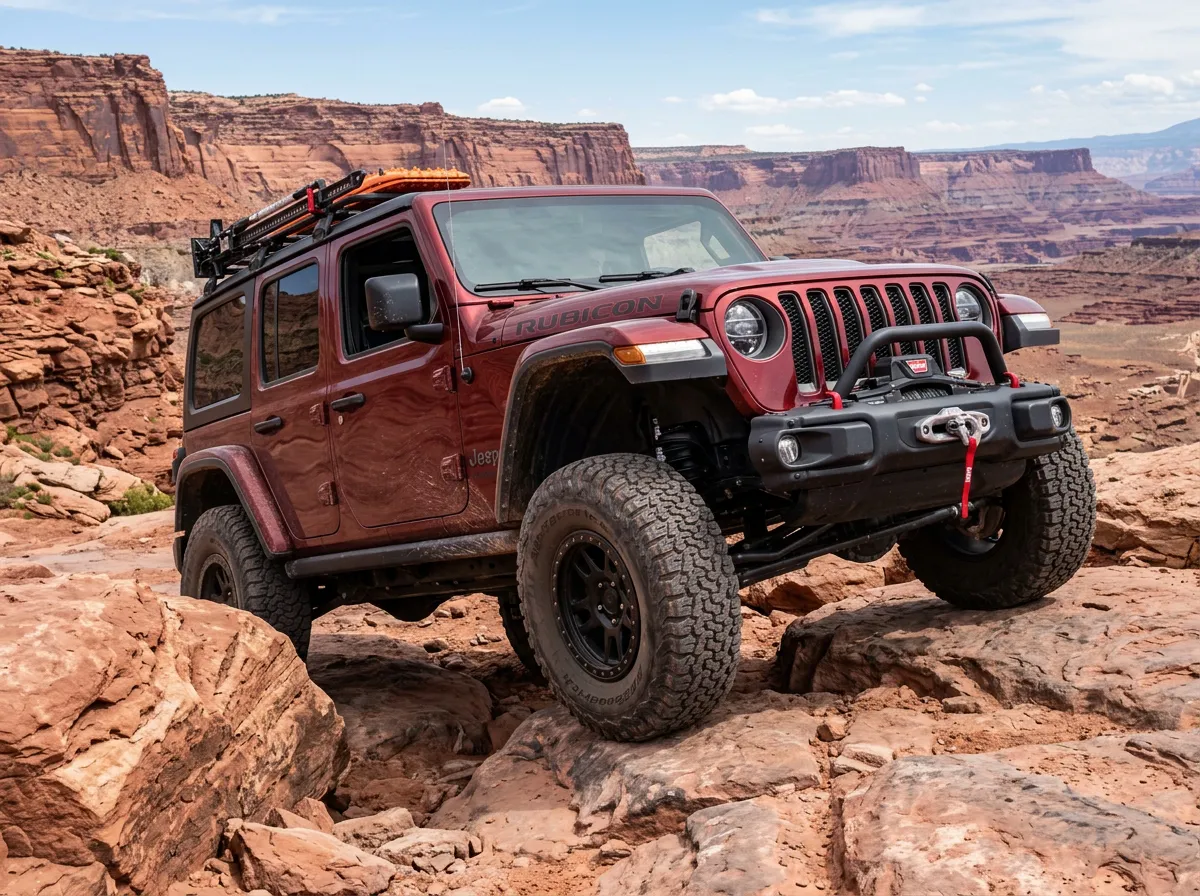
Not all Jeeps are built the same way, and not all trips need the same capabilities. Our fleet includes different configurations of Jeep Rubicons, each designed to handle different demands. The Rubicon is the standard for serious terrain because it comes equipped with the mechanical systems that matter: locking differentials, disconnecting sway bars, electronic disconnects, and the suspension geometry that makes technical driving possible. But within that category, there are meaningful differences.
Here's what we have available:
4-door Modified Jeep Rubicon (passenger comfort, 5-person capacity, technical capability)
2-door Jeep Rubicon (lighter weight, more nimble on tight trails, smaller group size)
Custom-configured variants with specific equipment for different terrain types
What Each Vehicle Handles Well
A 4-door Rubicon is heavier and more comfortable for longer drives. It seats five people without anyone being squeezed. This matters if you're spending a full day on the trail or bringing a group. The extra weight gives you stability and comfort. If you're driving White Rim Trail—a full day commitment—the 4-door reduces fatigue.
A 2-door is lighter and more responsive on technical terrain. It fits into tighter spots. It climbs with less weight to manage. If you're doing Hell's Revenge or hitting challenging sections, the 2-door can feel more planted and agile.
What to expect from our vehicles:
Full mechanical capability for all major Moab trails (White Rim, Hell's Revenge, Poison Spider Mesa, Slickrock)
Comfort features for full-day drives (air conditioning, quality seating, visibility)
Equipment designed for the terrain you'll encounter (protective skid plates, appropriate tire tread)
Reliability that comes from regular maintenance and inspection
Enough space for your gear, snacks, water, and recovery equipment
Matching a Vehicle to Your Trip
This comes down to three questions: How many people are going? How long will you be out? What kind of trails are you targeting? A technical rock-crawling session with two experienced drivers might prefer the 2-door. A family day trip with four people and comfort as a priority needs the space and climate control of the larger vehicle.
There's no wrong choice, but there are better fits. Think about your group, your timeline, and what you actually want the experience to feel like.
Pricing and Rental Periods
We rent by the day, multi-day, and weekly options. Daily rates start at a base price that changes by season, vehicle type, and demand. Multi-day discounts apply if you're renting for three or more days. Weekly rates offer the best value per day if you're planning a longer trip. Off-season (late fall through early spring) brings lower prices. Peak season (spring and fall) increases rates but also guarantees better trail conditions.
You can build a custom rental package based on what you need. Some people rent for a single day. Others book an entire week. The system is flexible because trips vary wildly in scope.
Keep In Mind: The vehicle you choose affects not just how you drive, but how the experience feels. If you're photographing in dramatic locations, the 4-door gives you the stability for the group and the equipment for the journey. If you're chasing technical challenge, the 2-door responds differently. Take your time thinking about what matters for your specific situation.
The Trails You'll Actually Want to Drive
Moab has dozens of trails. Most guidebooks list them all with equal weight, as if they're all equally worth your time. They're not. Some trails are crowded, some are overrated, some are genuinely exceptional. We'll focus on the ones that actually deliver and explain what makes each one worth considering.
Here are the trails that matter:
Hell's Revenge Trail (intermediate difficulty, dramatic views, half-day commitment)
White Rim Trail (full-day commitment, technical sections, water crossings, iconic)
Poison Spider Mesa (technical and rewarding, shorter duration, less crowded)
Slickrock (famous, but requires specific skills and conditions)
Less crowded alternatives (for those visiting during peak season or preferring solitude)
What Each Trail Offers
Hell's Revenge is where most people start. It's not beginner terrain, but it's not extreme either. The trail climbs elevation, offers stunning views across Arches National Park, and gives you real terrain without requiring specialized skills. You can do it in half a day and still have time for other activities. The name comes from the exposed sections—narrow in places, with big drop-offs—but the driving is straightforward.
White Rim Trail is the commitment. It's a full loop around a mesa, taking anywhere from 9 to 12 hours depending on your pace and whether you stop. The trail has technical sections that demand respect: steep descents, rock gardens, water crossings that can be deep depending on recent weather. Many people split it across two days. It's the trail Moab is famous for, and with reason—the views are sustained and genuinely exceptional.
Poison Spider Mesa is technical without being overwhelming. It has rock crawling sections that test your vehicle and skill, but they're manageable if you're paying attention. It's shorter than White Rim, less crowded, and delivers a sense of accomplishment that matches the difficulty. If you want the feeling of real driving without committing to a full day, this is it.
Slickrock is the famous one. The name is literal—it's smooth, sloping rock with minimal traction. Driving it requires specific techniques: momentum, smooth inputs, understanding how your tires interact with stone. It's shorter than most trails but demands focus. It's also extremely popular, which means planning your timing matters if you want to avoid crowds.
What to expect from each:
Hell's Revenge: 2-3 hours, 6,000 feet elevation, good views, high-clearance helpful but not essential for careful drivers
White Rim: 8-12 hours, sustained technical terrain, water crossings, full-day or split-day commitment
Poison Spider Mesa: 2-3 hours, technical rock sections, less crowded, good for intermediate drivers wanting a challenge
Slickrock: 2-3 hours, smooth rock surfaces, technique-dependent, plan early morning or late afternoon to avoid crowds
Alternatives: Various shorter loops and lesser-known trails that avoid peak season congestion
Which Trail Fits Your Trip
If you're visiting during spring or fall and want the iconic experience, White Rim is the answer—just accept that you'll be on the trail with other people. If you want something equally technical but less crowded, Poison Spider delivers. If you're short on time or new to this, Hell's Revenge gives you a real sense of what Moab offers. Slickrock is worth driving, but go early or late in the day, and understand that it requires specific vehicle control.
Peak season crowds change the calculus. If you're visiting in peak periods and want something less populated, the lesser-known alternatives offer genuine solitude without sacrificing scenery. You won't get the same bragging rights, but you'll get the actual experience of moving through the landscape. Whether you're there for serious trail time or photos on dramatic backdrops, knowing what each trail offers helps you choose something that matches your reality, not someone else's Instagram feed.
Planning Your Moab Adventure
Planning matters more than most people think. Moab isn't forgiving if you show up unprepared. The desert doesn't care about your timeline. It cares about water, fuel, fitness, and whether you've thought through what you're actually attempting. Good planning isn't about eliminating spontaneity—it's about creating the conditions where spontaneity can actually happen.
Here's what needs thinking through before you arrive:
When to go (seasonal considerations that affect everything)
How many days you actually need versus how many you think you need
What your driving skill level really is, not what you wish it was
Physical demands beyond just sitting in a seat
Navigation systems and backup options
Advance bookings that prevent last-minute scrambling
Choosing the Right Season
Spring (March through May) and fall (September through November) are peak season for good reason. The weather is mild, trails are dry, and you won't overheat in the vehicle. Spring brings green vegetation and wildflowers. Fall brings cooler afternoons and stable conditions. Both have crowds, which matters if you're trying to find quiet without other vehicles in the background.
Summer (June through August) is hot. Temperatures regularly hit 95 to 105 degrees. The heat is relentless and affects both your vehicle's performance and your physical tolerance. Water needs increase dramatically. Midday driving becomes unpleasant. Sunrise starts and early finishes become essential.
Winter (December through February) is mild by desert standards, but weather becomes unpredictable. Flash floods are a real concern after rain. Trails can be muddy. Some higher-elevation sections close. It's less crowded, which appeals to some people, but the logistical complications increase.
Best seasons to rent a Jeep in Moab:
Spring (March-May): Ideal conditions, moderate crowds, wildflowers
Fall (September-November): Ideal conditions, moderate crowds, comfortable temperatures
Summer (June-August): Hot, early starts required, fewer crowds if you can handle heat
Winter (December-February): Unpredictable weather, flash flood risk, fewer tourists
How Long You Actually Need
A day trip works if you're doing Hell's Revenge or Slickrock. You can fly in, rent a Jeep, drive for a few hours, and fly out. That's legitimate. But understand that you'll spend a significant portion of your time just driving to and from trails, getting oriented, and figuring out logistics.
Two days lets you do something with actual substance. You can drive White Rim as a multi-day trip or tackle Poison Spider Mesa and Hell's Revenge on separate days without feeling rushed. This is the length where the experience starts to feel complete rather than sampled.
Three days or longer lets you settle in. You're no longer trying to maximize experiences. You can drive a trail, recover, explore smaller sections, sit and absorb the landscape. This is where the experience shifts from checklist to actual immersion.
Understanding Your Actual Skill Level
Be honest about this. Not because anyone's judging, but because honesty keeps you safe. Technical driving is learnable, but it's not intuitive if you haven't done it. Techniques that feel obvious in hindsight feel completely foreign when you're actually on the rock.
Have you driven on unpaved terrain before? Rock sections? Water crossings? Do you understand how to read terrain and predict what your vehicle will do? Have you practiced smooth steering inputs and momentum management? These aren't questions about whether you're brave enough. They're questions about whether your body and instincts have experience with this specific kind of driving.
If you're new to this, Poison Spider or Hell's Revenge are reasonable entry points. White Rim is a full commitment and should probably wait until you have other trails under your belt. Slickrock requires specific technique and respect. Be the person who knows their limits, not the person who learns them the hard way.
Physical Fitness Matters
Driving in the desert isn't just sitting. Your forearms and shoulders absorb constant micro-adjustments. Your core stays engaged to manage weight shifts. Your neck and back work to stay positioned correctly. A full day on technical terrain leaves you genuinely fatigued if you're not conditioned for it.
Add to that the heat, the sun exposure, the dehydration, the altitude in some sections. Your body is working harder than you think. If you have existing back or neck issues, if you're carrying extra weight, if your cardio fitness is limited, a full day on the trail becomes less enjoyable and more stressful.
Honest physical assessment:
Can you sit for extended periods without significant discomfort?
How is your heat tolerance and hydration baseline?
Do you have any joint or spine issues that sitting and steering aggravates?
What's your actual cardiovascular fitness level?
Have you tested yourself on similar activities to know what you handle well?
Navigation and Maps
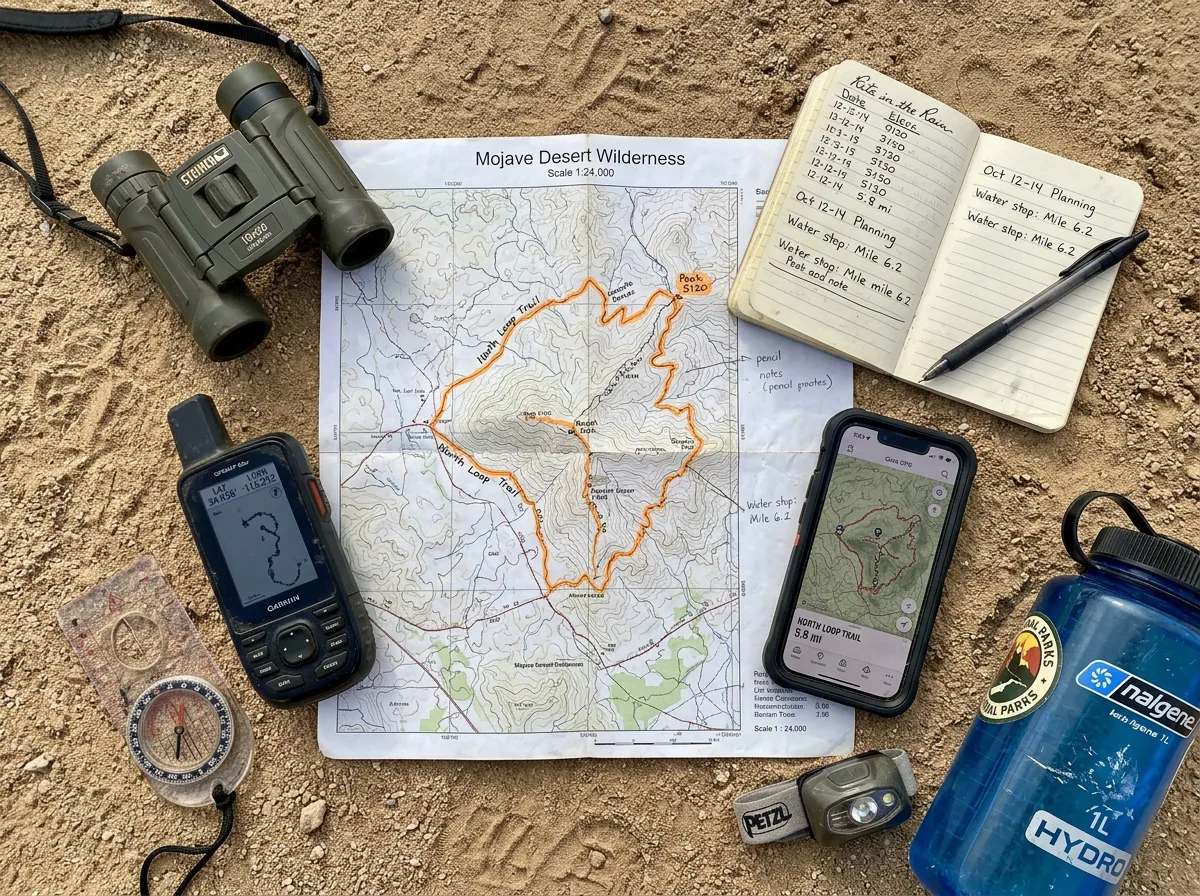
Bring offline maps. Cell service in Moab is spotty once you're off main roads. Download Gaia GPS, OnX Maps, or Avenza with offline capability before you arrive. Know your trails ahead of time. Know where bailout points are if conditions change. Know where water crossings are and what depths they typically reach.
A printed map as backup isn't paranoid—it's practical. A GPS unit that works without cell service gives you one more safety layer. Know how to use your navigation tools before you need them in actual conditions.
Booking in Advance
Jeep rentals in peak season book out. Reserve your vehicle weeks ahead if you're visiting March through November. Lodging fills fast—even mid-range hotels get booked solid. Food service gets overwhelmed during peak times. Restaurants have long waits or limited seating. Planning ahead means you don't arrive and discover everything is full.
Research guides if you want them. Book any commercial tour operators in advance. Scout locations and plan access routes ahead of time so you're not figuring it out on the day.
Think of it this way: The trip that feels spontaneous and easy is usually the one where someone did the planning work beforehand. You're not being rigid by booking ahead—you're creating the conditions where you can actually be flexible once you're here. If you're doing a technical trail, the difference between a frustrated experience and a great one often comes down to whether you reserved your Jeep, your lodging, and your time weeks earlier instead of hoping something would work out.
The Rental Process
The rental process exists for a reason. It's not bureaucracy for its own sake—it's the system that ensures you get a safe vehicle, understand what you're responsible for, and have clarity around what happens if things go wrong. Most of it is straightforward. Some of it requires actual attention. We'll walk through each part so there are no surprises when you show up.
How to Book with Cliffhanger
You can book online through our website or call directly if you prefer talking through your options. Online booking takes about five minutes. You select your vehicle, your dates, your location pickup (we have multiple spots in Moab), and your rental duration. The system shows availability and pricing in real time. You'll need a valid driver's license and a credit card for the reservation. A deposit holds your booking. The balance is due at pickup.
If you call, our team walks through the same information and can answer questions about vehicle types, trail conditions, or what might work best for your specific situation. Either way, you'll have a confirmation email with your reservation details and pickup instructions.
Understanding the Paperwork
When you arrive for pickup, you'll sign rental agreements that spell out the terms: who's responsible for what, what happens if damage occurs, fuel policy, mileage limits (we don't have them, but fuel is your responsibility), and liability coverage. Read it. It's important. It's not dense legal language—it's straightforward terms about vehicle care and damage responsibility.
You'll need:
Valid driver's license (from any country, but must be valid)
Credit card for the security deposit and payment
Secondary identification (passport if international)
Signature on all rental documents
Acknowledgment that you understand fuel and return expectations
Insurance Options and Coverage
We offer several insurance tiers. Basic coverage gives you liability protection but makes you responsible for damage to the vehicle. Mid-tier coverage raises your deductible on damage but lowers your out-of-pocket risk. Full coverage brings your personal responsibility down to a minimal deductible or eliminates it entirely, depending on which option you choose.
What insurance typically covers:
Third-party liability (if you damage someone else's property or vehicle)
Collision and comprehensive damage (depending on coverage level selected)
Water damage (though some policies exclude deep-water crossings—ask specifically)
Theft and vandalism
Recovery costs if you get stuck and need winching out
What insurance doesn't cover:
Damage from extreme negligence or recklessness
Off-trail driving in prohibited areas
Damage from using the vehicle outside agreed-upon parameters
Fuel cost and returns policy violations
Damage from not following safety briefing recommendations
Vehicle Orientation and Safety Briefing
Before you drive anywhere, we spend time going through your specific vehicle. We show you how the locking differentials work, how to engage four-wheel drive, where the recovery points are, how to check tire pressure, basic maintenance items you might need during your trip. We explain water crossing protocol, proper tire inflation for different terrain, and what to do if you get stuck.
The safety briefing covers:
How to use differential locks and when they're necessary
Proper tire pressure for trails versus highway
Water crossing technique and depth assessment
What to do if your vehicle gets stuck or immobilized
Recovery equipment in the vehicle and how to use it
Communication protocol if something goes wrong
Speed and pacing considerations for technical terrain
When to turn back instead of pushing forward
Fuel Policy and Vehicle Return
You receive the vehicle with a full tank. You return it with a full tank. If you return it less than full, we charge the fuel cost plus a service fee. It's simpler than trying to calculate partial tanks. Fill up before you come back to town. Don't plan to return the Jeep on empty and refuel after.
Vehicle return expectations:
Vehicle returned at agreed-upon time (late returns incur daily fees)
Fuel tank full or refueling charge applied
Exterior reasonably cleaned (we don't expect spotless, but we do expect you to rinse off major mud or debris)
No new damage beyond normal wear
All personal belongings removed before you leave
Receipt and final paperwork signed at return
Remember: This process isn't complicated, but it does matter. Take time understanding your vehicle before you're on the trail. Understand what your insurance covers so there are no surprises if something happens. Be realistic about what you're capable of and what conditions require. And whether you're out for a serious technical day or not, return the vehicle in the condition you received it. It's simple respect and it keeps the experience good for everyone who comes after you.
What to Actually Bring
What you bring determines whether you have a good day or a problematic one. The desert doesn't negotiate. It doesn't care that you forgot water or that you underestimated the heat. You either have what you need, or you figure it out the hard way. This isn't about being paranoid. It's about respecting the environment and giving yourself options when things don't go as planned.
Here's what actually matters:
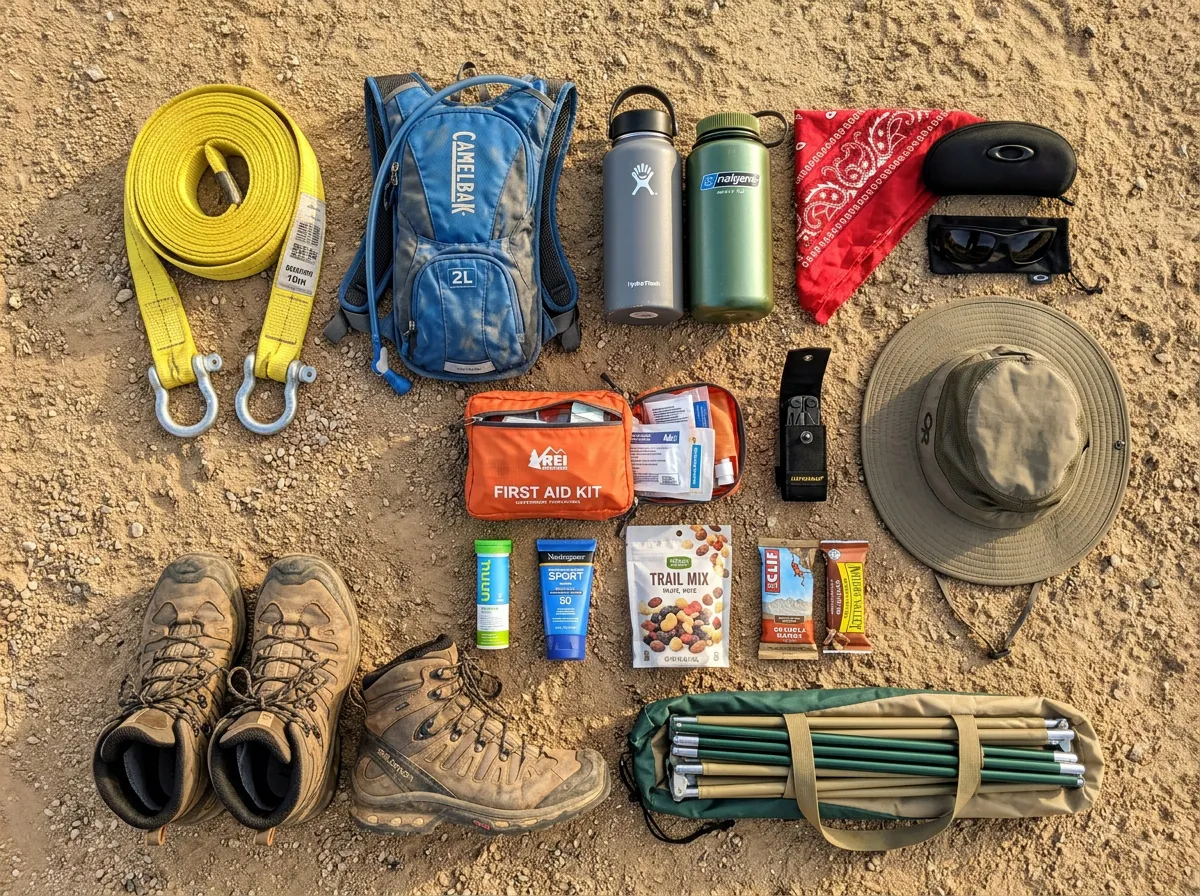
Recovery gear (winches, straps, shackles, snatch blocks)
Water in quantities that seem excessive until you're actually thirsty
Snacks with actual calories and salt
First aid supplies beyond the basic bandage
Proper footwear and clothing for heat and sun
Shade solutions for breaks and emergencies
Communication devices that work without cell service
Recovery Gear and Why It Matters
Your rental vehicle comes equipped with recovery points. You might never need recovery gear. But if you do need it and don't have it, you're stuck. Recovery equipment includes winches, recovery straps, shackles, D-rings, and snatch blocks. Some of this comes with your rental. Some you might need to bring or rent separately depending on how technical you're planning to go.
Why recovery gear matters:
Winches pull your vehicle out if you're high-centered or bogged down
Recovery straps connect vehicles safely without damage
Shackles and D-rings provide secure attachment points
Snatch blocks provide mechanical advantage for pulling from angles
Having these tools means you can self-recover instead of waiting for outside help
Cell service is spotty, so outside help takes time anyway
Water, Snacks, and First Aid Reality
You are far from help. That's not dramatic phrasing—it's your actual situation. If something happens, emergency response takes time. If you're dehydrated, injured, or stranded, you need to be able to sustain yourself until you can get to town or help arrives.
Water: Bring more than you think you need. A liter per person per hour of driving is a starting point in summer. Winter allows less, but don't assume winter means you can skip water. Electrolyte replacement matters—water alone doesn't cut it on full days. Bring a hydration pack or bottles you can actually drink from while driving.
Snacks: Real food with calories and salt. Trail mix, granola bars, jerky, nuts, fruit. Things that provide energy and don't melt in heat. If you're driving all day, bring lunch. Don't plan on stopping for food unless you're coordinating your route around restaurants, and even then, bring backup calories.
First aid: A basic first aid kit covers cuts and scrapes. Bring something better. Include blister treatment (because your feet will take punishment if you're not used to this), pain medication beyond aspirin, antibiotic ointment, bandages in multiple sizes, tweezers for splinters, pain relief for muscle strain, antacids, and any personal medications you use.
What to actually pack:
At least 3-4 liters of water per person for full-day trips
Electrolyte replacement drinks or tablets
High-calorie snacks (trail mix, granola, jerky, nuts, energy bars)
Actual lunch if you're doing a full day (sandwiches, wraps, something with protein)
First aid kit with blister treatment, pain medication, antibiotic ointment, multiple bandage sizes
Tweezers, pain relievers, antacids
Any personal medications you take
Sunscreen and lip balm with SPF
Clothing and Footwear for the Actual Conditions
The desert sun is intense. UV exposure adds up fast. Heat radiates from the rock. Wind kicks up dust. Your clothing needs to account for all of this while you're sitting in a vehicle or hiking short sections.
Footwear: Sturdy hiking boots or approach shoes with ankle support and good tread. The rock is unforgiving if you slip. Sneakers work in a pinch, but boots handle the terrain better. Soles need real grip. Ankles need support. Bring a second pair of shoes or boots if you're going for multiple days—your feet will appreciate the break.
Clothing: Long sleeves and pants despite the heat. They protect against sun and against getting scraped by rock or brush. Light colors and breathable fabric help manage heat. A wide-brimmed hat keeps sun off your face and neck. Sunglasses that block actual UV. A light jacket for morning and evening when temperatures drop. A bandana or buff for dust protection if trails are dusty.
What to wear and bring:
Sturdy hiking boots or approach shoes with good tread
Long pants (light color, breathable material)
Long-sleeve shirt (light color, breathable material)
Wide-brimmed hat
Sunglasses that block UV
Bandana or buff for dust
Light jacket for early morning and evening
Extra socks if doing multiple days
Second pair of shoes for evening wear
Shade Solutions for Breaks and Emergencies
You're in a Jeep in the desert sun. Midday temperatures can exceed 100 degrees. Sitting in a parked Jeep in direct sun becomes unbearable quickly. You need shade options for breaks. You also need contingency shade if your vehicle becomes immobilized and you're waiting for help.
Portable shade solutions:
If you get a flat tire or breakdown and are stuck for hours
If you need to rest during a full day of driving
If weather turns and you need shelter
Bring a pop-up shade structure or a simple tarp and rope system that creates temporary shelter. A beach umbrella works in a pinch. The goal is to get out of direct sun if you're stranded or taking extended breaks. Dehydration and heat stress happen faster than you think when you're sitting still in the sun.
If/Then Scenarios for Packing
If you're doing a full day on White Rim, then bring lunch, extra water, and backup snacks. If you're doing Hell's Revenge, then three liters of water and snacks are sufficient. If you're planning multiple location changes, then bring shade, first aid for blisters, and extra sunscreen. If it's summer, then bring more water and plan early morning starts to avoid midday heat. If it's winter, then bring extra layers and be prepared for temperature swings between sun and shade. If you're going to technical terrain, then bring extra first aid supplies and pain medication for muscle strain.
Keep In Mind: Most of what you bring, you won't use. That's the point. You're not packing for disaster—you're packing so you can handle unexpected situations without panic or discomfort. Whether you're serious about trail driving or out for a simpler drive, the person who planned ahead is the person having a good experience. The person who relied on hoping everything would work out is the person with regrets.
During Your Trip: Managing the Experience
Once you're on the trail, the conditions are what they are. You can't negotiate with dust. You can't reason with heat. What you can do is understand what's actually happening, adjust your expectations accordingly, and make decisions based on reality instead of what you hoped would happen. This is where preparation meets practice, and where knowing your limits becomes the difference between a great experience and a frustrated one.
Dust Is Everywhere
Not metaphorically. Literally everywhere. If there's another vehicle ahead of you on the trail, you'll eat dust. If the trail hasn't had rain recently, your vehicle kicks up clouds. Wind carries it into every opening. After a few hours, you'll have a layer of it on your skin, in your hair, coating the inside of the vehicle. Your vehicle's air filter will be working overtime.
This isn't a problem—it's just the reality. Expect it. Embrace it. You'll return dustier than you've probably ever been. Your vehicle will need cleaning. Your lungs will process dust particles. Your gear will be covered. This is part of the experience, not a flaw in it.
Heat Management and Hydration
Your body isn't adapted to desert conditions. Even if you grew up somewhere hot, sustained exposure to 95+ degree heat with intense sun and low humidity is different from what most people experience regularly. Dehydration doesn't announce itself loudly. You get thirsty, then you get tired, then your judgment starts slipping without you noticing. By the time you realize you're seriously dehydrated, you've already been compromised for a while.
Quick tips:
Drink before you're thirsty. By the time thirst registers, you're already behind on hydration
Take breaks in shade every 90 minutes. Stop moving, let your core temperature drop, reset
DOs and DONTs:
DO drink electrolyte-enhanced water, not just plain water. Plain water alone doesn't replace salts you're losing through sweat
DO take frequent breaks instead of pushing through. A 15-minute rest every 90 minutes beats pushing hard for 4 hours and crashing
DON'T rely on feeling okay as evidence that you're hydrated. Fatigue creeps in before you consciously recognize it
DON'T skip the hat, sunscreen, and protective clothing. UV exposure accumulates regardless of whether you feel burned in the moment
Pacing Yourself Over a Full Day
A full day on technical terrain is more demanding than highway driving. Your concentration is constant. Your body is making micro-adjustments. Your forearms, shoulders, and core are engaged. By mile 50, fatigue is real. By mile 100, it's exhausting. Plan your pacing accordingly.
Don't treat a trail like a race you're trying to complete as fast as possible. Treat it like something you're experiencing. Stop at viewpoints. Walk around. Let your vehicle rest periodically so the engine and transmission cool. Eat your lunch sitting down instead of in the vehicle. Your pace should allow for this. If you're driving so hard that you're not actually absorbing the experience, you're doing it wrong. Whether you're serious about the technical challenge or out for a simpler drive, the experience improves when you slow down enough to actually be present.
When to Turn Back and Recognizing Your Limits
You will encounter moments where you question whether to continue. Water crossing looks deeper than expected. Rock section looks steeper than the photo suggested. You're more tired than you anticipated. Weather is changing. Your vehicle made a sound you haven't heard before.
These are moments to make rational decisions, not ego-driven ones. Turning back isn't failure. It's respecting reality. The trail isn't going anywhere. Your vehicle will be okay. You can come back another day when conditions are better or you're more prepared.
Turn back if:
Water crossings are deeper than you can safely assess
Weather is deteriorating and visibility is dropping
You're physically exhausted and making slower decisions
Your vehicle is showing signs of mechanical stress
You're genuinely unsure whether you can complete the terrain ahead
Your group is asking to stop and you've already pushed past reasonable limits
Turning back is the right call, and you'll know it in the moment if you're being honest with yourself.
Minor Mechanical Issues and Wilderness Respect
Your rental vehicle comes with basic tools and equipment. Learn where they are. Know how to check and top off fluids. Understand what minor adjustments you can make safely and what requires stopping and calling for help. A loose belt, a slow leak, a radiator hose that needs tightening—these are things you might be able to address if you have basic tools and understand what you're doing. A transmission issue, a serious oil leak, or brake problems require stopping immediately and calling for help.
Respect private land and wilderness areas. Stay on marked trails unless you have explicit permission to be elsewhere. Pack out everything you pack in. Don't destroy vegetation. Don't leave garbage. Don't damage water sources. The places you're driving exist because people steward them. Leave them better than you found them, or at minimum, leave them unchanged. This isn't just ethics—it's practical. Bad behavior leads to trail closures. Closed trails hurt everyone.
The Bottom Line
The actual experience of driving a trail is different from planning it or imagining it. Reality includes dust, heat, fatigue, and the constant small decision-making that comes with managing yourself and your vehicle through challenging terrain. It also includes genuine moments of clarity, views that justify the effort, and the sense of capability that comes from pushing your limits safely. Whether you're out for a serious technical challenge or taking photos in stunning locations, the day goes better when you pace yourself, stay hydrated, respect your limits, and leave the land as you found it. The Jeep gets you there. Your judgment and preparation determine whether the experience is what you hoped for.
What Jeep Rental Moab Actually Gives You
There's a particular kind of clarity that comes from being outside, moving through terrain that demands your attention, and discovering what you're actually capable of. It's not something you can manufacture. You can't get it from watching videos or reading about other people's experiences. You have to be there, pushing against your own perceived limits, and finding out what's on the other side.
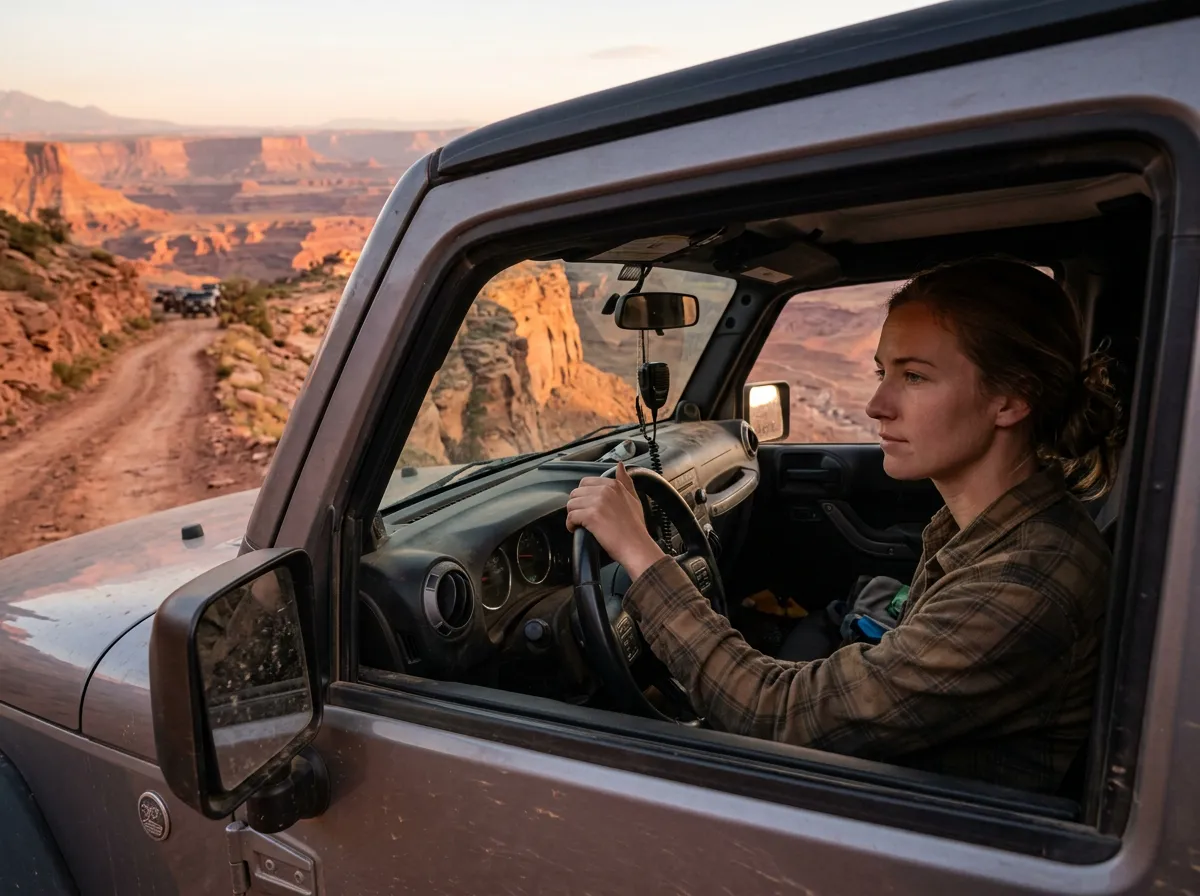
Moab does this. The landscape makes you pay attention. The driving demands presence. The scale of the place has a way of making ordinary concerns feel appropriately small. You realize that most of what you worry about doesn't actually matter. What matters is whether you're hydrated, whether you're making good decisions, whether you're respecting the terrain and the people you're with. That clarity lingers.
This is why people come back. Not because Moab is objectively the most beautiful place on Earth—though it's genuinely beautiful. Not because the trails are the most technically challenging—though some of them are. They come back because something happened out there that felt real. They tested themselves. They moved through a landscape that required them to be present. They discovered they could handle something they weren't sure about. That sticks with you in ways that most experiences don't.
Jeep rental Moab is the mechanism that makes this possible. The vehicle gets you to places that matter. The experience of driving does the rest.
If you have questions about which vehicle fits your trip, which trails match your skill level, or what a custom itinerary might look like for your specific situation, reach out. We're here to help you plan something that actually fits your reality instead of someone else's Instagram fantasy. Whether you're planning a serious technical adventure, a family exploration, or something else entirely, we can help you think through what makes sense.
Contact us through our website, call directly, or send an email. Tell us what you're envisioning. We'll be honest about what's realistic, what's worth your time, and what might surprise you once you're actually out there. That's what we're here for.