What Most Big Island Jeep Rentals Won't Tell You
Here's what the airport rental counter won't mention about Big Island Jeep rentals: most major companies explicitly prohibit off-road use of their vehicles, their insurance doesn't cover unpaved road damage, and the fine print in nearly every standard rental agreement turns a Jeep Wrangler into an expensive sedan the moment you leave pavement.
The Big Island of Hawaii isn't just another tropical destination with a couple of scenic viewpoints and a resort strip. It's the most geologically diverse island on the planet—five volcanoes, eleven of the world's thirteen climate zones, lava fields that look like the surface of Mars, cloud forests receiving 200 inches of rain annually, and a summit that rises 13,796 feet above sea level where astronomers operate some of the world's most powerful telescopes. Experiencing this diversity requires a vehicle actually permitted and equipped for the terrain that makes the Big Island what it is.
A standard rental Jeep from an airport counter delivers the paved version of Hawaii. A proper Big Island Jeep rental from Cliffhanger delivers the actual island.
The Big Island's Two Completely Different Realities
No other island destination in the world compresses this much landscape variety into a single driving circuit. Understanding the two versions of Big Island exploration makes the vehicle decision obvious.
The Paved Version
Hawaii's highway network provides legitimate scenery and genuine accessibility. The Queen Ka'ahumanu Highway along the Kohala Coast, the Chain of Craters Road through Hawaii Volcanoes National Park, the Hamakua Coast Highway connecting Hilo to Waipio Valley—these are genuinely spectacular drives that any vehicle handles without concern.
Paved route characteristics:
Accessible to anything
Standard sedans, minivans, and non-4WD vehicles cover the main highway circuits without issue. Most tourist itineraries never require anything beyond this.
Spectacular on its own terms
The Kohala Coast delivers dramatic ocean views. Hawaii Volcanoes National Park's paved routes provide access to lava tube systems, crater overlooks, and active volcanic activity visible from maintained roads. Akaka Falls drops 442 feet and is a short paved walk from the parking lot.
The ceiling
Paved Big Island itineraries hit Green Sand Beach from the road (then a 2.5-mile walk across lava field to reach it), view Waipio Valley from the overlook rather than driving into it, and stop before Mauna Kea's summit because the access road above the Visitor Information Station requires 4WD and ranger approval. Most tourists consider this the full Big Island experience. It isn't.
The 4x4 Version
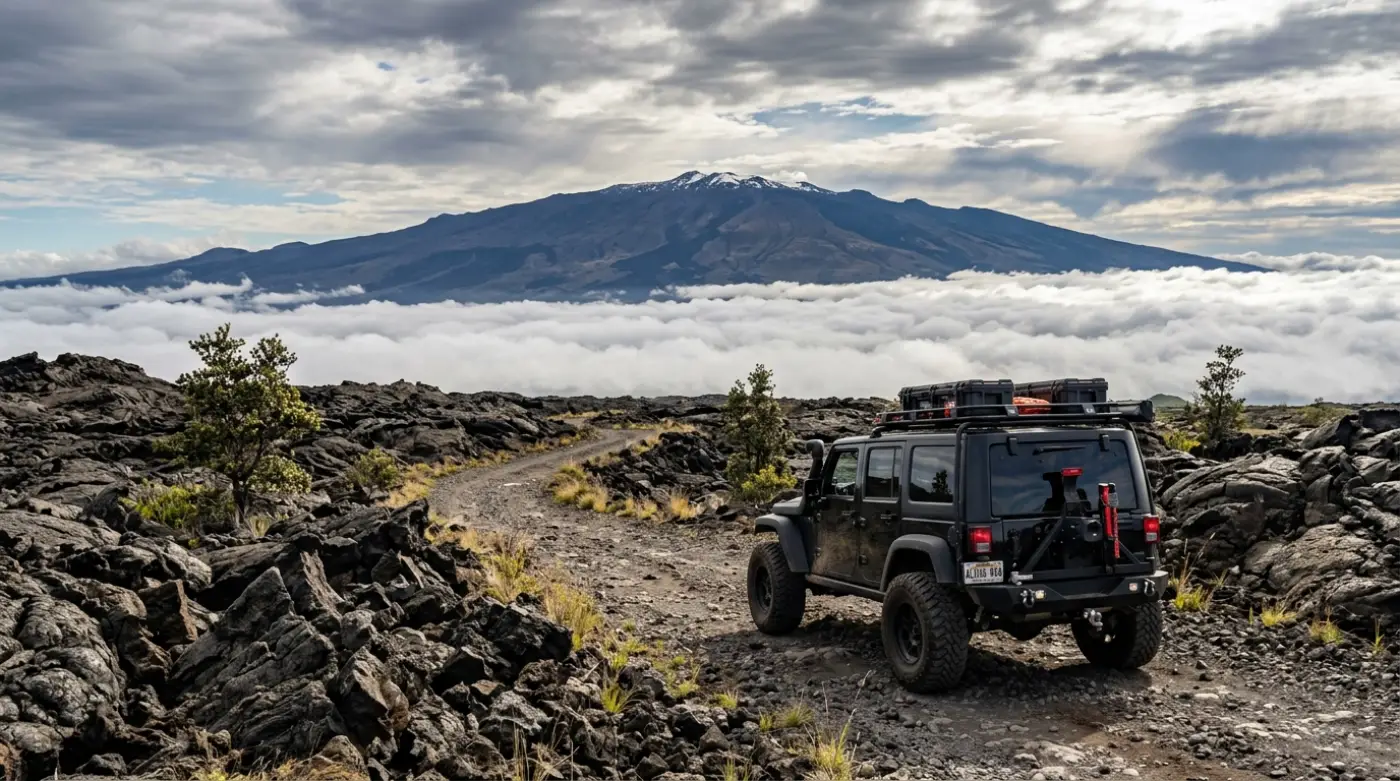
The moment you engage four-wheel drive on the Big Island, the island doubles in size. Waipio Valley's 25% grade descent that most rental companies explicitly prohibit. Mauna Kea's summit road requiring a ranger inspection of your vehicle's 4WD capability before they'll let you proceed. The South Point area's rugged coastal access to one of the most remote corners of US soil. The lava field trails that connect geological features no paved road touches.
4x4 route characteristics:
Vehicle restrictions that matter
The Mauna Kea summit road above the Visitor Information Station at 9,300 feet requires a 4WD vehicle with 4LO capability. The ranger station conducts vehicle inspections before allowing summit access. Standard AWD modes and crossovers fail this inspection. Proper 4WD with low-range gearing passes it.
Rental prohibition reality
Most Big Island rental companies explicitly prohibit unpaved road travel. Their standard agreements list specific roads—including Waipio Valley descent, South Point access roads, and Mauna Kea summit road—as prohibited routes. Cliffhanger's vehicles are specifically permitted and equipped for these destinations.
Terrain unlike anything else on Earth
Active lava fields where new ground was created within the last century. Summit terrain at 13,796 feet with sub-zero wind chills above the cloud layer. Valley floor access to a place that was once the most sacred location in all of Hawaii. These experiences don't exist from the pavement.
The Routes That Justify a Proper Big Island Jeep Rental
Mauna Kea Summit Road
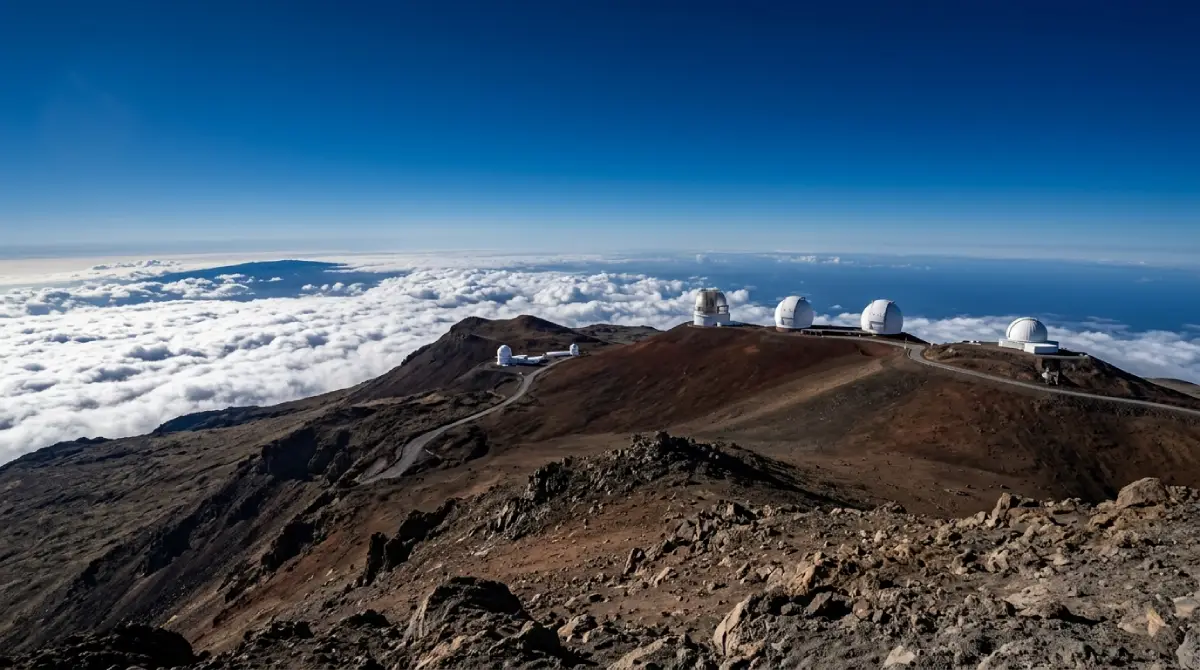
Mauna Kea is the centerpiece of any serious Big Island adventure—and the most technically demanding destination on the island for rental vehicles. At 13,796 feet above sea level, it's the tallest mountain in the world measured from its oceanic base, home to thirteen international telescope observatories, and the only place in Hawaii where you can stand above the clouds and watch the Milky Way emerge against a sky darkened by altitude and distance from light pollution.
What the summit access actually involves:
The paved Saddle Road (Route 200) connecting Kona and Hilo crosses the island's interior between Mauna Kea and Mauna Loa at approximately 6,500 feet elevation. This section is paved, dramatic, and accessible to any vehicle—lava plains, desert-like terrain, and views of both massive volcanic summits.
The Mauna Kea Access Road begins at the Route 200 junction and climbs paved road to the Visitor Information Station at 9,300 feet. Any vehicle handles this section.
Above the VIS, the road transitions to unpaved terrain. A ranger checkpoint inspects vehicles for 4WD with low-range capability before allowing summit access. This is where standard rental agreements and standard rental vehicles fail.
The summit itself—above 13,000 feet—requires 4LO engagement for portions of the ascent. Altitude reduces engine power significantly. Braking demands are elevated on the descent. This is not casual sightseeing.
Timing and preparation:
Acclimatize at the Visitor Information Station for 30 minutes minimum before continuing to the summit. The altitude change from Kona (sea level) to summit (13,796 feet) in a single morning is significant.
Summit temperature averages 25–35°F with wind chill. Bring layers regardless of Kona weather.
Sunset and after-dark visits deliver the stargazing the summit is famous for. The VIS hosts public stargazing programs most evenings.
Children under 13 and pregnant women are advised against summit access due to altitude.
Vehicle requirement: 4WD with 4LO capability, ranger-inspected and approved. Standard AWD fails the checkpoint. Cliffhanger's modified Rubicons pass it.
Waipio Valley
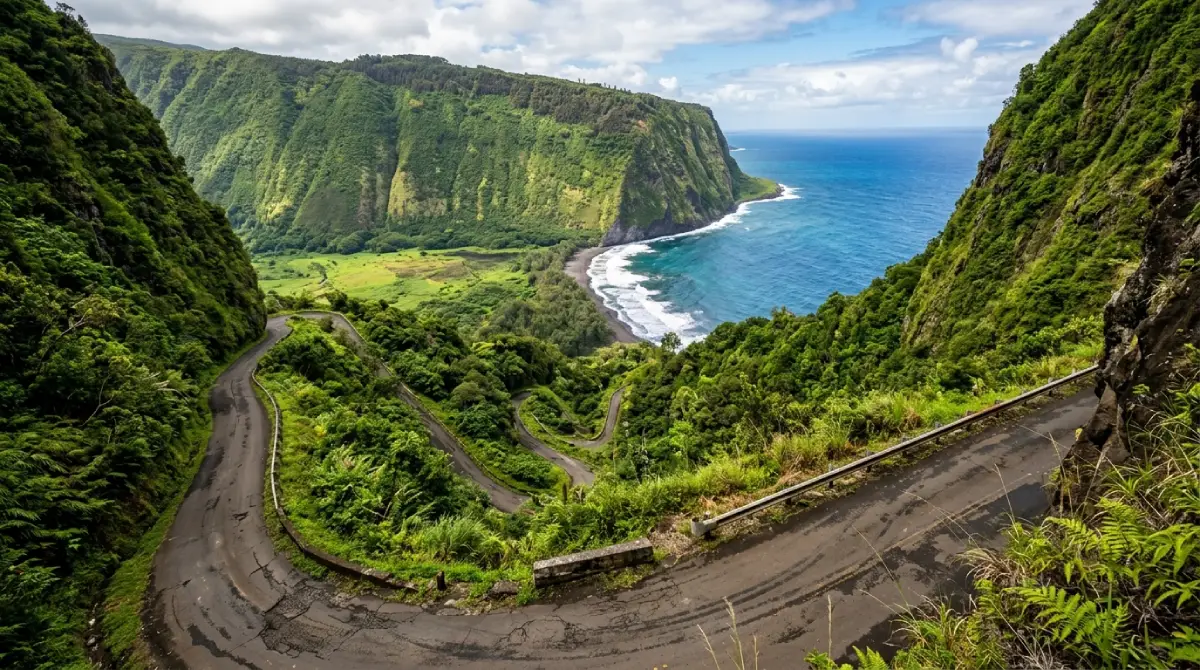
Waipio Valley sits on the Big Island's northeastern Hamakua Coast—a mile-wide, 2,000-foot-deep valley once called the Valley of the Kings, where Hawaiian royalty lived and the island's most sacred spiritual traditions were practiced for centuries. The overlook at the valley's rim is free, accessible to any vehicle, and visited by thousands of tourists daily. The valley floor is accessible only by 4WD vehicle with a steep enough grade to filter out everything else.
The descent:
The road from rim to valley floor drops 900 feet over less than a mile—a sustained 25% grade on a single-lane paved road barely wide enough for one vehicle. This is the steepest public road in the United States by some measurements.
4LO engagement on descent is essentially mandatory. Standard transmission vehicles can manage it with careful technique; automatics without low-range gearing overheat brakes on the descent and struggle for traction on the climb back out.
Most rental companies explicitly list Waipio Valley road as a prohibited destination in their agreements. The reason is straightforward—it damages standard vehicles and they know it.
What the valley floor delivers:
Waipio Stream and the black sand beach at the valley's mouth accessible only to those who made the descent.
Taro farms that have operated continuously for centuries in the valley's flat floor.
Views back up the cliff walls that explain why this valley was considered sacred—completely enclosed, extraordinarily fertile, connected to the ocean but separated from the rest of the island by terrain that made it defensible and self-sufficient.
Hiking access deeper into the valley toward Waimanu Valley, one of the most remote backcountry destinations in Hawaii.
Vehicle requirement: 4WD with 4LO essential. High clearance helpful for stream crossings in wet conditions. Not recommended for inexperienced 4WD drivers.
Hawaii Volcanoes National Park
Hawaii Volcanoes National Park sits on the Big Island's southeastern flank, roughly 96 miles from Kona via the Saddle Road corridor. It's the only place in the United States where you can drive to within a short walk of an active volcanic eruption zone—and the range of terrain accessible inside the park with a capable vehicle is dramatically wider than what standard rental agreements permit.
What the park actually contains:
Kilauea Caldera and Halemaumau Crater
— The summit caldera of Kilauea, one of the world's most continuously active volcanoes, sits at the park's center. The Rim Drive circles the caldera with multiple overlook pullouts, steam vents, and sulfur banks accessible from paved roads. The Halemaumau lava lake glows against the night sky when active in a display visible from the overlook that no photograph adequately captures. No 4WD required for this section.
Chain of Craters Road
— This 18-mile paved descent drops 3,700 feet from the caldera rim to the coastline, passing through decades of lava flows that buried the original road multiple times. The drive ends at a hardened lava bench where previous flows reached the ocean. Holei Sea Arch—a 90-foot natural arch carved by wave action into fresh lava—sits at the terminus. Any vehicle handles Chain of Craters Road.
Hilina Pali Road
— A 9-mile unpaved spur off Chain of Craters Road descending to a remote overlook above the Ka'u Desert coastline. High-clearance 4WD handles the deteriorating surface sections significantly more confidently than standard vehicles. The overlook sits above a 1,500-foot escarpment with coastal views extending in both directions.
Ka'u Desert Trail access
— The parking area at Hilina Pali Road's end accesses backcountry trails through the Ka'u Desert, a rain-shadow desert formed by Mauna Loa blocking trade wind moisture. Footprints of Hawaiian warriors preserved in volcanic ash from an 1790 Kilauea eruption are visible on the Footprints Trail—one of the most historically significant sites in the park and essentially unknown to visitors who don't go looking.
Park logistics:
Entrance fee: $35 per vehicle, valid for 7 days.
The park operates 24 hours, making overnight lava glow visits possible during active eruption periods.
Volcano Village, adjacent to the park entrance, has restaurants and fuel—the last services before the Chain of Craters descent.
Cell service is unreliable throughout the park. Download offline maps before entering.
Vehicle requirement: Main caldera loop and Chain of Craters Road — any vehicle. Hilina Pali Road and backcountry access — high-clearance 4WD recommended.
The Hamakua Coast
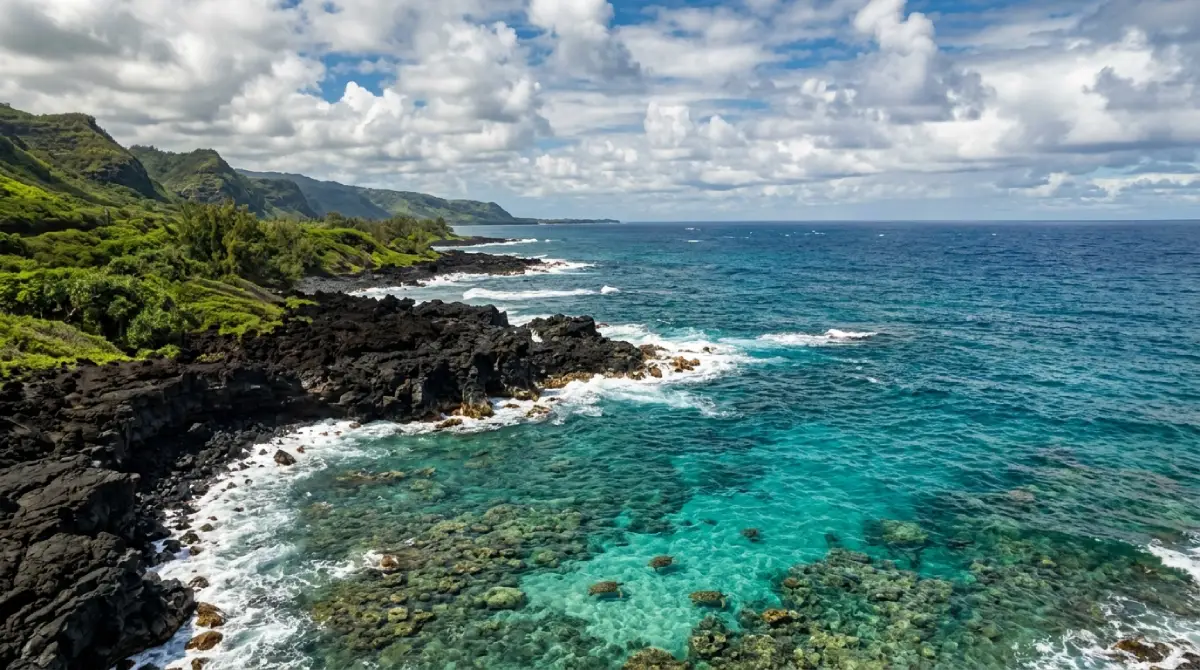
The Hamakua Coast highway connects Hilo to the Waipio Valley overlook along 40 miles of Hawaii's most lush coastline. The main highway is paved and accessible to any vehicle, but the valley access points and side roads along the route reward high-clearance 4WD with destinations the highway itself misses completely.
Key stops:
Akaka Falls State Park
— A short paved loop trail through tropical rainforest delivers two significant waterfalls: Kahuna Falls at 100 feet and Akaka Falls at 442 feet, one of the tallest waterfalls in Hawaii. Most impressive after recent rainfall, which the Hamakua Coast receives constantly. Any vehicle, no 4WD needed.
Honokaa Town
— A former sugar plantation town with preserved early 20th-century main street character. Local restaurants and the historic Honokaa People's Theatre make it a worthwhile break before continuing to Waipio.
Waipio Valley Overlook
— The paved road's terminus provides the valley view most visitors collect and consider the end of the Hamakua Coast experience. The 900-foot overlook down to the black sand beach and taro fields below is genuinely impressive. For Cliffhanger Jeep renters, it's where the descent begins.
Timing: Morning light hits the valley floor best. The coast receives significant year-round rainfall—waterfalls are more impressive after rain, but unpaved road conditions deteriorate quickly. Budget a full day from Kona including the valley descent.
South Point and Green Sand Beach
Ka Lae—South Point—is the southernmost point of land in the United States, a windswept lava platform where Hawaiian fishermen have anchored canoes in the same iron rings for over a thousand years. The access road south of Na'alehu drops 12 miles down a narrow paved road that any vehicle handles, but the Green Sand Beach access from South Point requires either a 2.5-mile walk across lava terrain or a high-clearance vehicle capable of navigating the rough coastal track.
Green Sand Beach:
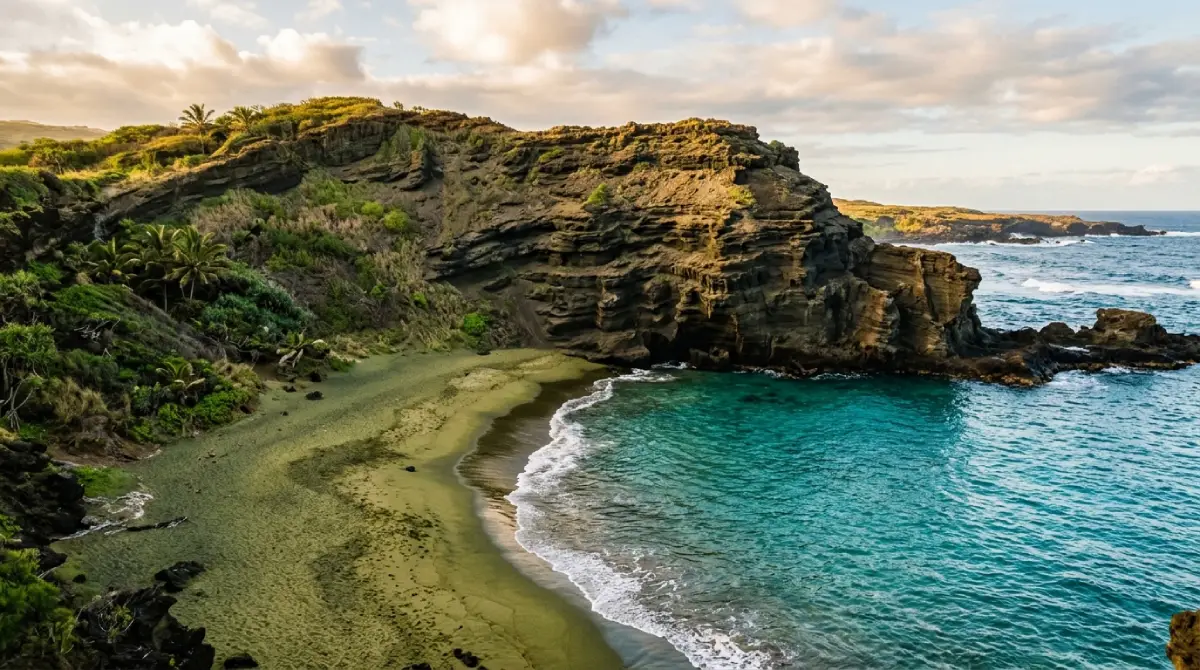
Papakolea Beach gets its distinctive olive-green color from olivine crystals—a volcanic mineral that erodes out of the surrounding cinder cone and concentrates on the beach through wave action. There are only four green sand beaches in the world. This is the most accessible of them, and it's still genuinely remote by any standard.
The coastal track from South Point is 2.5 miles each way across rough lava terrain. Passable on foot but exposed to wind and sun with no shade.
High-clearance 4WD vehicles can navigate the track, significantly reducing the hike. The route involves embedded lava rock, loose gravel sections, and exposed coastal terrain that eliminates standard vehicles.
The beach sits in a sheltered cove below a 150-foot cinder cone cliff. Snorkeling in the cove when surf conditions allow delivers some of the island's clearest water.
Vehicle requirement: High-clearance 4WD for vehicle access. Any vehicle for South Point itself; 4WD for beach access.
Saddle Road and the Interior
Route 200—the Saddle Road—crosses the Big Island's interior between Kona and Hilo at 6,000–6,500 feet elevation, between the massive shoulders of Mauna Kea and Mauna Loa. The road is fully paved and accessible to any vehicle, but it delivers terrain unlike anything else in Hawaii and serves as the access corridor for multiple 4WD destinations.
Key Saddle Road stops:
Pu'u Huluhulu
— A small forested kipuka (island of older vegetation surrounded by newer lava flows) with a short hiking trail and panoramic views of both Mauna Kea and Mauna Loa. Free, 20-minute walk, genuinely impressive.
Mauna Loa Observatory Road
— The paved road climbing Mauna Loa's northern flank to 11,135 feet provides views across the entire island interior and access to trailhead for the summit route. Paved and accessible to any vehicle.
Lava field transitions
— The Saddle Road passes through multiple lava flow zones of different ages. The color and texture differences between flows dated decades versus centuries versus millennia apart are visible from the road, creating a living geological timeline.
Why Cliffhanger's Kona Location Changes the Trip
The Big Island's most compelling destinations require a vehicle that can actually get to them—and a rental agreement that doesn't prohibit it. Most visitors discover this limitation after arriving, after attempting to book alternatives, and after settling for the paved-version island experience because they didn't know better before landing.
Cliffhanger's Kona operation exists to close this gap.
What Cliffhanger's Big Island Jeep rental delivers:
Modified Jeep Wranglers with genuine 4WD low-range capability that passes Mauna Kea's ranger inspection
No rental restrictions on unpaved roads, Waipio Valley descent, South Point track, or Mauna Kea summit road
Local knowledge on current conditions for each destination before departure
Vehicles equipped with the clearance and capability that Hawaii's terrain actually demands
The vertical range this unlocks:
In a single Big Island day with a proper Jeep rental, it's physically possible to start the morning watching sea turtles on a Kona coastal beach, drive the Saddle Road through lava desert terrain at 6,500 feet, acclimatize at the Mauna Kea Visitor Information Station at 9,300 feet, and reach the summit above 13,000 feet for sunset and stargazing before returning to Kona. No other drive on Earth compresses this range of climate, terrain, and altitude into a single day trip.
That trip requires 4LO capability and a rental agreement that doesn't prohibit exactly the roads that make it possible.
Planning Your Big Island Jeep Adventure
Season considerations:
The Big Island's weather varies more by location and elevation than by season. Kona's west coast is dry and sunny year-round—this is where most visitors base themselves. The Hamakua Coast and Hilo receive dramatically more rainfall regardless of season. Summit weather changes fast and independently of Kona conditions; check Mauna Kea summit forecasts specifically before attempting.
Mauna Kea specific timing:
The Visitor Information Station hosts free public stargazing from approximately 6–10 PM on clear nights. Summit access for private vehicles is permitted until 30 minutes after sunset, after which the road is closed to allow astronomical operations. Morning summit visits avoid the crowds that develop later in the day at the VIS.
Flash flood and lava field awareness:
Waipio Valley road becomes impassable in heavy rain—flash flooding from the watershed above the valley happens fast and without warning on the valley floor. Check rainfall forecasts for the Hamakua region specifically before attempting descent. Lava field driving requires careful attention to sharp 'a'a lava that will puncture sidewalls—air pressure management and reinforced tires matter.
Cell service:
Coverage disappears in Waipio Valley, across most of the Saddle Road interior, and on the Mauna Kea summit. Download offline maps before departing Kona. Physical backup navigation is worthwhile for any route beyond the main highways.
The Big Island Experience You Actually Came For
The Big Island of Hawaii is not a beach resort with a volcano nearby. It's an island that contains more geological variety than most continents, terrain ranging from sea-level lava fields to 14,000-foot summits in a single driving day, and destinations that specifically require vehicles capable of getting to them—and rental agreements that permit it.
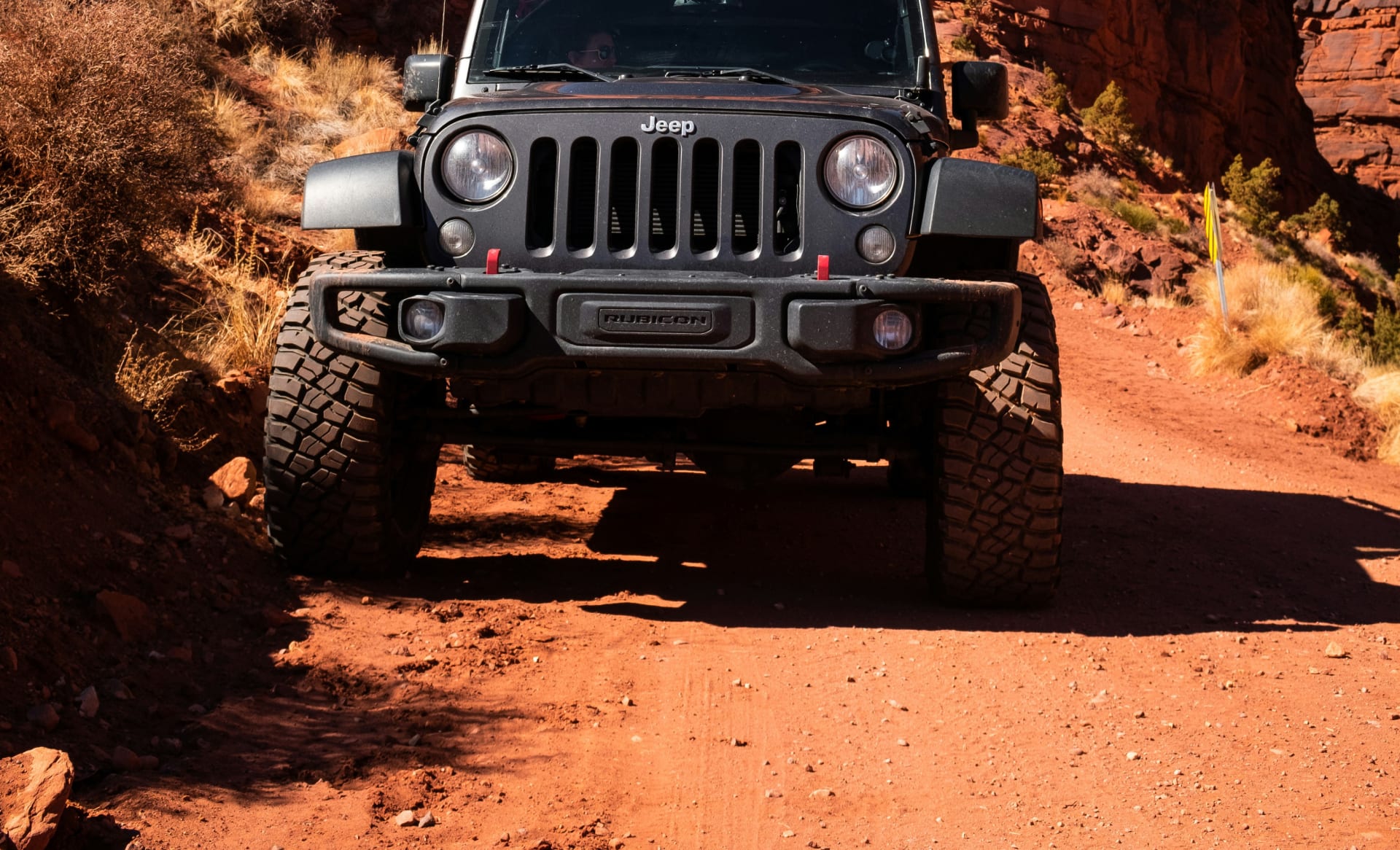
Most Big Island Jeep rentals deliver a Wrangler with a standard agreement that prohibits the exact destinations that justify the vehicle. Cliffhanger's Kona location delivers modified Rubicons equipped and permitted for Mauna Kea's summit road, Waipio Valley's descent, South Point's coastal track, and everything the island actually offers beyond the pavement.
The summit is waiting. The valley floor is accessible. The green sand beach is out there. The question is whether your rental agreement lets you get to any of it.
Ready to experience the Big Island the way it actually exists? Contact Cliffhanger Jeep Rentals in Kona and let's get you into a vehicle built for every mile of it.