Here's what the glossy tourism campaigns conveniently omit about backcountry Utah: the complete absence of cellular coverage beginning approximately 8 miles from any paved road, the afternoon thunderstorms that transform dry washes into flash-flood channels within 15 minutes, and the harsh mathematical reality that tow trucks charge $150 per mile plus hourly rates when you're 47 miles deep on Poison Spider Mesa with a cracked oil pan.
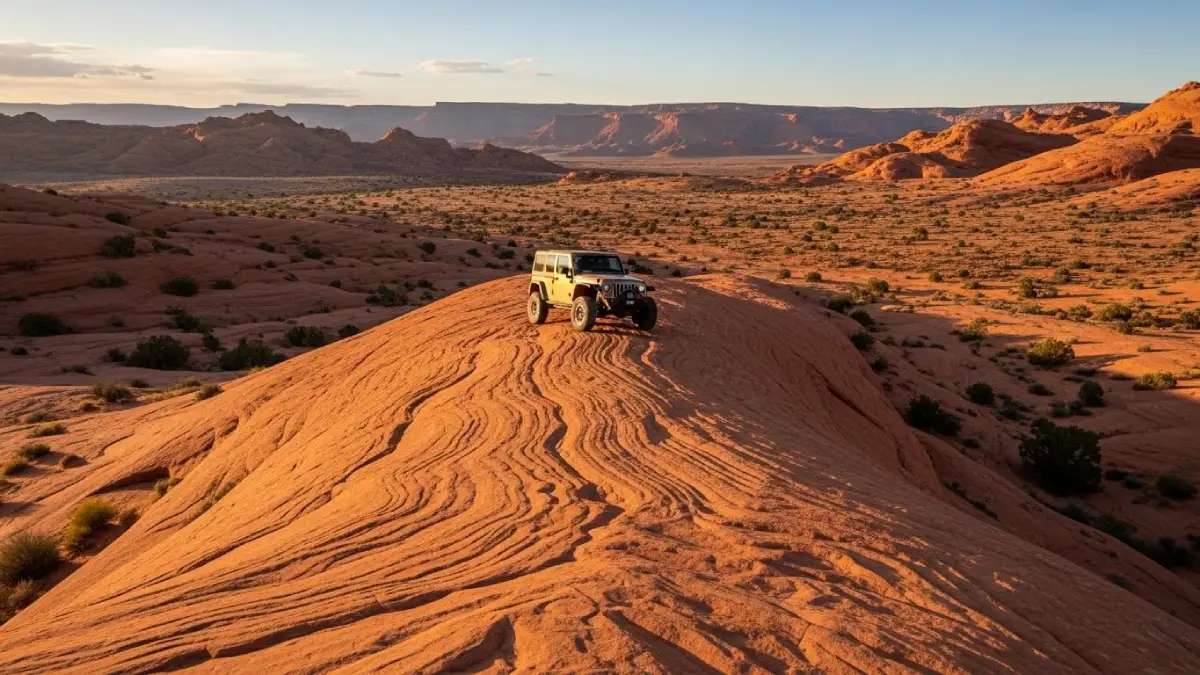
Backcountry Utah isn't just "off-road driving with prettier scenery." It's 84,899 square miles of geological formations that actively resist vehicle passage, where ancient Navajo and Entrada sandstone create slickrock surfaces that either provide exceptional traction or send vehicles sliding sideways depending on variables tourists can't predict. The San Rafael Swell alone contains over 2,000 square miles of trails rated from "challenging for stock 4x4" to "barely passable with $35,000 in modifications."
The numbers tell an uncomfortable story: search-and-rescue teams in Moab respond to an average of 127 backcountry vehicle incidents annually, with 73% involving tourists who assumed their rental SUV's "4WD" badge qualified them for White Rim Trail. Recovery costs average $1,847 per incident, and that's before addressing vehicle damage that standard rental insurance explicitly excludes.
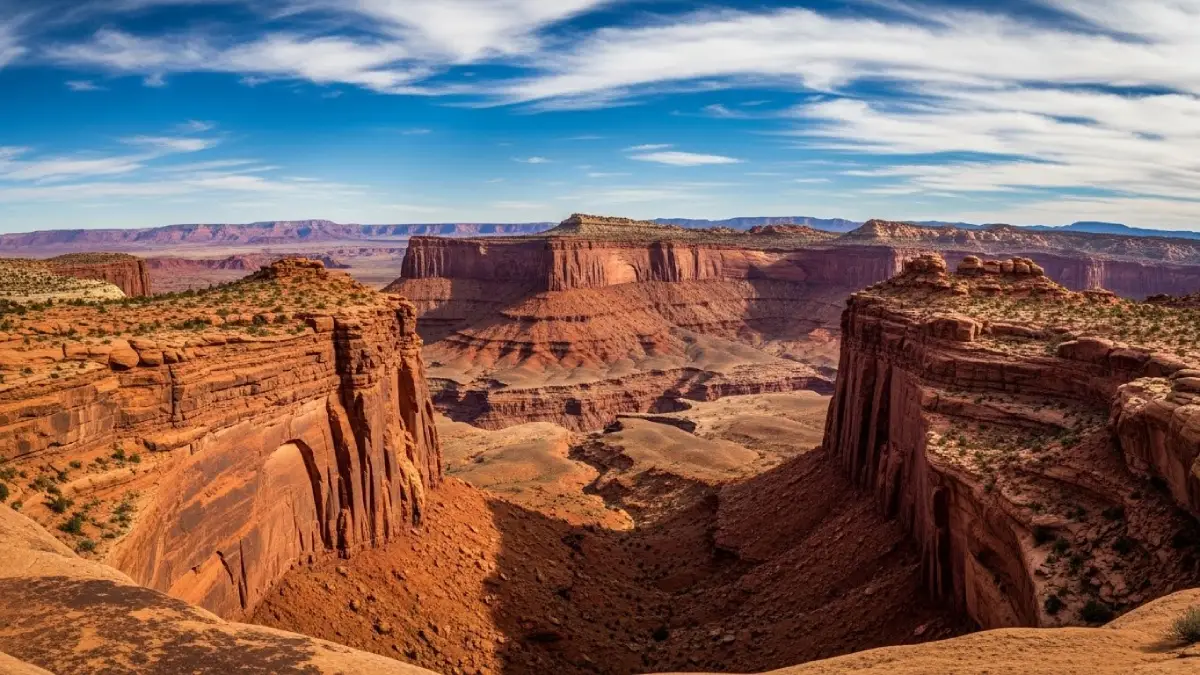
Understanding why backcountry Utah separates equipped adventurers from expensive mistakes requires acknowledging that accessibility and difficulty exist on completely different scales here. A trail marked "moderate" in Utah might be the most technical route you've ever driven, and "difficult" often translates to "impassable without professional-grade equipment and genuine skill."
What "Backcountry" Actually Means in Utah
The term "backcountry" gets thrown around casually by tourists planning scenic drives, but in Utah, it carries specific implications about remoteness, technical difficulty, and the complete absence of emergency infrastructure.
True backcountry characteristics:
Zero cell service – Not "spotty coverage" but complete signal absence for 20+ miles in any direction. Your navigation apps won't function. Your emergency calls won't connect. You operate in genuine isolation.
No maintained surfaces – Backcountry routes aren't graded roads with occasional rough patches. They're former mining tracks, livestock trails, and geological features that barely qualify as routes. Washouts, rockslides, and storm damage alter conditions weekly.
Multi-hour recovery windows – When something goes wrong 40 miles into White Rim Trail, help measures response time in hours, not minutes. Tow trucks can't reach these locations. Recovery requires specialized vehicles driven by operators familiar with specific terrain.
Serious consequences for errors – Wrong line selection on Elephant Hill means damaged suspension, cracked oil pans, or vehicles wedged between sandstone walls. Afternoon thunderstorms create flash floods that trap vehicles for days. Mechanical failures strand groups overnight or longer.
Legitimate wilderness conditions – Summer temperatures exceed 110°F with zero shade. Water sources are nonexistent or contaminated. Wildlife encounters include rattlesnakes, scorpions, and the occasional mountain lion. The environment actively works against human presence.
The Moab Field Office manages over 1.8 million acres of public land, with approximately 750 miles of maintained trails and another 400+ miles of unofficial routes used by experienced backcountry explorers. Canyonlands National Park adds 337,598 acres of designated wilderness, while the San Rafael Swell contributes another 600+ square miles of accessible backcountry.
Each of these areas presents different challenges, different risks, and different equipment requirements that tourists chronically underestimate.
The Major Backcountry Utah Regions
Moab and Surrounding BLM Land
Moab serves as the epicenter of Utah's backcountry scene, with Hell's Revenge, Poison Spider Mesa, and Golden Spike drawing international attention. But beyond these famous trails lies a network of routes that test even experienced operators.
White Rim Trail – A 100-mile loop through Canyonlands requiring 2-3 days, permits, and vehicles capable of sustained technical driving over deteriorating surfaces. The trail includes steep grades on loose rock, narrow shelf roads with 1,000-foot exposures, and sand sections that trap inadequately equipped vehicles.
Poison Spider Mesa – The 14-mile route to the mesa top includes obstacles like "Little Arch" where vehicles must navigate through a narrow sandstone opening, and "The Chute" where proper line selection prevents $4,000 in body damage. The trail continues beyond the popular turnaround point into genuine backcountry where most tourists never venture.
Gemini Bridges – What starts as an accessible scenic drive transforms into technical terrain requiring precise navigation through sandstone fins and across slickrock expanses where painted trail markers disappear under dust and weather.
Steel Bender – Living up to its name with obstacles that literally bend unprotected components, this trail separates vehicles with genuine rock sliders from those with decorative side steps.
San Rafael Swell
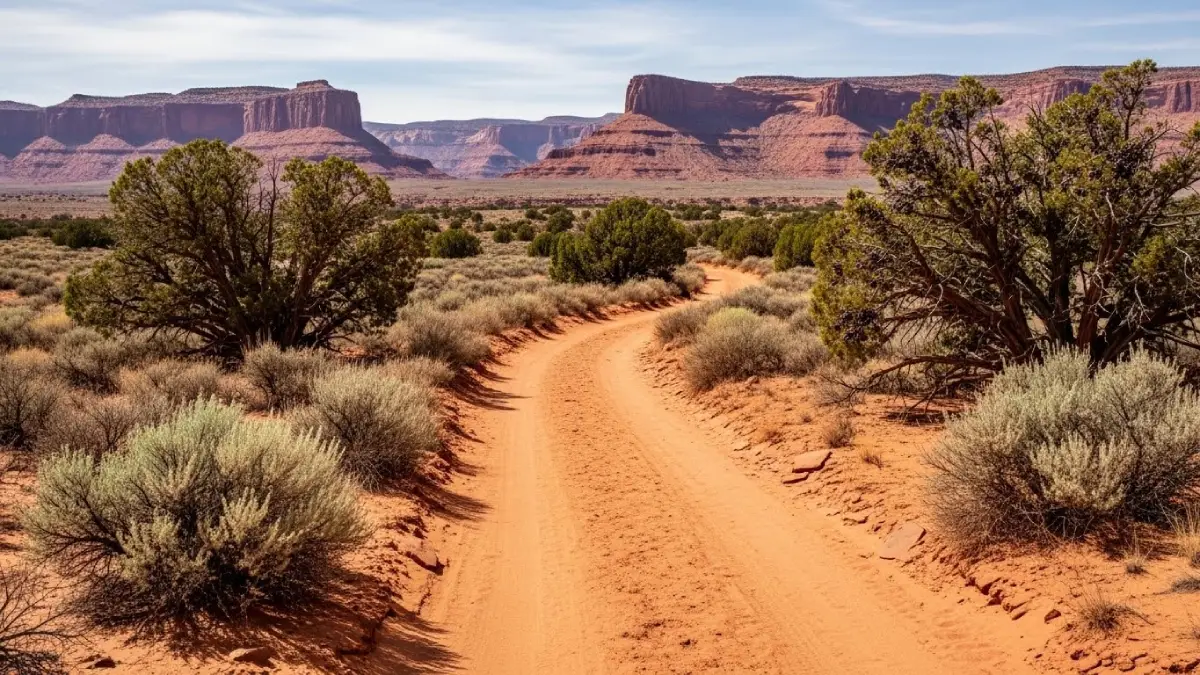
The San Rafael Swell contains some of Utah's most spectacular and least-visited backcountry. Its 2,000+ square miles include everything from maintained gravel roads to routes requiring winch-equipped vehicles and recovery skills.
Buckhorn Draw – Starting as a maintained county road, it provides access to progressively more technical side routes including paths to ancient Native American rock art panels, narrow slot canyons, and remote camping areas.
Devil's Racetrack – A 40-mile loop rated difficult to extreme, featuring technical sections that punish ground clearance deficiencies and articulation limitations. The route includes steep climbs over broken rock, narrow passages between sandstone walls, and sections where recovery requires specialized equipment.
Little Wild Horse Canyon – The access roads alone challenge stock vehicles, with deep sand sections alternating with rock gardens that test suspension travel and tire capability.
Canyonlands National Park - Needles District
Elephant Hill – Consistently rated as one of North America's most technically demanding drivable routes. The descent includes switchbacks so tight that vehicles with 110-inch wheelbases require three-point turns, grades approaching 40 degrees on loose rock, and exposure that makes mistakes immediately consequential.
The Joint Trail access road – Requires high clearance, significant approach and departure angles, and the confidence to commit to obstacles where backing up isn't an option.
Central Utah - Paiute ATV Trail
Over 900 miles of interconnected trails spanning multiple mountain ranges, the Paiute system includes everything from gentle forest roads to technical single-track sections. The elevation ranges from 6,000 to 11,000+ feet, creating weather variability that catches unprepared riders.
Southern Utah - Coral Pink Sand Dunes & Sand Hollow
These areas present a completely different challenge – deep, fine sand that requires specific tire pressures, momentum management, and recovery techniques when (not if) you become stuck.
Sand Hollow – Red sand beaches meeting technical slickrock create conditions where vehicles need capabilities for both environments. The transition from soft sand to hard rock happens within feet, requiring constant adaptation.
The Equipment Gap Nobody Discusses
Tourism marketing implies that any 4WD vehicle handles backcountry Utah adequately. The reality involves specific mechanical requirements that separate confident exploration from mechanical failures 40 miles from pavement.
Ground Clearance Requirements
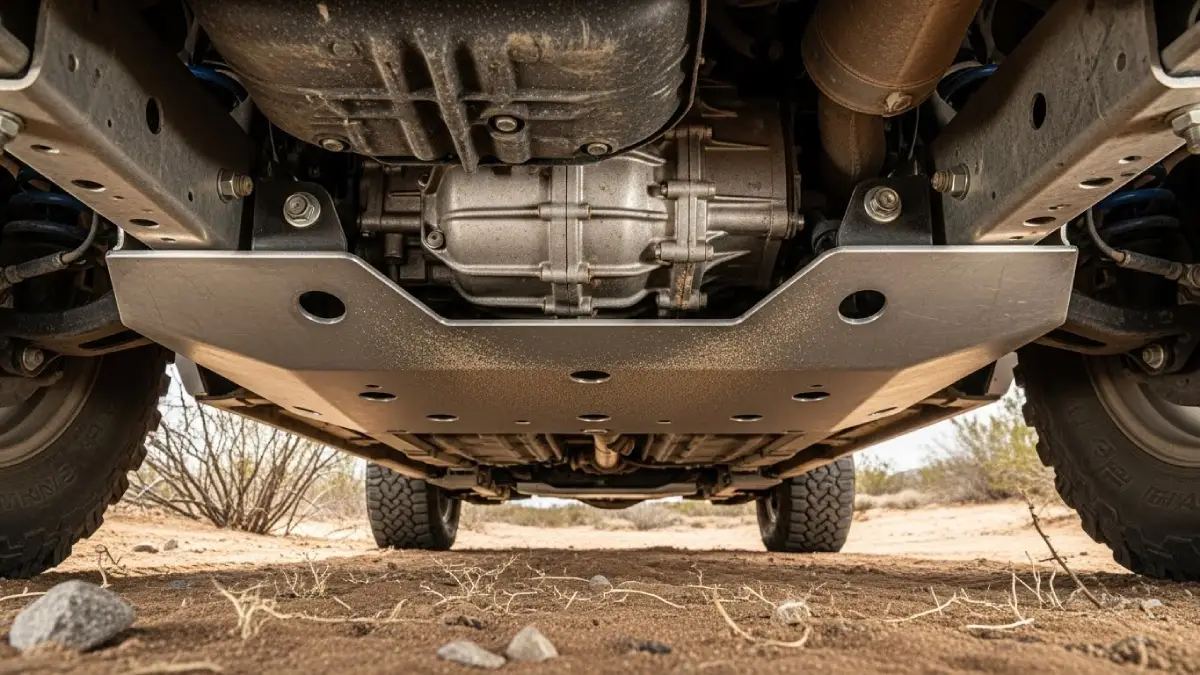
Stock SUVs typically provide 8-9 inches of ground clearance. Backcountry Utah routinely presents obstacles requiring 11-14 inches. The 3-5 inch gap means constant concern about undercarriage contact.
Critical clearance points:
Oil pans and differentials hang vulnerable on stock vehicles
Transfer cases contact high centers regularly
Exhaust systems drag over rocks on descents
Fuel tank skid plates are rare on stock vehicles
Transmission pans sit exposed to impact damage
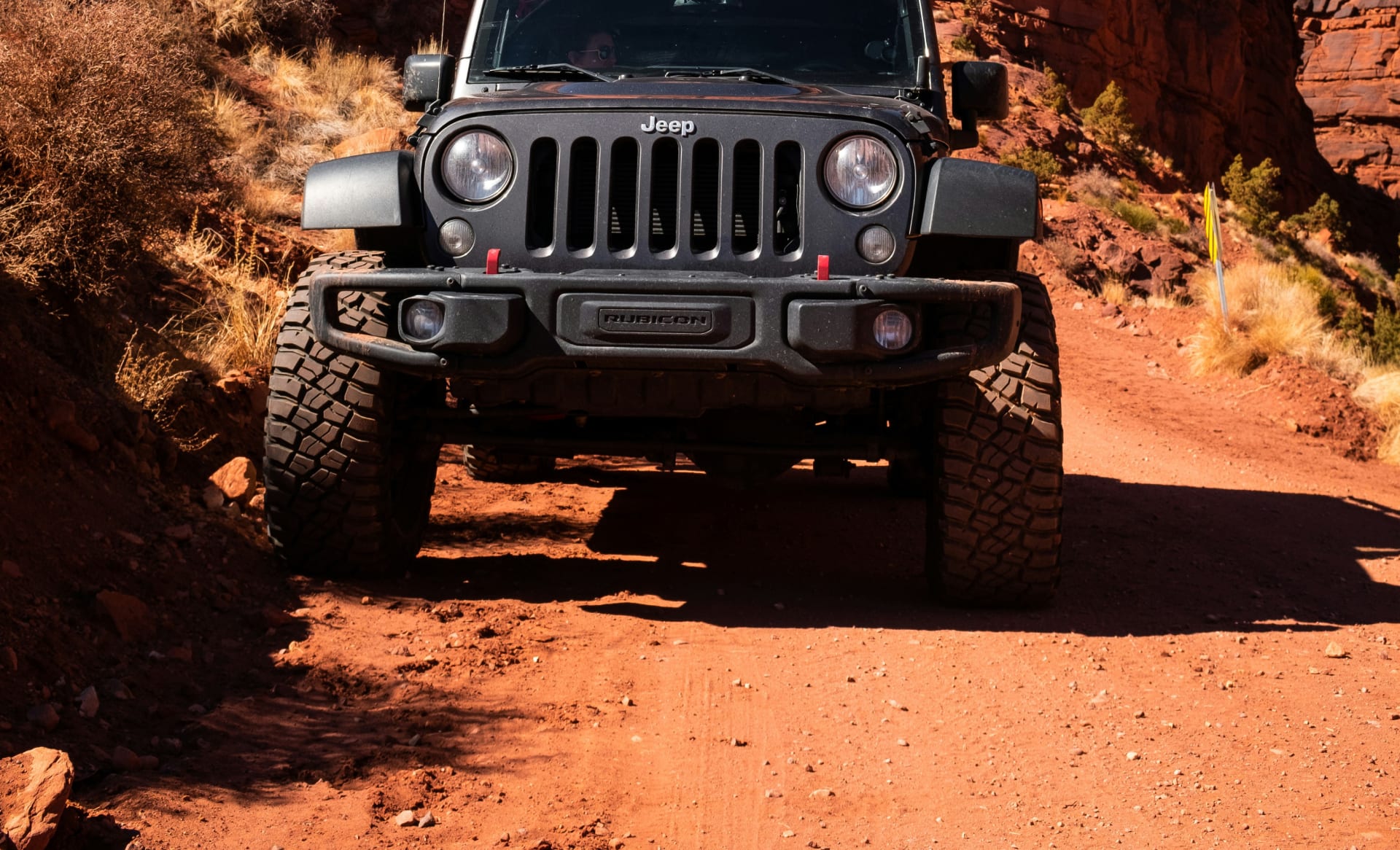
Cliffhanger's modified Jeeps provide 11.5+ inches of clearance with protective skid plates covering every vulnerable component. The Extreme Rubicons push this to 13+ inches with 39-inch tires. These specifications aren't luxury features – they're the minimum for confident backcountry travel.
Suspension Articulation
Keeping all four tires in contact with irregular terrain requires suspension that flexes significantly beyond stock capabilities. Three-wheel scenarios (where one tire lifts off the ground) shift weight distribution unpredictably and reduce traction when you need it most.
Stock suspension travel: 7-9 inches per wheel Modified suspension travel: 11-14+ inches per wheel
That 3-5 inch difference determines whether you maintain traction on off-camber sections or tip toward exposure zones.
Tire Selection Matters Critically
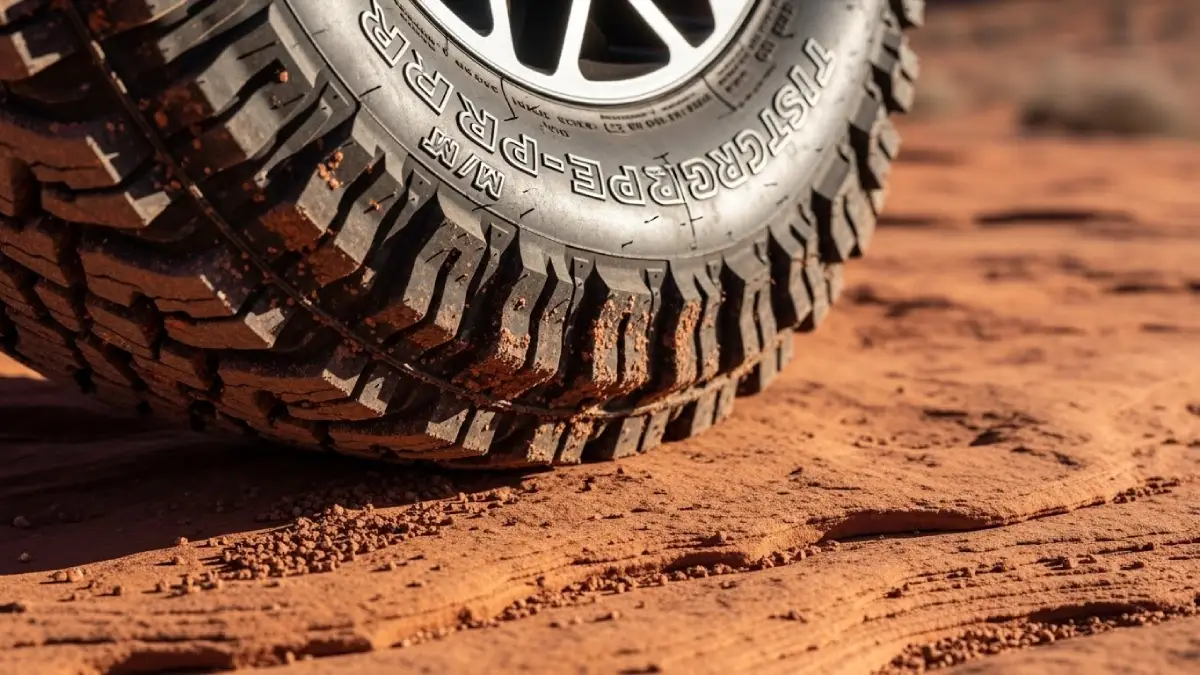
All-terrain highway tires might handle gravel roads, but backcountry Utah demands aggressive tread patterns, reinforced sidewalls, and compounds that grip sandstone.
Tire requirements for different conditions:
Slickrock – Requires softer compounds that conform to sandstone texture, typically run at 15-18 PSI for maximum contact patch
Sand – Needs wider tires at 10-12 PSI to float over soft surfaces rather than digging in
Rock gardens – Demands reinforced sidewalls to resist puncture from sharp edges, typically 8-ply construction minimum
Mixed terrain – Compromises that provide adequate performance across conditions, usually 35-37 inch diameter with aggressive tread
Recovery Equipment Standard
Backcountry Utah makes recovery equipment mandatory, not optional. When you're 30 miles from the nearest paved road with one vehicle high-centered on a sandstone ledge, AAA can't help you.
Essential recovery gear:
Winch (10,000-12,000 lb capacity minimum)
Recovery straps rated for vehicle weight
D-rings and shackles (actual rated equipment, not hardware store substitutes)
Hi-Lift jack or equivalent
Traction boards for sand/mud
Tire deflation/inflation capability
Basic hand tools for trail repairs
Cliffhanger vehicles come equipped with appropriate recovery gear because we understand that "if" you need it becomes "when" you need it in genuine backcountry conditions.
The Weather Factor Tourists Ignore
Utah's desert environment creates weather patterns that shift from benign to dangerous within minutes. The consequences of being caught unprepared range from inconvenient to life-threatening.
Flash Floods
Summer monsoons create afternoon thunderstorms that drop inches of rain in minutes. Water flows downhill through every drainage, wash, and canyon, transforming dry routes into raging torrents.
Flash flood characteristics:
Develop within 15-30 minutes of rainfall
Can occur miles from actual storm location
Peak within minutes, creating wall of water 6-10 feet high
Carry debris including boulders, trees, and vehicles
Last 20-60 minutes before receding
Smart backcountry travel monitors weather constantly and avoids canyon bottoms when afternoon storms develop. The tourists posting "adventure" videos from slot canyons with dark clouds overhead are demonstrating ignorance, not courage.
Extreme Temperature Swings
Utah backcountry can experience 50-60°F temperature variation between day and night. Summer daytime temperatures exceeding 110°F transition to nighttime lows in the 50s. This creates specific challenges for emergency situations.
Temperature-related risks:
Daytime heat exhaustion – Dehydration happens faster than tourists expect, especially at elevation where thinner air conceals exertion
Nighttime hypothermia – Getting stranded overnight in summer clothing when temperatures drop becomes serious rapidly
Equipment failure – Extreme heat taxes cooling systems, degrades rubber components, and accelerates mechanical stress
Surface conditions – Morning routes passable with cool tires become treacherous as afternoon sun superheats slickrock and sand
When Backcountry Utah Becomes Genuinely Dangerous
Most backcountry incidents result from cascading small mistakes rather than single catastrophic errors. Understanding the progression helps prevent the initial missteps.
The Typical Failure Cascade
Stage 1: Overconfidence – Successfully completing Hell's Revenge convinces tourists they're qualified for White Rim Trail. The skills aren't transferable, and neither is the equipment.
Stage 2: Poor Planning – Departing at noon for a 6-hour trail means finishing in darkness. No emergency gear means relying on everything going perfectly.
Stage 3: Wrong Line Selection – Taking the aggressive line instead of the bypass route results in undercarriage contact. Small crack in oil pan becomes catastrophic leak.
Stage 4: Escalating Problems – Oil leak forces shutdown. No cell service prevents communication. Evening approaches. Recovery options become limited.
Stage 5: Emergency Situation – Overnight stay in summer clothing. Limited water. No emergency beacon. Search-and-rescue becomes necessary.
Each stage presented intervention points where correct decisions prevent escalation. But tourists operating beyond their knowledge level don't recognize these decision points until consequences become obvious.
Real Rescue Statistics
Moab area search-and-rescue statistics reveal patterns:
127 vehicle-related incidents annually
Average response time: 3.7 hours from initial call
73% involve tourists driving beyond vehicle capability
Average recovery cost: $1,847 per incident
31% require overnight stay due to timing/conditions
12% result in medical transport for injuries
These aren't dramatic failures – they're ordinary tourists making predictable mistakes with consequences they didn't anticipate.
The Local Knowledge Advantage
Backcountry Utah changes constantly. Yesterday's passable wash is today's impassable sandbar. Last week's easy ledge is this week's broken-edge challenge after a thunderstorm.
Local operators navigate these changes daily. Cliffhanger vehicles traverse backcountry routes consistently, accumulating current conditions knowledge that guidebooks and GPS tracks can't provide.
Local expertise covers:
Current obstacle conditions – That ledge on Poison Spider? Last week's rain changed the line. We know because our vehicles were there this morning.
Weather pattern recognition – Those clouds forming? That's a 70% probability of afternoon thunderstorms in 90 minutes. Time to exit canyon areas.
Seasonal considerations – Spring runoff affects creek crossings through June. Summer heat makes afternoon travel dangerous. Fall offers optimal conditions but shorter daylight.
Alternate routes – When the primary route becomes temporarily impassable, knowing which alternate exists prevents backtracking 20 miles.
Recovery resources – Which recovery services actually operate in remote areas, what their response times realistically are, and which situations exceed their capabilities.
Why Cliffhanger Vehicles Transform Backcountry Access
Backcountry Utah exploration fundamentally changes when vehicle capability matches terrain demands. The difference between managing obstacles confidently versus constantly worrying about damage affects the entire experience.
Modified Rubicons: Proper Backcountry Capability
Cliffhanger's modified Rubicons start with Jeep's factory Rubicon platform, then add the specific enhancements that Utah backcountry demands:
2.5-inch suspension lift providing 11.5+ inches clearance
35-inch all-terrain tires with reinforced sidewalls
Complete skid plate protection (oil pan, transfer case, gas tank, transmission)
Heavy-duty rock sliders protecting rocker panels
Upgraded recovery points front and rear
Proper recovery equipment included
These specifications handle 90% of Utah backcountry confidently, including technical routes that challenge stock vehicles severely.
Extreme Rubicons: No-Compromise Capability
For the genuinely extreme backcountry and most technical obstacles, Extreme Rubicons provide:
3.5-inch suspension lift with 13+ inches clearance
39-inch tires maximizing ground clearance and articulation
Enhanced gearing for technical climbing
Additional protection and recovery capability
Proven on Utah's most demanding routes repeatedly
The Insurance Reality
Standard vehicle insurance explicitly excludes off-road damage. Rental car insurance adds similar exclusions. That $4,000 cracked oil pan? That's your responsibility under most insurance arrangements.
Cliffhanger rental agreements acknowledge that off-road use is the intended purpose. Our vehicles are built for this terrain, maintained by professionals familiar with backcountry demands, and insured appropriately.
Local Guidance Included
Beyond vehicle capability, we provide current conditions information, route recommendations matching your actual experience level (not your optimistic assessment), and realistic time estimates accounting for Utah backcountry realities.
Planning Your Backcountry Utah Adventure
Successful backcountry exploration starts with honest capability assessment and appropriate preparation.
Essential Pre-Trip Preparation
Route research – Study trail reports, understand technical ratings in Utah context, and identify bailout points before committing to long routes.
Weather monitoring – Check forecasts, understand flash flood potential, and plan timing around temperature extremes.
Communication plan – Acknowledge cell service will be absent, carry emergency beacon if going deep, and establish check-in protocols with someone who knows your route.
Equipment verification – Confirm vehicle meets clearance requirements, check tire condition and pressure, and verify recovery gear presence.
Supply loading – Pack extra water (1 gallon per person per day minimum), emergency food, first aid kit, and overnight gear even for day trips.
Realistic Time Management
Backcountry Utah takes longer than GPS estimates suggest. Add time for:
Photo stops at incredible vistas
Technical obstacles requiring careful navigation
Unexpected trail conditions requiring detours
Rest breaks in extreme heat
Buffer time for mechanical issues
A trail listed as "4-6 hours" should be treated as an all-day commitment with departure by 7-8 AM.
The Turnaround Decision
Pride kills backcountry adventures. When conditions exceed your comfort level, turning around is always an option. We tell customers: "The trail will still be here tomorrow. Your vehicle being stuck 40 miles out creates problems that last days."
Experience Backcountry Utah Properly
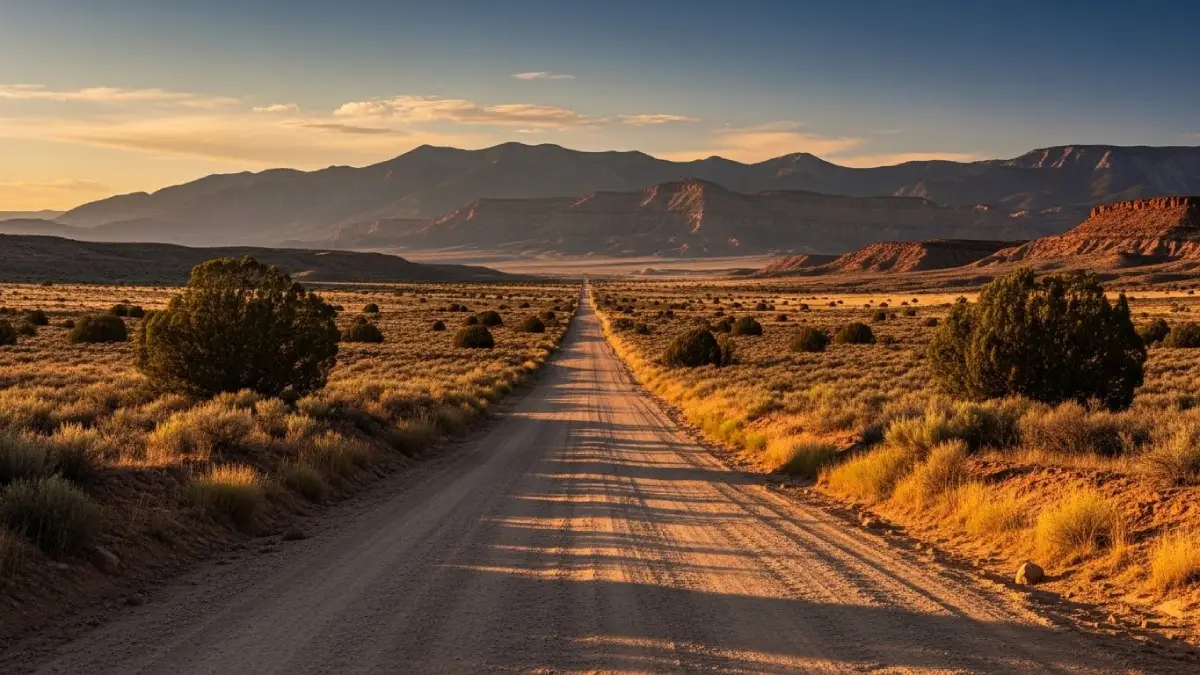
Backcountry Utah offers adventure experiences found nowhere else on Earth. The 200-million-year-old Navajo sandstone, the spectacular canyon systems, the genuine wilderness conditions – these create opportunities for exploration that justify the challenges.
But respecting this terrain means arriving with appropriate equipment, realistic expectations, and the humility to acknowledge that professional-grade capability makes the difference between confident exploration and expensive mistakes.
Cliffhanger Jeep Rentals specializes in providing vehicles genuinely built for backcountry Utah. Our modified and extreme Rubicons handle technical terrain confidently because they're designed for it, tested on it daily, and maintained by professionals who understand what Utah backcountry actually demands.
Our Moab, Vernal, and Colorado locations position you minutes from legendary backcountry access. Our experienced staff provides the local knowledge that transforms anxiety into confident adventure. And our purpose-built vehicles eliminate the gap between tourist optimism and backcountry reality.
Ready to experience backcountry Utah the right way – with proper equipment, professional guidance, and the confidence that comes from knowing your vehicle actually handles the terrain you're exploring? Contact Cliffhanger Jeep Rentals and discover why thousands of adventurers trust us for their Utah backcountry experiences.
The slickrock, the canyons, the genuine wilderness – it's all waiting. But it only reveals its secrets to those who approach with appropriate respect and proven capability.
Book your backcountry Utah adventure with Cliffhanger Jeep Rentals today.